India’s Co-Orbital Counter-Space Path: What Official Sources Actually Reveal
India has already demonstrated that it can physically destroy a satellite in orbit. The successful
India has already demonstrated that it can physically destroy a satellite in orbit. The successful
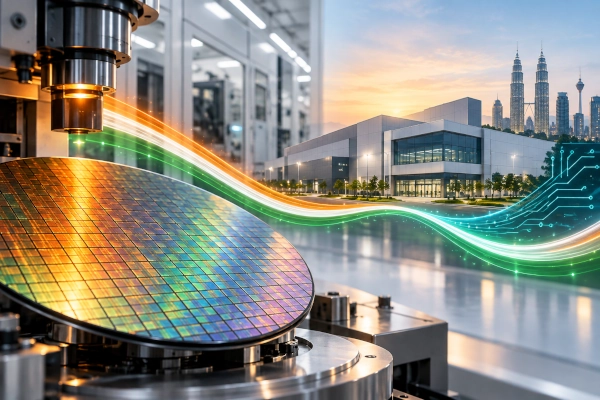
The collaboration will place Kelington’s semiconductor infrastructure expertise inside one of India’s most important technology projects. Tata Electronics is developing the Dholera facility as a 300-mm, or 12-inch, wafer fabrication plant with a planned investment of around $11 billion.
BARC has already identified Tarapur in Maharashtra as the site for the lead BSMR-200 demonstration unit. The project is intended to validate the reactor design, construction methodology, operating systems, safety architecture and economics before any wider commercial rollout is considered.
The wider TVS industrial ecosystem has extensive capabilities in manufacturing, electronics, sensors, automotive components and engineering products. This provides SibSensor with access to an Indian partner that already operates across multiple industrial sectors and has established relationships with domestic customers and manufacturers.
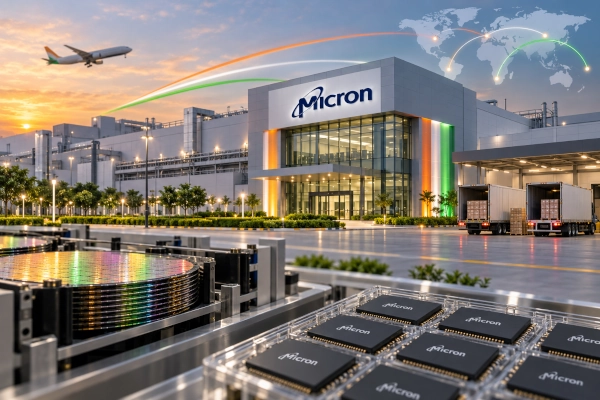
Micron formally opened the Sanand facility on 28 February 2026. The plant receives advanced DRAM and NAND wafers produced elsewhere in Micron’s global manufacturing network and converts them into finished memory and storage products through assembly and testing operations.
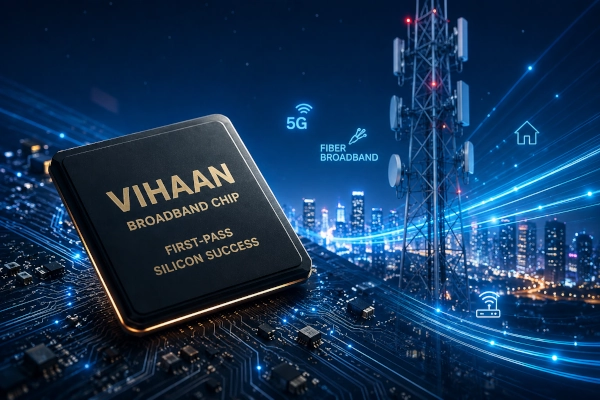
The Chennai-based deep-tech company showcased the chip at SEMICON India 2026, highlighting the growing contribution of Indian startups towards building a domestic semiconductor ecosystem that extends beyond chip design services into complete semiconductor products.
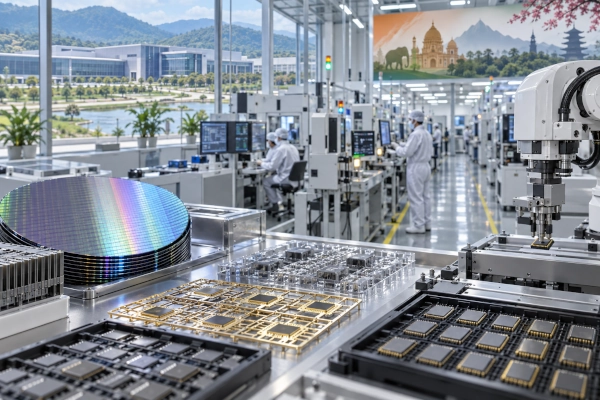
The announcements reflected India’s transition from building initial semiconductor manufacturing capacity towards developing a complete ecosystem capable of supporting chip production, innovation and commercial deployment.
The existing capabilities developed through the Su-30MKI programme provide HAL with experience in large fighter aircraft assembly, aerospace manufacturing, component integration and supply-chain management.
The partnership aims to combine Naval Group’s decades of expertise in naval defence systems with Nibe’s industrial capabilities to support the development of advanced maritime technologies in India.
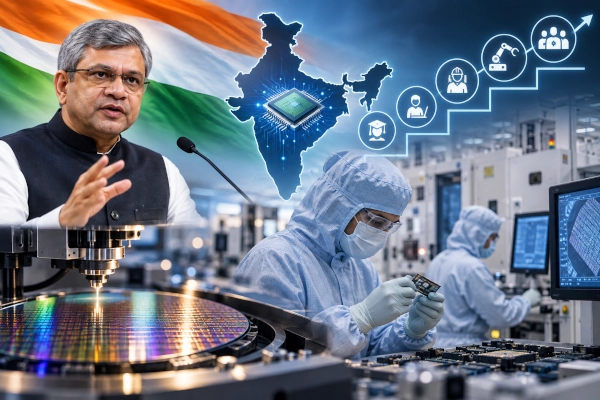
Electronics and Information Technology Minister Ashwini Vaishnaw outlined the proposal during SEMICON India 2026, saying that the institute would be built around a five-level skilling model. The government wants the training framework to extend beyond conventional chip design and include systems engineering, precision manufacturing, semiconductor production and equipment-related skills.