Make in India

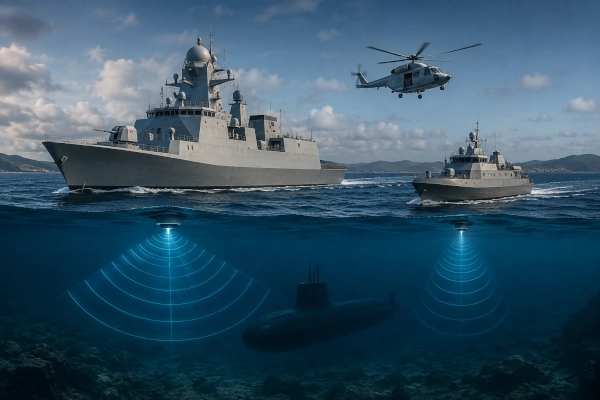
India’s Indigenous Sonar Ecosystem Powers New Generation of Indian Navy Warships

At the heart of this underwater capability is the Naval Physical and Oceanographic Laboratory in Kochi, better known as NPOL. The DRDO laboratory has emerged as one of India’s principal centres for underwater acoustics, sonar engineering and anti-submarine warfare technologies, developing systems capable of detecting, classifying and tracking submarines and other underwater threats.

AGNIT Semiconductors: Building India’s Gallium-Nitride Chip Capability for Radar, Communications and Power Electronics

AGNIT Semiconductors, born from research at the Indian Institute of Science (IISc), is developing GaN semiconductor technology for high-frequency communications, strategic electronics and power applications. The company describes itself as a fab-lite GaN semiconductor company covering the technology chain from semiconductor wafers to components and modules.

India’s LR-AShM Family Could Reach 3,500 Km as DRDO Develops Extended-Range Hypersonic Variants

The Defence Research and Development Organisation has already demonstrated the basic long-range hypersonic missile technology and publicly displayed the LR-AShM during the Republic Day Parade in January 2026. Reporting preserved in DRDO’s own January 2026 newspaper-clippings compilation subsequently stated that higher-range versions reaching up to 3,500 km were at various stages of development, citing a senior DRDO scientist.

Indian Composite Manufacturing Gets BrahMos Boost With ₹60-Crore Order to Allen Reinforced Plastics

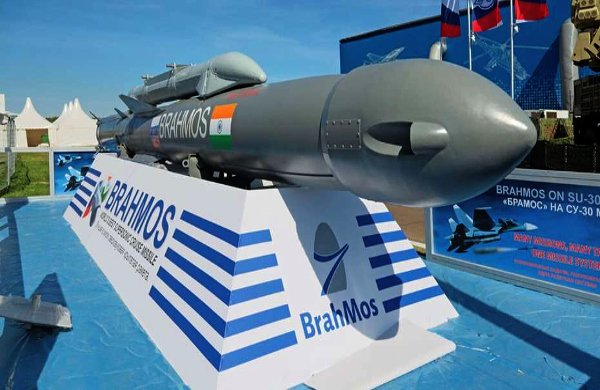
The contract was disclosed by Jaykay Enterprises Limited on 25 August 2026. Allen Reinforced Plastics is a step-down subsidiary of Jaykay Enterprises through its defence and aerospace arm. The order is domestic and is valued at approximately ₹60.01 crore including GST. The company has stated that execution will be carried out according to the terms and conditions contained in the order.

DoT and C-DOT to Establish End-to-End Optical Network Testbed for Indigenous Telecom Technologies

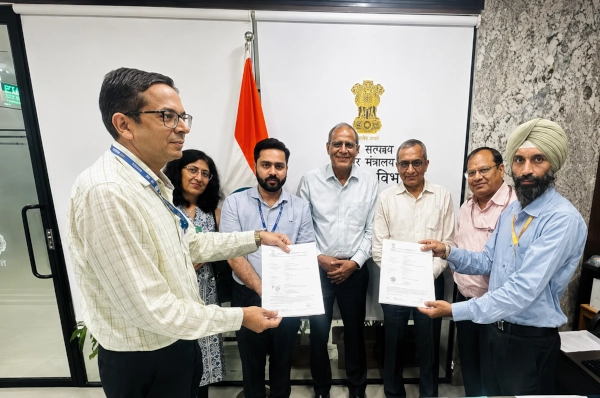
Signed on 27 August 2026, the DoT-funded initiative is designed to bridge the gap between laboratory-stage innovation and commercial deployment. Indian startups, telecom companies, researchers and technology developers will be able to test optical networking solutions in a realistic network environment before taking them to market.

India-UK Move Closer to Major LMM Missile Pact as Indian Army Requirement Expands

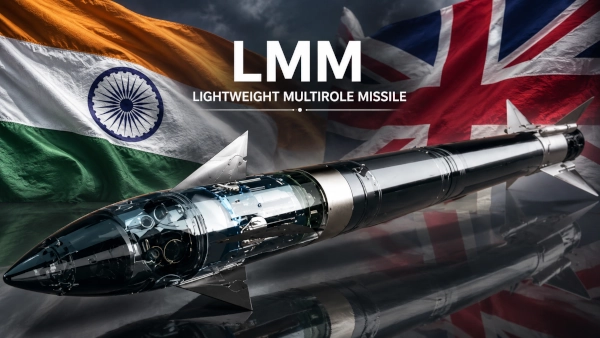
British officials indicated on 26–27 August 2026 that an Inter-Governmental Agreement for the missiles is expected to be signed soon. India is now expected to emerge as one of the largest customers for the weapon, reflecting the Army’s growing requirement for highly mobile short-range missiles capable of countering drones, helicopters and other low-altitude threats.

Indian Startup DetectifAI Develops Live-Call Detection System to Fight AI Voice Deepfakes

Founded in 2025 by Tarini Padmanabhuni, DetectifAI is building what it describes as a voice-trust layer capable of verifying who is speaking, analysing whether speech is synthetic or replayed and flagging suspicious interactions before a sensitive transaction or conversation proceeds. The startup is particularly targeting financial institutions, KYC providers, telecom networks and other organisations where voice is frequently used as part of customer verification.

DRDO Pursues Lighter Shoulder-Fired VSHORADS as India Moves Toward Indigenous MANPADS

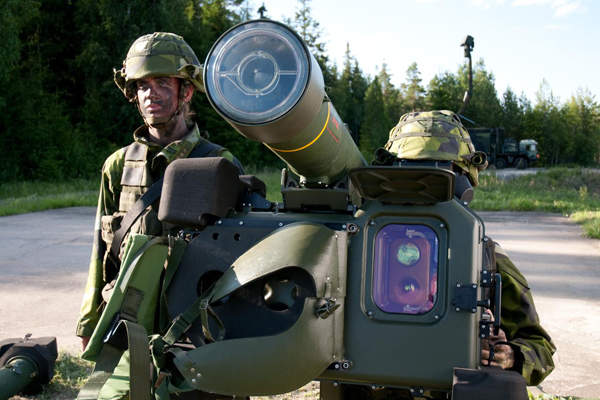
The existing VSHORADS is already a major technological advance over older-generation infrared-guided missiles. Developed by DRDO’s Research Centre Imarat, the fourth-generation system incorporates an uncooled Imaging Infrared seeker, miniaturised reaction-control system, integrated avionics and a dual-thrust solid-propellant motor. These technologies give the missile better target discrimination, manoeuvrability and resistance to conventional infrared countermeasures.

India’s S7 Systems Develops Compact 7-Inch Tactical UAV With Thermal Vision and Multi-Drone Coordination

The compact platform has been developed around the requirement for a small, rapidly deployable aircraft capable of carrying useful tactical sensors without the logistical footprint associated with larger reconnaissance UAVs. S7 Systems says the drone offers a 20-minute flight endurance, an operational range of 2 kilometres and payload capacity of up to 300 grams, while supporting configurable sensors, communications and mission equipment.