Defense

News , articles and essays on Indian Defense

DRDO’s LRLACM Test Strengthens India’s Long-Range Precision Strike Capability

The test is important because the LRLACM belongs to a category of weapons designed for deep land-attack missions. A land attack cruise missile gives the armed forces the ability to strike fixed land targets with precision from long distances. Such a system strengthens deterrence, supports conventional precision warfare and adds another layer to India’s growing missile inventory.

Special Weapons and Astras in the Ramayana: The Ancient Doctrine of Decisive Battlefield Systems

Ordinary weapons fill the daily rhythm of war. Bows, arrows, maces, swords, spears and stones create close combat pressure. Astras change the character of the battle. They bring fire, serpents, wind, water, darkness, shock, paralysis and overwhelming destruction into the field. A warrior who commands an astra controls an effect greater than his physical strength. The weapon becomes a system. It carries range, payload, guidance, psychological power and escalation value. Its deployment signals that the battle has moved from personal combat to specialised warfare.

India Pushes Rafale Partnership Beyond Buying Jets into Local Manufacturing

The message from India is clear. Future defence cooperation with France must focus on co-development, co-design, co-production and co-manufacturing. This means India wants a larger share of work inside the country, from structural manufacturing and components to maintenance, repair, overhaul and possible integration of Indian systems. Rafale is now becoming a test case for the next stage of India-France defence ties.

Indian Army and Airtel Push Mobile Connectivity into Arunachal’s Kameng Frontier

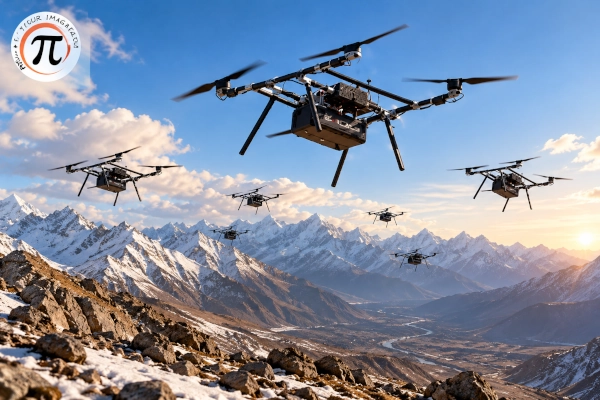
The initiative focuses on remote locations in the Kameng belt of Arunachal Pradesh, one of India’s most sensitive and challenging Himalayan regions. The terrain is mountainous, forested and cut by deep valleys. Many settlements remain far from dense commercial telecom networks. Weather, altitude, road access and low population density make telecom rollout difficult. This is exactly where civil-military cooperation becomes valuable.

K9 Vajra-T: India’s Tracked Thunderbolt and the New Age of Mobile Artillery

The K9 Vajra-T is not just a weapon platform. It is also an industrial success story. The first batch of 100 guns was produced with major Indian participation through Larsen & Toubro’s defence manufacturing ecosystem. The project showed that a private Indian company could build a complex tracked artillery platform with high quality, integration capability and delivery discipline. This is important because India’s defence industry has often been judged by its ability to produce complex platforms, not only simple components.

Ashok Leyland’s Autonomous Stallion: India’s Defence Mobility Enters a New Era

Autonomous military vehicles can play an important role in modern war because supply chains are now direct targets. Ammunition, fuel, food, spares and medical material must reach forward positions even under surveillance, artillery threat and drone observation. A connected and autonomous logistics vehicle can reduce the exposure of drivers and support troops while improving movement discipline across dangerous routes. Such systems can also operate in convoy formations, support last-mile delivery and serve in high-risk zones where human presence must be limited.

Illusion and Deception Warfare in the Ramayana: Indrajit’s Maya-Yuddha and the Battle for the Mind

Indrajit is a warrior of intelligence, timing and deception. He enters battle with the skill of a master tactician who understands that fear can wound before a weapon lands. His attacks create uncertainty among the Vanaras because the source of danger remains hidden. Arrows arrive from unseen directions. Weapons strike before the enemy can locate him. The battlefield becomes a place of doubt, where courage must fight through confusion before it can reach the opponent.