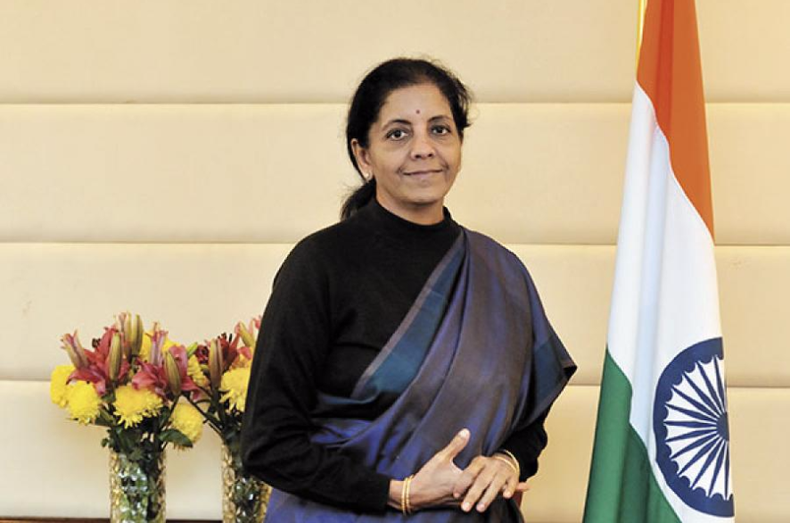
Finance Minister Nirmala Sitharaman has proposed creating a dedicated forum to help Indian technology companies deal with foreign governments and regulators as they expand into overseas markets, arguing that smaller firms cannot be expected to navigate increasingly complex regulatory systems on their own.
Speaking at the Global Fintech Fest in Mumbai on September 11, 2026, Sitharaman said Indian technology companies are increasingly operating in areas where regulations differ substantially from one country to another. These differences can affect licensing, market entry, cybersecurity requirements, data governance and the ability of technologies developed in India to work with systems used overseas.
Her proposal is aimed particularly at startups and smaller technology companies that may have strong products but lack the legal, regulatory and diplomatic resources available to large multinational firms.
A Common Platform for Overseas Expansion
Sitharaman suggested that industry and government should consider creating a federated platform through which Indian technology companies could collectively engage with regulators and policymakers in foreign markets.
Such a forum could help companies understand licensing requirements, establish contacts with overseas authorities and resolve issues affecting entry into regulated markets. It could also provide a channel for discussions on interoperability between Indian and foreign technical standards.
The proposal reflects a change in the problems facing India’s technology sector. A decade ago, much of the policy emphasis was on helping startups raise capital and build domestic businesses. A growing number of Indian fintech, software, artificial-intelligence and digital-infrastructure companies are now looking beyond India, where regulatory compliance can become one of the main barriers to expansion.
Large companies can maintain specialist legal teams in multiple jurisdictions. Smaller startups often cannot.
Sitharaman’s argument was that these firms should not have to approach every foreign regulator individually without institutional support.
Licensing and Standards Can Become Trade Barriers
Technology exports differ from conventional exports because the product may still require local regulatory approval even when it can technically be delivered across borders.
A payments company, for example, may require financial-services licences in every market it enters. A digital-identity provider may have to comply with local privacy and data-storage rules. Cybersecurity companies can face national security restrictions, while AI platforms may encounter different rules governing training data, automated decision-making and model accountability.
Differences in technical standards can create another problem. A system developed according to Indian standards may need additional certification or modification before it can connect with foreign infrastructure.
Sitharaman said a common forum could support discussions on interoperability, allowing Indian technology firms and overseas regulators to identify areas where standards or regulatory processes can be aligned.
Cybersecurity and Data Rules Form Part of the Proposal
Cybersecurity would also be an important part of such an arrangement.
Sitharaman said the proposed platform could facilitate exchanges of best practices related to data protection and cybersecurity, areas where regulations are becoming more demanding as financial systems adopt artificial intelligence, tokenised assets and increasingly automated digital infrastructure.
At the same event, the Finance Minister described AI as a technology that can improve areas such as fraud detection while simultaneously allowing cyberattacks to become faster and more sophisticated.
She argued for stronger safeguards around emerging technologies without imposing regulation so restrictive that it prevents innovation.
This balancing act is particularly relevant for Indian companies seeking international customers. Regulatory systems in different countries are developing at different speeds, and companies may face substantially different requirements for the same technology.
Agentic AI and Tokenisation Complicate the Regulatory Landscape
Sitharaman’s proposal came during a broader discussion about technologies such as agentic AI, tokenisation and quantum computing.
These technologies are moving faster than many regulatory systems. Agentic AI can increasingly carry out complex tasks without continuous human intervention, while tokenisation is beginning to alter the way financial assets are issued and settled.
Quantum computing could eventually affect existing encryption systems, creating another set of regulatory and cybersecurity questions.
Sitharaman said governments and regulators will have to coordinate more closely because many of these risks do not stop at national borders.
The same international coordination could also benefit Indian companies trying to commercialise technologies in multiple jurisdictions.
Supporting the Next Stage of India’s Technology Exports
The proposal comes as India increasingly seeks to turn domestic digital infrastructure and technology companies into international businesses.
Indian firms have developed substantial capabilities in digital payments, financial technology, artificial intelligence, cybersecurity, enterprise software and digital public infrastructure. Expanding these technologies overseas, however, requires more than having a competitive product.
Companies must deal with local licensing, data protection, consumer rules, cybersecurity requirements and technical standards before they can operate at scale.
A dedicated regulatory-engagement platform could give smaller companies access to expertise and institutional support that would otherwise be difficult to obtain.
It could also provide foreign regulators with a common point of contact when evaluating Indian technologies rather than dealing separately with dozens of individual companieIf implemented, however, it could address a practical problem facing India’s increasingly international technology sector: helping companies move from building successful products at home to navigating the regulatory systems required to sell and operate them across multiple countries.s.
Proposal, Not Yet a Formal Programme
The initiative remains at the proposal stage.
Sitharaman called for such a mechanism to be created, but the government has not yet announced its structure, participating ministries, funding, operating agency or implementation timetable.
It is therefore more accurate to describe the September 11 announcement as a proposal for a global regulatory-support forum, rather than a formally approved government scheme.
You may also like
-
Vietnam Expands Business and Investment Links Across India’s Major Economic Hubs
-
India’s GST Collections Rise 14.7% to ₹2.04 Lakh Crore in September
-
SberIndia Lending to Indian Companies Quadruples as India-Russia Trade Finance Expands
-
India Manufacturing PMI Rises to Seven-Month High of 55.1 in September
-
Nothing and Optiemus Announce $100 Million Joint Venture to Expand Smartphone Manufacturing in India
