PEARL: DRDO’s Passive Exoskeleton Redefining Soldier Load Management
India’s push toward human performance augmentation in combat environments has taken a pragmatic and field-oriented
News , articles and essays on Indian Defense
India’s push toward human performance augmentation in combat environments has taken a pragmatic and field-oriented
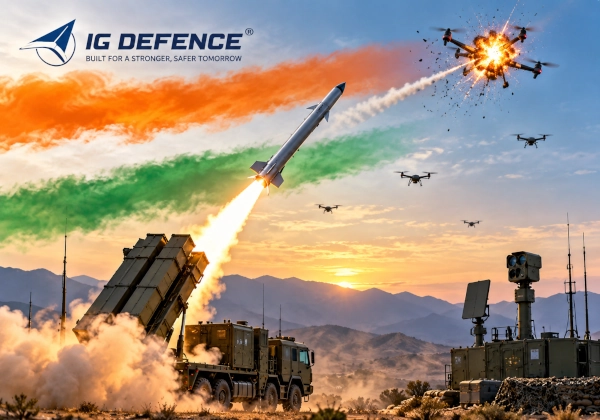
BEL’s official product description states that the system, developed by DRDO and productionised by BEL, is already operationally proven and is capable of real-time search, detection, tracking, and neutralisation of flying drones in the micro and small UAV classes, while also presenting optical, thermal, and RF spectrum data on the operator interface.
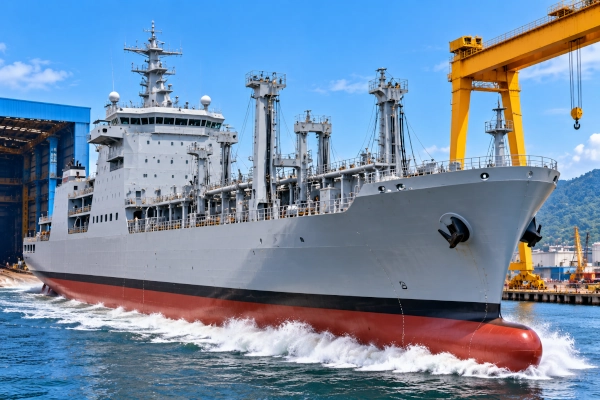
The new vessels are being fitted with advanced onboard systems, including an AI-based predictive maintenance system and multipurpose drones, reflecting a shift toward more technology-enabled maritime operations. According to the Ministry of Defence, the ships will also carry significant indigenous content, including gear boxes supplied by Triveni of Mysore and water jets from MJP India.
Indian naval torpedo warfare has matured into a layered architecture built around mission geometry, launch
The phrase “blown wing” refers to a lift-augmentation approach in which propellers or other propulsors accelerate airflow over the wing and high-lift surfaces, increasing lift at low speed and reducing the runway needed for takeoff and landing.
According to the Army, the document is designed to provide clear and actionable guidance to industry, academia and research and development institutions so that investments and innovation can be directed toward priority capability areas identified by the service. In effect, the roadmap seeks to reduce uncertainty for developers and create a more demand-driven pathway for India’s growing drone ecosystem.
Cavitation tunnels exist to reproduce and study those flow conditions in a controlled environment before the real platform ever goes to sea. Research and industrial tunnel operators use them to investigate hydrodynamic performance, cavitation behavior, pressure fluctuations, erosion, and radiated noise from propulsors and underwater bodies.
The system was developed by the Defence Institute of Psychological Research (DIPR) and handed over at The Infantry School, Mhow, one of the Army’s key training institutions.
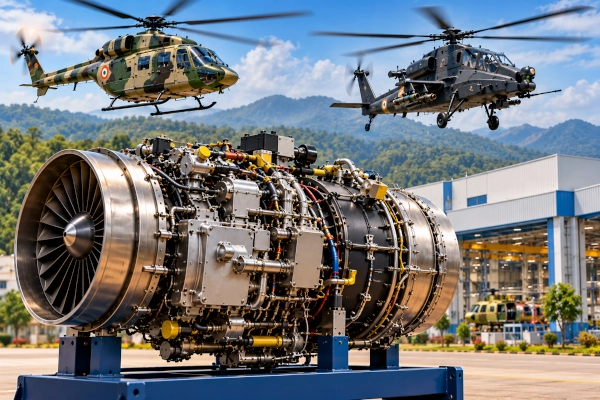
What has changed now is HAL’s response. Instead of treating the delay as a generic supply-chain inconvenience, the company has begun imposing liquidated damages or penalty clauses on GE for each delayed engine, according to multiple reports. That signals a harder contractual line from the Indian side and reflects growing frustration within the defence establishment over slippages in a programme that is central to both IAF force regeneration and the wider Aatmanirbhar Bharat aerospace narrative.
For France and United States’s markets, India is often not exporting complete front-line weapon platforms. Instead, Indian companies are increasingly embedded in global aerospace and defence supply chains, supplying fuselages, empennages, aerostructures, electronics, precision parts and specialist subsystems to global OEMs. That is a different export model, but an equally important one.