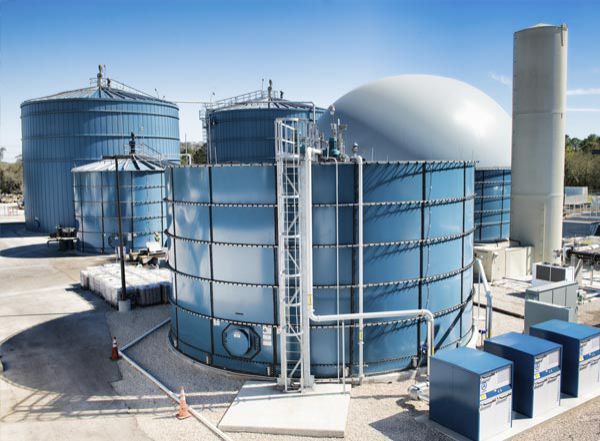
The Union Cabinet, chaired by Prime Minister Narendra Modi, has approved GOBARdhan, a unified national scheme aimed at transforming India’s organic waste into compressed biogas, organic manure, rural income and clean energy.
The National Circular Bioenergy Scheme has been approved with a total financial outlay of ₹23,731 crore and will be implemented over ten years, from the financial year 2026–27 to 2035–36.
By combining assured purchase, stable pricing, capital support, pipeline connectivity, credit guarantees and technology development under a single framework, the scheme seeks to expand India’s compressed biogas industry from a collection of emerging projects into a nationally integrated clean-energy sector.
The government expects GOBARdhan to enable nearly ten-fold growth in domestic compressed biogas production while attracting large-scale private investment and strengthening India’s energy security.
Converting Organic Waste into Economic Value
India generates enormous quantities of agricultural residue, cattle dung, sugar industry press mud, municipal organic waste and other biodegradable material every year.
Under GOBARdhan, these resources will be collected and processed to produce compressed biogas, or CBG, which can be used in vehicles, industries, commercial establishments and household gas networks.
The process also produces fermented organic manure and liquid fermented organic manure, creating an additional revenue stream for plant operators and supplying farmers with alternatives to chemical fertilisers.
The scheme therefore seeks to create a circular economy in which organic waste becomes a source of fuel, fertiliser, employment and rural enterprise.
Each CBG plant can support a local network of farmers, cattle owners, waste suppliers, transporters, feedstock aggregators, plant workers and manure processors. This could help villages emerge as decentralised centres of renewable-energy production.
Building on the SATAT Initiative
The new national scheme builds upon earlier government programmes that established the initial foundation for India’s compressed biogas industry.
These include the Sustainable Alternative Towards Affordable Transportation initiative, the Market Development Assistance Scheme for organic manure, the Biomass Aggregation Machinery Scheme, the Development of Pipeline Infrastructure Scheme and financial assistance provided for CBG plants under the National Bioenergy Programme.
Together, these programmes have contributed to the commissioning of more than 200 compressed biogas plants across India. They have also helped establish supply arrangements, feedstock networks, manure markets and fuel-purchase systems.
GOBARdhan will bring these separate interventions together under one national framework administered by the Ministry of Petroleum and Natural Gas.
The integrated structure is expected to reduce administrative fragmentation, improve project economics and provide greater certainty to developers, investors and financial institutions.
Supporting India’s Gas-Based Economy
India’s consumption of natural gas is rising across the transport, domestic, industrial and commercial sectors.
Compressed biogas can substitute a portion of conventional natural gas because it has similar chemical and combustion characteristics. After purification and compression, CBG can be supplied through existing gas infrastructure or sold as a transport fuel.
Greater domestic production of CBG could therefore reduce India’s dependence on imported fossil fuels while supporting the expansion of the country’s city gas distribution network.
Unlike conventional natural gas, CBG is produced from renewable biological resources. Its production also prevents organic waste from decomposing in unmanaged conditions and releasing methane into the atmosphere.
The scheme is therefore expected to contribute simultaneously to energy security, waste management, rural development and emissions reduction.
Six Major Components of GOBARdhan
Assured Purchase of Compressed Biogas
A central feature of the scheme is the creation of a dedicated CBG offtake-assurance mechanism.
City Gas Distribution companies will procure compressed biogas in line with the government’s notified blending obligation for compressed natural gas used in transport and piped natural gas supplied to households.
The obligation has been fixed at 3 per cent for 2026–27, 4 per cent for 2027–28 and 5 per cent from 2028–29 onwards.
This guaranteed demand is expected to give producers a predictable market and improve the financial viability of CBG projects.
For investors and lenders, assured purchase reduces uncertainty regarding plant utilisation and future revenue. It could also encourage developers to establish larger projects and enter into long-term feedstock agreements.
Stable Long-Term Pricing
The scheme introduces an administered CBG price of ₹2,110 per metric million British thermal units.
The pricing system will be supported through a government-backed framework combining public support with a market-based cost-sharing mechanism.
The arrangement will remain in place for a minimum period of ten years, giving producers greater visibility over future earnings.
Long-term price certainty is especially important for compressed biogas projects because they require substantial initial investment in digesters, purification systems, compression equipment, feedstock supply chains and waste-processing infrastructure.
Stable pricing could make these projects more attractive to private investors while protecting consumers from sudden increases in fuel costs.
Capital Assistance for New and Expanded Projects
Eligible greenfield compressed biogas projects will receive capital support of up to ₹2 crore for every tonne per day of installed CBG production capacity.
The assistance will cover not only core plant machinery but also supporting infrastructure required for feedstock collection, manure processing and value addition.
Existing plants that expand their production capacity will also be eligible for assistance.
This component could reduce the financial burden during the early stages of project development and help operators achieve financial closure more quickly.
The support is expected to benefit private developers, micro, small and medium enterprises, cooperatives, farmer organisations and rural entrepreneurs.
Pipeline Connectivity
GOBARdhan will provide support for the development of pipeline infrastructure connecting compressed biogas plants with City Gas Distribution systems and major gas pipelines.
Both cluster-based pipeline networks and standalone connections will be eligible.
At present, many CBG plants depend on road tankers or cascades to transport their output. This can increase logistics costs and limit the distance over which the fuel can be sold economically.
Direct pipeline connectivity can reduce transportation expenses, improve fuel evacuation and enable plants to supply gas to a wider market.
It could also help integrate domestically produced renewable gas into India’s expanding national gas grid.
Credit Guarantee for MSME Projects
The scheme establishes a dedicated credit-guarantee mechanism for eligible compressed biogas projects developed by MSMEs.
The government-backed facility will share a portion of the lending risk faced by banks and other financial institutions.
This could reduce collateral requirements, improve access to affordable credit and enable projects to secure financing more quickly.
The mechanism is expected to widen participation by first-time developers, women entrepreneurs, rural businesses and smaller enterprises that may otherwise struggle to raise sufficient capital.
By strengthening lender confidence, the government aims to create a more competitive and diverse CBG industry rather than one dominated only by large corporations.
CBG Ecosystem Challenge Fund
A dedicated CBG Ecosystem Challenge Fund will support district-level development of compressed biogas projects and related supply chains.
The fund will finance feedstock mapping, resource assessment, aggregation infrastructure, district-level planning, technology adoption, process improvements, manure value addition, capacity building and public awareness.
Reliable information about the quantity, seasonality and location of biomass resources is essential for the success of a CBG project.
The challenge fund could help districts identify suitable feedstock clusters, establish collection centres and create coordinated development plans involving local governments, farmers, cooperatives and private developers.
It is also expected to encourage innovation in plant technology, waste preprocessing, manure marketing and feedstock logistics.
Benefits for Farmers and Rural Communities
Agricultural residue and cattle dung are often treated as low-value waste materials. GOBARdhan aims to convert them into marketable resources.
Farmers could earn additional income by supplying crop residue, animal waste and other biomass to nearby compressed biogas plants.
The scheme could also create employment in collection, baling, transportation, storage, plant operations, equipment maintenance and manure distribution.
Cooperatives, dairy societies, farmer producer organisations and village-level entrepreneurs may participate in feedstock aggregation and decentralised bioenergy production.
The development of a reliable market for crop residue could also discourage open-field burning in regions where farmers face difficulties disposing of agricultural waste.
Strengthening the Organic Manure Economy
Compressed biogas production generates digestate that can be processed into fermented organic manure and liquid fermented organic manure.
GOBARdhan aims to expand the production, processing, certification and marketing of these materials.
A stronger organic manure value chain could improve soil health, increase organic carbon content and reduce excessive dependence on chemical fertilisers.
The inclusion of manure-processing and value-addition infrastructure within the capital-support framework recognises that the financial success of a CBG plant depends on both fuel production and the commercial utilisation of its by-products.
Attracting Private Investment
Compressed biogas projects have traditionally faced several obstacles, including uncertain demand, fluctuating prices, high capital costs, limited pipeline access and difficulty obtaining loans.
The new scheme addresses these challenges through an integrated package rather than isolated interventions.
Assured purchase provides market certainty. Stable pricing improves revenue predictability. Capital assistance reduces initial expenditure. Pipeline support lowers logistics costs. Credit guarantees improve access to finance.
Together, these measures are expected to strengthen project bankability and unlock significant private-sector investment.
The ten-year implementation period will also give companies sufficient time to develop project pipelines, establish technology partnerships and build regional feedstock networks.
Environmental and Energy-Security Impact
GOBARdhan is expected to reduce greenhouse gas emissions by replacing fossil natural gas with renewable compressed biogas.
The scientific processing of cattle dung, food waste and other biodegradable material can also prevent uncontrolled methane emissions from landfills, waste dumps and open decomposition.
In addition, the use of agricultural residue for fuel production can reduce crop-residue burning and the associated air pollution.
Greater domestic production of renewable gas will support India’s efforts to diversify its energy sources and reduce exposure to fluctuations in international fossil-fuel prices.
The scheme could also contribute to India’s climate commitments by promoting renewable energy, circular resource use and low-carbon rural development.
A National Waste-to-Wealth Mission
GOBARdhan represents an effort to place compressed biogas at the centre of India’s future clean-gas economy.
By connecting organic waste management with fuel production, rural livelihoods, private investment and national energy security, the scheme seeks to establish a new economic value chain stretching from farms and municipalities to gas pipelines and transport networks.
Its success will depend on efficient implementation, reliable feedstock supply, timely payments, technological performance and effective coordination among central ministries, state governments, local bodies, gas distributors, financial institutions and project developers.
With a ₹23,731-crore commitment and a ten-year policy framework, the government has created the foundation for compressed biogas to grow from an emerging alternative fuel into a major national industry.
The scheme reflects a broader vision in which India’s waste resources are used to generate domestic energy, strengthen rural prosperity and support the country’s transition towards a more self-reliant and circular economy.
Source: PIB
You may also like
-
India’s Economic Warfare Challenge: Strategic Autonomy, Energy Security and the Rise of a Global Power
-
India-US Trade Deal Stalemate: Why Washington’s Tariff Pressure Has Failed to Secure an Agreement
-
US Double Standards in Foreign Policy: 16 Recent Cases Involving India, Russia, China and Global Trade
-
India’s Arctic Energy Ambitions: Russian Oil, LNG and a New Sea Route to Indian Ports
-
India and Russia Explore Joint Icebreaker Construction as Maritime Industrial Cooperation Expands
