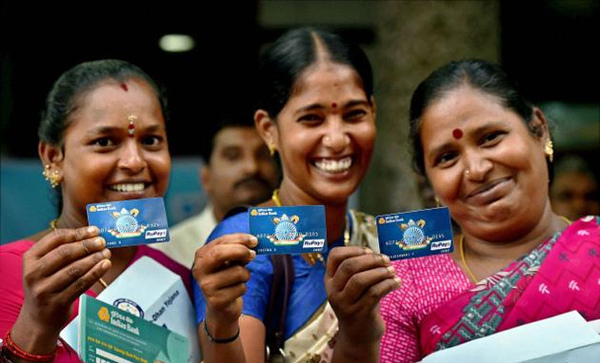
ndia has brought formal banking access within a 5-kilometre radius of 99.92 per cent of villages across the country, according to information shared in the Lok Sabha on March 30, 2026. The government said its continuing objective is to ensure that every inhabited village has access to a banking outlet, whether through a bank branch, Business Correspondent (BC), or India Post Payments Bank (IPPB).
The coverage is being tracked through the Jan Dhan Darshak (JDD) App, a Geographic Information System-based platform that allows authorities to monitor banking infrastructure across the country. Based on data uploaded by banks on the application, nearly all villages have now been brought within the targeted service radius. The government also said that 100 per cent of villages in the Union Territory of Dadra and Nagar Haveli are covered by banking outlets within 5 kilometres.
The update highlights the scale of India’s financial inclusion drive, which has increasingly relied not only on traditional bank branches but also on alternative delivery channels such as business correspondents and India Post Payments Bank outlets. These models have played a particularly important role in extending banking services to remote and underserved locations where setting up full-scale branches may not always be practical.
At the same time, the government acknowledged that some obstacles continue to affect the expansion of banking infrastructure in the remaining uncovered areas. Among the major challenges are poor connectivity, inadequate infrastructure, and the non-availability of suitable premises, all of which make it harder to establish or operate banking points in certain regions.
Under current Reserve Bank of India guidelines, the expansion of banking outlets in uncovered areas remains an ongoing process. This rollout is overseen by the State Level Bankers’ Committee (SLBC) and the Union Territory Level Bankers Committee (UTLBC), working in consultation with state governments, member banks and other stakeholders. Banks consider proposals for new outlets on the basis of RBI instructions, internal business plans and commercial viability, while also conducting surveys where necessary to assess the feasibility of opening new service points.
The information was shared by Minister of State for Finance Pankaj Chaudhary in a written reply in the Lok Sabha, underlining the government’s continued emphasis on deepening banking penetration and strengthening last-mile access to financial services across rural India.
Source: PIB
You may also like
-
Punjab’s Rail Coach Factory Advances Vande Bharat Manufacturing as 16-Coach Trainset Undergoes 180 kmph Trial
-
Himachal Startup Tecnod8.AI Develops Industrial AI Copilot for Advanced Manufacturing
-
Skyroot Aerospace Partners with Brazil’s Concert Technologies to Develop New Orbital Launch Vehicle
-
Subex Wins $700,000 African Telecom Contract for AI-Powered HyperSense Fraud Management Technology
-
BEML Secures ₹75.58 Crore Export Order for Heavy Mobility Military Vehicles in Southeast Asia
