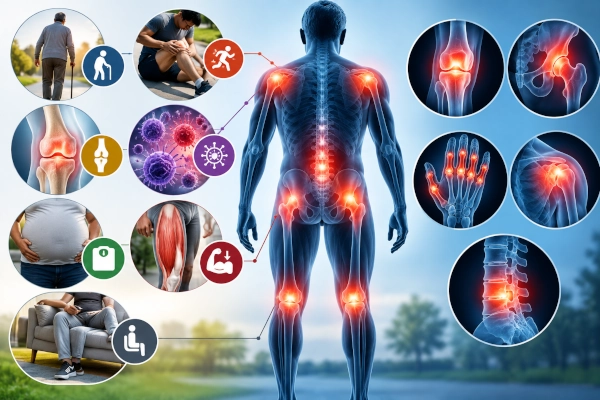
Joint stiffness can develop for many reasons. Ageing, previous injury, osteoarthritis, inflammatory conditions, excess body weight, weak supporting muscles and reduced physical activity can all affect the way joints move and feel. Knees, hips, hands, shoulders and the spine are particularly vulnerable because they carry weight or undergo repeated movement throughout the day.
Ayurveda has traditionally approached joint discomfort through a combination of diet, daily routine, movement, external therapies and medicines, rather than treating food as a stand-alone cure. Conditions resembling degenerative osteoarthritis are commonly discussed under Sandhigata Vata, in which aggravated Vata is considered to affect the joints and produce pain, stiffness and difficulty in movement.
The Central Council for Research in Ayurvedic Sciences specifically associates osteoarthritis with Sandhigata Vata and describes pain, swelling and restricted movement as common features. Modern medicine similarly defines osteoarthritis as a condition involving progressive changes in joint cartilage and surrounding tissues that can produce pain, stiffness and reduced mobility.
Diet can support joint health, but it cannot rebuild severely damaged cartilage or replace appropriate treatment for rheumatoid arthritis, advanced osteoarthritis, gout, fractures or other structural joint disease. The most useful dietary approach is therefore one that supports healthy body weight, adequate protein and micronutrient intake, and an overall eating pattern that does not worsen metabolic health.
Ayurveda Traditionally Links Joint Stiffness With Vata
Ayurvedic descriptions of joint disorders often place particular emphasis on Vata Dosha, especially when the symptoms involve dryness, cracking, stiffness, reduced movement and pain.
Traditional Ayurvedic reasoning generally favours foods and routines that are warm, adequately moist, nourishing and easy to digest when Vata predominates. Very dry, cold or irregular eating patterns may be considered less suitable in such situations.
This does not mean that every person with knee pain has the same Ayurvedic imbalance. Joint pain may occur in many different conditions, and redness, heat or pronounced swelling may suggest a very different process from gradual stiffness associated with ageing.
The important traditional idea is that diet should be adapted to the person’s digestion, age, activity level, constitution and symptoms rather than based on one universal “joint diet.”
Maintaining a Healthy Weight Is One of the Most Important Dietary Goals
From a modern medical perspective, one of the strongest connections between diet and joint health is body weight.
Excess weight increases mechanical load on the knees and hips and is a recognised risk factor for osteoarthritis. The World Health Organization notes that obesity contributes both through increased stress on weight-bearing joints and through metabolic and inflammatory mechanisms. Maintaining a healthy weight and staying physically active can help reduce osteoarthritis symptoms and slow functional decline.
This makes overall meal quality more important than adding one particular herb.
A diet based largely on vegetables, pulses, appropriate portions of whole grains or millets, fruit, nuts and minimally processed foods can support weight management better than one dominated by sweets, fried snacks, sugary drinks and highly refined foods.
Ayurvedic dietary principles similarly place importance on appropriate quantity, digestion and avoiding excessive heavy food.
For someone with knee or hip stiffness, even modest reductions in excess body weight can reduce the daily mechanical burden placed on the joints.
Moong Dal and Other Pulses Help Support Muscles Around the Joints
Healthy joints depend heavily on the muscles surrounding them.
When pain causes people to move less, muscle strength often declines. WHO specifically notes that reduced movement in osteoarthritis can lead to weakening of the muscles, making everyday activity even more difficult.
This makes adequate dietary protein important.
Moong dal, masoor dal, chickpeas, lentils and other pulses provide useful plant protein and can form the foundation of many Ayurvedic-inspired meals.
Moong dal is especially common in traditional Indian diets because it can be prepared in relatively light forms such as dal, soup or khichdi. Combining pulses with grains produces a broader amino-acid profile and creates a satisfying meal without relying heavily on processed foods.
Protein alone will not prevent joint stiffness, but adequate protein combined with regular strength-building activity helps maintain the muscles that stabilise knees, hips and other joints.
Sesame Has Long Been Valued in Ayurveda
Sesame, or Tila, has an important place in traditional Ayurvedic nutrition and external therapies.
Sesame seeds provide fat, protein, calcium, magnesium and several other nutrients. They can be added in modest quantities to chutneys, vegetables, laddus with limited added sugar, salads or grain dishes.
Sesame oil is also widely used in Ayurvedic external practices, particularly in preparations associated with Vata. That traditional use should be distinguished from dietary evidence. Applying oil externally is not the same as eating sesame, and neither should be presented as a method for regenerating cartilage.
From a nutritional perspective, sesame is most useful as a nutrient-dense seed that contributes minerals and healthy fats to the overall diet.
Milk, Curd and Other Calcium Sources Support Bone Health
People often use “joint health” and “bone health” interchangeably, but they are not the same.
Joints include cartilage, synovial tissue, ligaments, tendons and surrounding muscles, while bones provide the structural framework on either side of a joint.
Adequate calcium remains important because it helps maintain strong bones and supports normal muscle and nerve function. NIH guidance notes that almost all of the body’s calcium is stored in bones and teeth and that calcium is also required for normal muscle contraction.
For people who consume dairy, milk and curd can contribute calcium and protein. Other sources include certain leafy vegetables, sesame, fortified foods and some pulses.
However, increasing calcium intake will not directly treat osteoarthritis. Calcium becomes particularly important when bone health is also a concern, such as in older adults or people at risk of osteoporosis.
Vitamin D Matters for Both Bone and Muscle Function
Vitamin D is another nutrient frequently discussed in relation to joint and bone health.
It helps the body absorb calcium and is necessary for normal muscle function. Prolonged deficiency can contribute to weak bones and painful or weak muscles.
Vitamin D comes from limited food sources and can also be produced in the skin after appropriate sunlight exposure. Fortified foods and supplements may be needed in people with documented deficiency, but the correct dose depends on individual circumstances.
Persistent joint or muscle discomfort should not automatically be blamed on vitamin D deficiency. Testing and clinical assessment may be appropriate when deficiency is suspected.
Ayurveda traditionally places importance on daily routine and appropriate exposure to the natural environment, but modern vitamin D treatment should be based on medical assessment rather than high-dose self-supplementation.
Turmeric Can Be Used as a Food, but Claims Should Be Modest
Turmeric, or Haridra, is one of the most frequently recommended Ayurvedic ingredients for joint discomfort.
Its main studied compounds include curcuminoids, especially curcumin. Turmeric has a long history of use in Indian traditional medicine, including for conditions associated with inflammation and joint discomfort.
Modern studies of concentrated turmeric and curcumin products in osteoarthritis have produced some encouraging results, particularly for knee pain and function. However, the evidence is still inconsistent, and NCCIH states that higher-quality research is needed before firm conclusions can be drawn.
This distinction is important because most clinical research examines standardised supplements, not the small amount of turmeric used in ordinary cooking.
Using turmeric in dal, vegetables, soups and other foods is reasonable and consistent with Indian dietary traditions. It should not be presented as a replacement for arthritis treatment.
People should also be cautious about taking large amounts of highly concentrated curcumin products without medical guidance, particularly because some high-bioavailability formulations have been associated with liver injury.
Ginger Fits Well Into a Joint-Friendly Diet
Ginger, or Shunthi when dried, is another traditional ingredient often associated with Vata-related discomfort.
Fresh ginger can be used in dals, vegetable dishes, soups and warm beverages. Its strong flavour also allows food to be made satisfying without excessive salt or heavy sauces.
Research has investigated ginger supplements for knee osteoarthritis and other pain conditions, but the evidence remains uncertain. Some studies suggest possible improvement, while others have not produced strong enough results for confident recommendations.
Ginger is therefore best regarded as a useful culinary spice rather than a proven arthritis medicine.
People taking medication should also remember that concentrated herbal supplements can interact with medicines even when the same ingredient is commonly used as food.
Amla Can Support Overall Dietary Quality
Amla, or Amalaki, is traditionally regarded in Ayurveda as a Rasayana food and is widely incorporated into dietary preparations.
Fresh amla provides vitamin C and plant polyphenols. Vitamin C contributes to normal collagen formation, which is relevant to connective tissues throughout the body.
That does not mean eating amla can restore worn cartilage.
Its value lies in contributing to an overall diet rich in fruits, vegetables and antioxidant-containing plant foods.
Amla can be eaten fresh, added to chutneys or used in preparations with minimal added sugar. Sweetened amla products should be treated more like preserved foods than therapeutic foods, particularly for people managing body weight or blood glucose.
Cooked Vegetables Can Form the Centre of the Meal
Ayurvedic-inspired joint nutrition does not need to revolve around herbs.
Ordinary vegetables can make up a substantial part of the diet.
Carrots, pumpkin, gourds, beans, okra, leafy greens and other seasonal vegetables provide fibre, potassium, folate, carotenoids and numerous plant compounds.
For people who feel bloated after large amounts of raw food, lightly cooked vegetables may be better tolerated.
This also fits traditional Ayurvedic preferences for warm, properly cooked meals in people with Vata-type symptoms.
Vegetables can be combined with dal, rice, millets or whole-grain roti to create meals that are nourishing without being excessively calorie dense.
Leafy Greens Provide More Than Just Calcium
Spinach, amaranth, drumstick leaves and other green vegetables contribute magnesium, folate, carotenoids and vitamin K alongside varying amounts of calcium.
These nutrients support broader metabolic and skeletal health.
Leafy vegetables should not be promoted as direct treatments for painful joints, but regular consumption can improve overall diet quality and help replace more calorie-dense processed foods.
A practical meal might combine moong dal, a cooked green vegetable, a whole grain or millet and a small amount of suitable oil or ghee.
This resembles the balanced dietary pattern that Ayurveda generally favours: several complementary foods eaten in moderate quantities rather than excessive reliance on one ingredient.
Ghee Can Be Used in Moderation
Ghee is frequently associated with Vata-pacifying diets because it provides Snigdha, or unctuousness.
A small amount of ghee in khichdi, dal or vegetables can make food more palatable and may fit well within traditional Ayurvedic eating.
However, ghee is energy dense and rich in saturated fat.
There is no evidence that eating large quantities of ghee “lubricates” joints directly. Dietary fat does not travel into the knee and replace synovial fluid or cartilage.
The idea of Snigdha should therefore be interpreted as a traditional dietary quality rather than a literal mechanical lubrication of the joints.
Moderate amounts can fit into a balanced diet, while excessive consumption may make weight management more difficult.
Nuts and Seeds Can Add Healthy Fats and Protein
Almonds, walnuts, peanuts, flaxseed and sesame can be useful additions to a joint-supportive diet.
They contribute fats, protein, minerals and fibre and can help replace highly processed snacks.
Walnuts and flaxseed also provide plant-derived omega-3 fatty acids.
Omega-3 fats have been studied more extensively in inflammatory joint disease, particularly rheumatoid arthritis. NCCIH notes that omega-3 fatty acids may provide a modest benefit for some rheumatoid arthritis symptoms, although they are not a substitute for disease-modifying treatment.
People who eat fish can obtain long-chain omega-3 fatty acids from oily fish, while vegetarian diets can include walnuts, flaxseed and other plant sources.
Warm Meals May Be More Comfortable for Some People
Ayurvedic diets for Vata conditions commonly favour warm, freshly prepared food over meals that are very cold, dry or stale.
A warm breakfast of millet porridge or moong dal chilla, a lunch of dal with cooked vegetables and rice, and a lighter evening khichdi can fit comfortably within this pattern.
There is no modern evidence that cold food itself causes osteoarthritis.
However, warm meals may be easier to digest for some people and can encourage the consumption of nourishing foods such as soups, dals and cooked vegetables.
The most important issue remains the overall composition and quantity of the diet.
Foods Worth Limiting
There is no single universally accepted list of foods that causes arthritis.
Still, certain dietary patterns can indirectly worsen joint problems by promoting weight gain and poor metabolic health.
Regular consumption of sugary drinks, sweets, heavily fried foods, large portions of refined snacks and highly processed foods can contribute excess calories while offering relatively little nutritional value.
People with gout require additional dietary considerations because elevated uric acid is involved, while people with rheumatoid arthritis require medical management because the condition is autoimmune.
This is why the same “anti-inflammatory diet” should not be prescribed indiscriminately to every person with joint pain.
The diagnosis matters.
Movement Is as Important as Food
A joint-supportive diet works best when combined with appropriate movement.
WHO considers regular physical activity an important part of osteoarthritis management because staying active helps preserve mobility, muscle strength and function.
People with joint stiffness often reduce activity because movement initially feels uncomfortable. Over time, however, inactivity can weaken muscles and contribute to further loss of mobility.
Walking, supervised strengthening, physiotherapy, yoga or other low-impact exercise may be appropriate depending on the joint involved and the severity of symptoms.
Ayurveda similarly does not view diet in isolation. Daily routine, appropriate movement, sleep and external therapies traditionally form part of joint care.
Ayurvedic Medicines Require More Caution Than Culinary Foods
Several Ayurvedic formulations have been studied for knee osteoarthritis, and CCRAS has reported clinical work involving preparations used for Sandhigata Vata. Some studies have shown improvements in pain, stiffness and function, although many are relatively small and further research is needed.
This is different from simply adding turmeric or ginger to food.
Ayurvedic medicines may contain concentrated herbs or, in some formulations, minerals and metals. NCCIH warns that some Ayurvedic preparations have been found to contain potentially toxic levels of lead, mercury or arsenic.
Medicinal formulations should therefore be taken under the supervision of a qualified practitioner and should come from reliable, regulated sources.
Food-based approaches are generally much simpler and safer.
A Practical Ayurvedic-Inspired Joint Health Plate
A joint-friendly Ayurvedic-inspired meal does not require complicated recipes.
A practical plate could contain moong dal or another pulse, a cooked leafy or seasonal vegetable, a moderate portion of rice, millet or whole-grain roti, and a small amount of ghee or suitable oil.
Sesame or other seeds can be added in modest quantities, while fresh amla or another seasonal fruit can provide additional variety.
Turmeric and ginger can be used during cooking rather than taken automatically as high-dose supplements.
Across the week, pulses, vegetables and grains can be varied to keep the diet nutritionally broad.
The goal is not to discover one miraculous joint food. It is to create an eating pattern that supports healthy weight, adequate protein, strong bones and muscles and good metabolic health.
When Joint Stiffness Needs Medical Attention
Joint stiffness should not automatically be assumed to be a normal part of ageing.
Persistent swelling, redness, warmth, sudden severe pain or difficulty bearing weight requires medical assessment.
Morning stiffness lasting for prolonged periods, particularly when several joints are involved, may sometimes suggest inflammatory arthritis rather than ordinary osteoarthritis.
Pain following an injury, unexplained fever with joint symptoms or rapidly worsening mobility also deserves prompt evaluation.
Ayurvedic foods can complement appropriate care, but they should not delay diagnosis of rheumatoid arthritis, gout, infection, fractures or other serious conditions.
The most useful lesson from both Ayurveda and modern medicine is therefore broader than any individual ingredient.
Ayurveda emphasises appropriate nourishment, digestion, moderation, warmth and individual suitability, while modern evidence highlights healthy weight, muscle strength, physical activity and adequate intake of protein, calcium, vitamin D and nutrient-dense foods.
Foods such as moong dal, sesame, leafy vegetables, amla, turmeric, ginger, nuts, seeds and appropriately prepared grains can all fit into that pattern.
They cannot rebuild damaged cartilage by themselves, but combined with regular movement, healthy body weight and appropriate medical care, they can form a sensible nutritional foundation for maintaining stronger, more comfortable and more mobile joints over time.
You may also like
-
Bharat Biotech’s Nucelion and VeGen Bio Partner to Manufacture Advanced Dual-Target CAR-T Cancer Therapy in India
-
Ayurveda and Anger: How Emotional Excess Affects Physical and Mental Health
-
Ayurveda and Stress: Daily Practices for Mental Balance and Emotional Well-Being
-
Ayurveda and Bowel Routine: Why Regularity Matters for Digestive Health
-
Why Ayurveda Warns Against Suppressing Hunger, Thirst and Sleep
