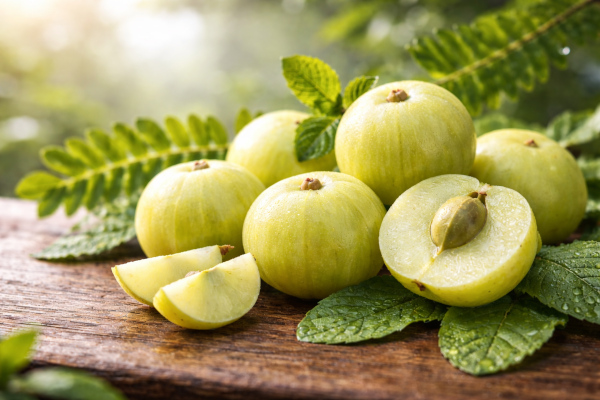
Amla, also called Indian gooseberry and known in Ayurveda as Amalaki, holds a special place as a rasayana—a rejuvenating fruit valued for supporting long-term vitality rather than offering only short, temporary relief. In modern botany it is generally identified as Phyllanthus emblica (also called Emblica officinalis in many Indian references), and ICAR describes aonla/amla as one of India’s oldest important indigenous fruit trees, prized for its nutritional, therapeutic and processing value. CCRAS also lists Amalaki among important rasayana herbs used to promote health and support healthy ageing.
What makes amla especially attractive is that its reputation is built on both Ayurvedic tradition and nutrition science. The National Institute of Nutrition’s Indian Food Composition Tables identify amla as a notably rich source of vitamin C, and NIN’s dietary guidance specifically mentions fresh amla among foods that help improve iron absorption from plant-based diets. That alone makes amla more interesting than its sour taste suggests: beyond being a fruit, it becomes a quiet helper for people whose meals are largely cereal- and pulse-based.
One of amla’s lesser-known benefits is exactly this support for better iron utilization. Many people think of amla only for immunity or hair care, but its vitamin C content gives it a practical place in daily food habits, especially alongside leafy greens, lentils and iron-rich vegetarian meals. Another underappreciated strength is that Ayurveda values amla as a gentle rejuvenator that nourishes without feeling heavy, which is why it appears in classic restorative preparations rather than only in short-term remedies.
Amla is also admired in Ayurveda for its balancing nature. Traditional use places it among fruits that support digestion, tissue nourishment, complexion, and healthy ageing, while modern reviews keep returning to its antioxidant-rich profile and broad food-processing value. In practical everyday terms, amla is often chosen by people who want to support digestion, appetite, bowel regularity, oral comfort, skin freshness and general resilience in a food-first way.
How to identify the amla plant
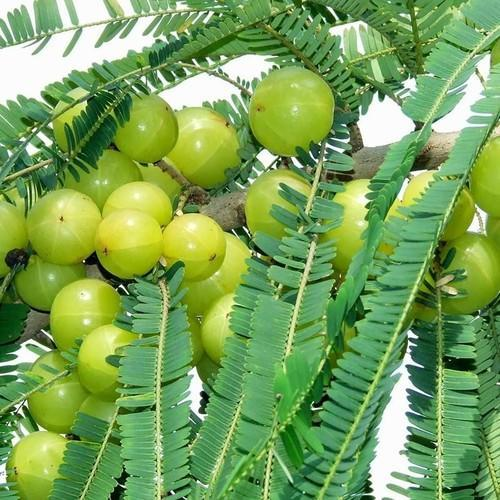
Amla is a deciduous tree that can grow up to around 15 metres, with grey-brown rough bark and many slender branchlets. Its leaves are small, simple, closely packed and arranged along thin branchlets, so at first glance they often look like the leaflets of a compound leaf. That is one of the easiest identification clues. The fruit is round, smooth, light green to yellow-green, typically marked by faint vertical lines or lobes, and tastes sharply sour with a characteristic astringent after-note. If you see a medium-sized tree with feathery-looking branchlets and marble-like green fruits, there is a good chance you are looking at amla.
Types of amla
In common Indian usage, people often speak of amla in two ways: wild/local amla and cultivated orchard amla. The cultivated side includes well-known horticultural varieties such as NA-7, NA-10, Chakaiya and Krishna, among others. ICAR studies show that these varieties can differ in yield and quality traits; for example, one IIHR study found NA-7 highly productive under the tested eastern tropical conditions, while NA-10 showed especially high vitamin C in that trial. For a home gardener or buyer, the simplest distinction is this: some types are chosen more for processing and yield, while others are appreciated more for fruit quality and specific growing conditions.
Positive health benefits of amla
From a positive Ayurveda-focused perspective, amla shines because it is seen as a fruit that supports ojas-like vitality, helps maintain healthy digestion without harshness, and fits well into routines meant for daily nourishment. People often know the obvious benefits—immunity support and hair care—but the quieter advantages are just as valuable: amla supports better nutrient utilization, works beautifully in summer cooling preparations, and can be used in a range of foods from chutneys to preserves to dried powders, making it easy to include consistently rather than occasionally. Its everyday usefulness is one reason it remained important across households, classical formulations and modern wellness products.
Another positive feature is that amla has a rare reputation for being both rejuvenating and practical. Some herbs are powerful but difficult to use daily; amla is much easier. It can be taken as fresh fruit, juice, powder, preserve, cooked chutney, candied murabba, or part of compound formulations. That flexibility matters because the real benefit of a wholesome food-herb usually comes from regular, moderate use rather than dramatic one-time intake.
Ayurvedic medicines and formulations with amla
Amla appears in several classic Ayurvedic formulations. The most widely recognized are Triphala and Chyawanprash, where amla is one of the core rejuvenating ingredients or the principal fruit base. CCRAS evidence summaries also mention Amalaki Rasayana and Dhatri Lauha in clinical and practice literature, showing that amla is used not only as a kitchen fruit but also in formal Ayurvedic formulations aimed at nourishment and specific health support. In simple terms, if you see names like Amalaki Rasayana, Triphala, Chyawanprash, or Dhatri Lauha, you are looking at some of the best-known amla-linked Ayurvedic preparations.
A simple summer health drink with amla
A very good summer drink is fresh amla cooler: take 2–3 deseeded fresh amlas, blend with water, add a few mint leaves, a little roasted cumin powder, and a small amount of rock sugar or honey if desired. Strain if you want a smoother drink, then chill lightly and serve. This makes sense in summer because amla brings sour freshness, mint adds lightness, and cumin supports digestibility. A second option is amla buttermilk—thin buttermilk with a spoon of fresh amla juice, roasted cumin and a pinch of black salt—which works especially well as a daytime refreshing drink. The aim is not excess sourness but a bright, clean, hydrating drink that feels restorative in hot weather. The use of amla in home remedies for general health and allied purposes is reflected in CCRAS public material as well.
Nutritional value of amla
Nutritionally, amla is best known for its very high vitamin C content, but that is only part of the story. It also contributes dietary fibre and small amounts of minerals and phytochemicals, while staying relatively low in calories compared with many processed foods people reach for in the name of health. NIN’s guidance highlights vitamin C-rich foods like amla for improving iron absorption, while ICAR studies on cultivated varieties show meaningful variation in vitamin C and soluble solids across genotypes. So nutritionally, amla is not merely “a sour fruit”; it is a compact, low-calorie, micronutrient-supportive fruit with a particularly valuable role in Indian diets.
Taken as a whole, amla deserves its reputation. It is easy to recognize, deeply rooted in Ayurveda, nutritionally useful, friendly to summer use, and versatile enough to fit into both food and medicine traditions. Its lesser-known strengths—support for iron absorption, easy daily usability, and its place in restorative formulations—make it even more impressive. For someone building a positive, food-based wellness routine, amla is one of the simplest and smartest fruits to include regularly. People on medicines for blood sugar, blood thinning, or significant stomach sensitivity should still use concentrated supplements or large medicinal doses with professional advice, but as a wholesome fruit and traditional household support, amla remains one of Ayurveda’s finest gifts.
You may also like
-
Ayurveda on Fresh Food Versus Reheated Food: Why Freshly Prepared Meals Are Preferred for Healthy Digestion
-
Ayurveda on Cold Foods and Iced Drinks: Why Food Temperature Matters for Digestion
-
Serum Institute of India-Manufactured Ebola Vaccine Enters Clinical Trial in Uganda
-
Ayurveda and Hydration: How Much Water Should We Really Drink?
-
Warm Water in Ayurveda: When and Why It Is Recommended
