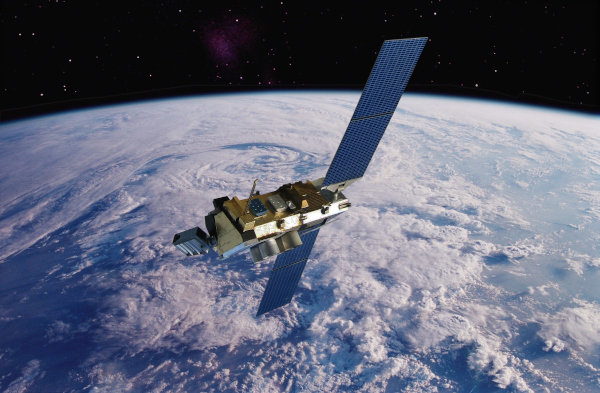
The French space agency (Centre National d’Etudes Spatiales, CNES) has signed a contract with Airbus Defence and Space for the development and manufacture of the thermal infrared instrument for the TRISHNA satellite.
TRISHNA (Thermal infraRed Imaging Satellite for High resolution Natural resource Assessment) is the latest satellite in the joint Franco-Indian satellite fleet dedicated to climate monitoring and operational applications. CNES and ISRO (Indian Space Research Organisation) are partnering on the development of an infrared observation system with high thermal resolution and high revisit capability including a satellite and associated ground segment.
TRISHNA observations will enhance understanding of the water cycle and improve management of the planet’s precious water resources, to better define the impacts of climate change, especially at local levels.
In the international partnership workshare, ISRO will provide the platform, the short-wave infrared instrument and will be the prime contractor for the satellite, while CNES is co-responsible for the mission and will provide the thermal infrared instrument, to be developed by Airbus. The ground segment is shared between both the countries.
For this mission, Airbus is leveraging the latest innovations and synergies from other programmes (IASI-NG, CO3D…) to offer an affordable high performance instrument, with the aim of encouraging development of a commercial market.
The mission will also serve numerous other applications: surveillance of continental and coastal waters, follow up of urban heat traps, risk monitoring (fire detection and volcanic activity), study of the cryosphere (glaciers, frozen lakes) and radiation budget assessment.
Jean-Marc Nasr, Head of Space Systems at Airbus, said: “Thanks to ambitious science missions like TRISHNA, our industry has reached a technological maturity that opens up a new era of commercial observation of the Earth and all related applications. France’s world-leading expertise in the Earth observation export market, combined with the unmatched efficiency and ambition of the Indian Space industry is going to bring thermal infrared imagery to a new level. This will enable breakthrough applications in agriculture, urban and coastal zone management, meteorology, climate science and many commercial applications.”
Source: THBL
Image Courtesy: ARS Technica
You may also like
-
Indian Researchers Combine AI and Infrared Spectroscopy to Detect Parkinson’s-Linked Biochemical Changes in Fruit Flies
-
IIT Hyderabad Develops Lung-Derived Bioink for 3D Bioprinting and Regenerative Medicine
-
Indian Scientists Discover Molecular Switch That Can Regulate Cellular Autophagy
-
Scientists Map Earliest Glow of Hydrogen, Opening A New Window to the Universe
-
Indian Researchers Study RAD51 DNA-Repair Gene Variant in Prostate Cancer
