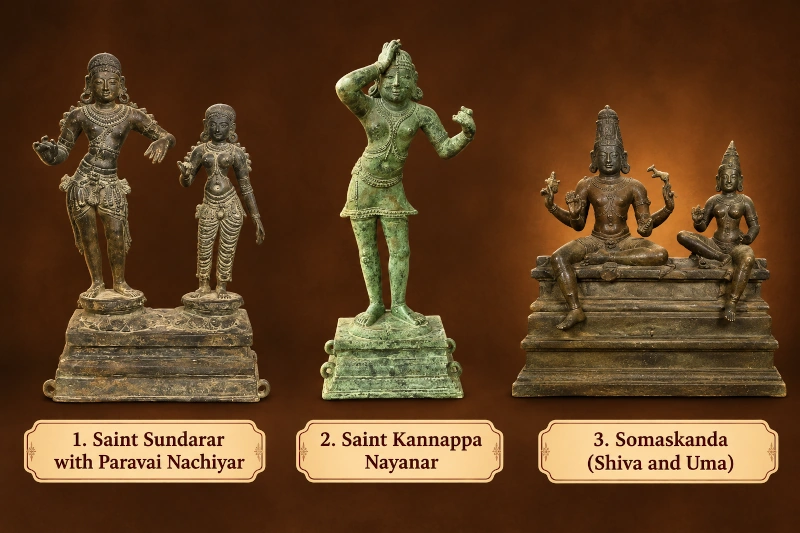
In a significant development in the restitution of India’s cultural heritage, the Archaeological Survey of India (ASI) handed over three repatriated bronze antiquities to the Idol Wing CID of the Tamil Nadu Police on 26 November 2026. The formal handover took place at Dharohar Bhawan in New Delhi, following the recovery of two antiquities from the Smithsonian Museum in the United States and one from The Hague in the Netherlands. Dating to the Chola and Vijayanagara periods, the sculptures represent the rich artistic, spiritual and metallurgical traditions of southern India.
Saint Sundarar with Paravai Nachiyar: A Vijayanagara-Era Bronze
Among the recovered antiquities is a 16th-century bronze sculpture depicting Saint Sundarar with Paravai Nachiyar, belonging to the Vijayanagara period. The sculpture was historically documented through a photograph taken in 1956 at the Sri Narisvara Shiva Temple in Viracholapuram, Kallakurichi Taluk, Tamil Nadu. The antiquity was repatriated from the Smithsonian Museum in the United States.
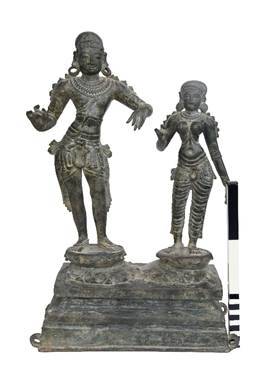
Saint Sundarar occupies a prominent position among the 63 Nayanars of the Tamil Shaivite devotional tradition, and his compositions form part of the sacred Tevaram hymns. The depiction of Sundarar alongside Paravai Nachiyar reflects the enduring relationship between devotional literature, religious traditions and temple iconography in Tamil Nadu. The recovery of this sculpture restores an important material connection to the region’s Vijayanagara-era religious and artistic heritage.
Saint Kannappa Nayanar: A Remarkable Chola Bronze
The second antiquity is a Chola-period bronze sculpture of Saint Kannappa Nayanar originating from the Arulmigu Agneeswarasamy Temple at Thirupugalur in Nagapattinam district, Tamil Nadu. Repatriated from The Hague in the Netherlands, the sculpture depicts the Shaivite saint in the classical tribhanga standing posture, with his right hand raised towards his eye. This distinctive iconography represents an episode from the saint’s devotional tradition.
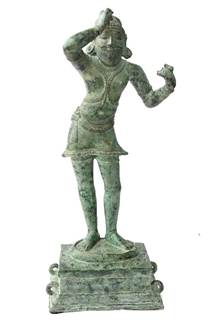
Kannappa Nayanar is revered in Shaivite literature for his unwavering devotion to Lord Shiva and his willingness to sacrifice his own eyes as an expression of that devotion. The sculpture demonstrates how Chola artists translated religious narratives into expressive bronze representations through carefully developed gestures, posture and craftsmanship. Its recovery represents the restitution of both a historic religious object and an important example of medieval Tamil artistic excellence.
Somaskanda: A 12th-Century Chola Masterpiece
The third repatriated antiquity is a 12th-century Chola-period bronze sculpture identified as Somaskanda, depicting Shiva and Uma. Historical photographic records from 1959 document the sculpture at the Sri Visvanatha Shiva Temple in Alattur, Mannargudi Taluk, in the erstwhile Thanjavur district of Tamil Nadu. The antiquity was recovered from the Smithsonian Museum in the United States.
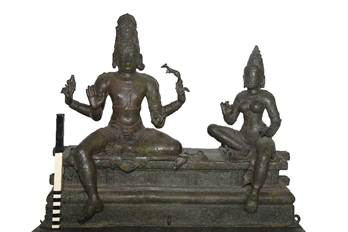
The Somaskanda tradition, which classically represents Shiva and Uma together with their son Skanda, occupies an important place in southern Indian temple worship and religious iconography. The tradition received considerable patronage during the Pallava and Chola periods, becoming an enduring feature of Tamil Shaivite religious art. The repatriated sculpture reflects the sophisticated bronze-casting techniques and aesthetic traditions that established Chola metal sculpture as a distinguished contribution to world artistic heritage.
Historical Documentation and International Cooperation
The recovery of these antiquities highlights the importance of historical photographic archives, temple records and institutional documentation in establishing the provenance of cultural objects. Photographs dating to 1956 and 1959 provide valuable evidence of the historical association of two of the recovered sculptures with their respective temples. Such documentation supports efforts to establish the origins of displaced antiquities and pursue their restitution through appropriate institutional and legal mechanisms.
The repatriation also demonstrates the significance of cooperation between Indian authorities and international institutions in addressing the displacement of cultural property. The Archaeological Survey of India continues to coordinate with national and international agencies to identify, recover and repatriate antiquities associated with India’s cultural heritage. These efforts contribute to strengthening heritage protection while encouraging greater international attention to the provenance of cultural objects.
Strengthening India’s Cultural Heritage Protection
The formal handover was undertaken by ASI Director-General Yadubir Singh Rawat, accompanied by other representatives of the organisation. The antiquities were transferred to officials of the Idol Wing CID of the Tamil Nadu Police, the specialised law enforcement unit responsible for investigating cases involving stolen and illegally trafficked religious sculptures and antiquities. The transfer marks an important administrative milestone following their international repatriation, although the official announcement did not specify a schedule for their reinstatement at their respective temples.
India’s efforts to recover displaced antiquities extend beyond the preservation of archaeological and artistic objects. Many such sculptures are inseparably connected with living religious traditions, regional histories and the cultural identities of communities that have preserved these traditions across generations. The recovery of these three bronzes strengthens the broader national effort to safeguard India’s civilisational inheritance and restore historic cultural treasures to their rightful homeland.
Source: Press Information Bureau, Government of India — Three Antiquities Repatriated from USA and Netherlands Handed Over to Tamil Nadu Police by ASI, 26 November 2026, 7:14 PM.
You may also like
-
Warcraft of the Purāṇas: Krishna versus Bāṇāsura — Divine Alliances, Numerical Superiority and Strategic Restraint
-
Satyabhāmā in the Narakāsura Campaign: Warrior Queens, Combat Readiness and Battlefield Resilience
-
Rāma and the Ocean: Persuasion, Patience and Coercive Diplomacy Before the Lanka Campaign
-
Warcraft in the Purāṇas: Krishna’s Destruction of Mura and the Defences of Pragjyotiṣa
-
Ramayana Diplomacy: Bharata’s Pādukā Diplomacy — Preserving Political Legitimacy Without Claiming the Throne
