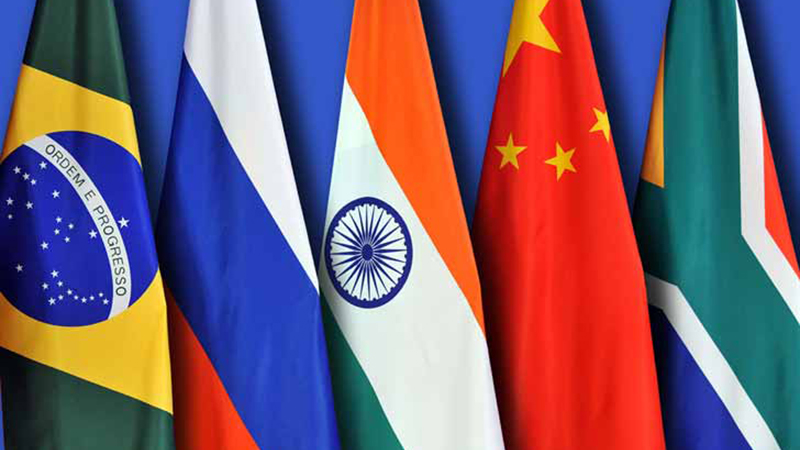
Russia has praised India’s leadership of BRICS during 2026, highlighting the organisation of approximately 400 events under New Delhi’s presidency and the progress achieved across political, security, economic, financial and humanitarian cooperation.
Russian Deputy Foreign Minister Sergei Ryabkov expressed Moscow’s appreciation for India’s extensive programme of engagements while addressing the international BRICS youth forum, Dialogue of Generations for the Future, in St Petersburg on 20 November 2026.
According to Russian news agency TASS, Ryabkov described India’s programme as an extensive undertaking that enabled BRICS members to advance cooperation across several important areas.
The Russian diplomat, who also serves as Russia’s BRICS Sherpa, acknowledged New Delhi’s efforts in coordinating discussions among member countries and maintaining engagement across the grouping’s expanding institutional framework.
India Organises Approximately 400 BRICS Events
India assumed the BRICS presidency on 1 January 2026, taking responsibility for coordinating the grouping’s meetings, ministerial engagements, working groups and other institutional activities during the year.
The programme covered a broad range of subjects, including international security, economic cooperation, financial coordination, technological development and humanitarian exchanges.
Speaking at the St Petersburg forum, Ryabkov highlighted the scale of India’s organisational efforts and expressed gratitude for the work undertaken by New Delhi.
He stated that the extensive programme had helped BRICS members achieve substantial progress on important issues across the grouping’s principal areas of cooperation.
The Russian assessment reflects the importance of sustained diplomatic engagement in a multilateral organisation whose activities now extend considerably beyond its original focus on economic cooperation among emerging markets.
India’s presidency has provided opportunities for member countries to engage through meetings involving government representatives, specialists, businesses, researchers and other stakeholders.
New Delhi Hosts the 18th BRICS Summit
A major event of India’s 2026 presidency was the 18th BRICS Summit, held in New Delhi on 12–13 September.
The summit took place under the theme Building for Resilience, Innovation, Cooperation and Sustainability, reflecting India’s emphasis on strengthening cooperation among emerging economies and developing countries.
Leaders discussed international governance, economic development, financial cooperation, technology, sustainable growth and contemporary global challenges.
The summit concluded with the adoption of the New Delhi Declaration, which outlined the participating countries’ shared positions and areas for continued cooperation.
The declaration addressed international peace and security, global economic governance, sustainable development and the need to strengthen the representation of developing countries in international institutions.
The summit also provided an opportunity for leaders to conduct bilateral discussions alongside the wider BRICS programme.
India’s Presidency Emphasises Resilience and Innovation
India’s BRICS presidency was organised around four principal priorities: resilience, innovation, cooperation and sustainability.
Resilience focused on strengthening the ability of member countries to address economic disruptions, international uncertainties and challenges affecting essential systems.
Innovation covered cooperation in emerging technologies, scientific research and the application of technological capabilities to economic and social development.
Cooperation emphasised deeper engagement among BRICS members through established institutions, working groups and practical partnerships.
Sustainability addressed development challenges, including environmental protection, energy transitions and long-term economic growth.
These priorities provided a framework for India’s engagement with BRICS members throughout 2026 and shaped the discussions conducted during the New Delhi Summit.
Economic and Financial Cooperation Remains Important
Economic and financial cooperation continued to occupy an important place in the BRICS agenda under India’s presidency.
The grouping provides a platform for discussing international financial institutions, investment, trade, development financing and the economic priorities of emerging markets.
BRICS members have also sought greater participation by developing countries in discussions concerning global economic governance.
The New Development Bank, established by BRICS countries, remains an important institutional component of the grouping’s development cooperation framework.
Discussions concerning financial cooperation are particularly relevant to countries seeking to improve access to development financing, strengthen economic resilience and support infrastructure investment.
Ryabkov’s remarks indicate that Russia views India’s programme of engagements as having contributed to the continuation of these discussions.
Security and Political Dialogue Across BRICS
Political and security cooperation represented another important dimension of India’s presidency.
BRICS provides a forum through which member countries can exchange views on international developments, regional security concerns and the functioning of multilateral institutions.
The grouping includes countries with different regional interests and diplomatic priorities, making continued dialogue an important part of its institutional activities.
During the 2026 summit, leaders discussed international peace and security alongside the need for reform of global governance institutions.
The New Delhi Declaration reaffirmed the importance of multilateral cooperation and the role of international law in addressing global challenges.
Ryabkov identified politics and security among the principal areas in which India’s programme had facilitated progress.
Humanitarian and Youth Cooperation Receives Attention
Beyond political and economic issues, India’s presidency included activities involving education, research, culture, youth engagement and humanitarian exchanges.
Such programmes provide opportunities for interaction among institutions and individuals from BRICS member countries, complementing formal diplomatic discussions.
The international youth forum in St Petersburg, where Ryabkov delivered his remarks, reflects this dimension of BRICS cooperation.
Youth engagement creates opportunities for dialogue on emerging international challenges, educational cooperation and the role of younger generations in shaping future economic and diplomatic relationships.
The forum also illustrates how BRICS activities extend beyond summits involving heads of state and government to include broader participation by civil society, academic institutions and other organisations.
Russia Recognises India’s Contribution to BRICS Cooperation
Russia’s appreciation of India’s presidency is significant within the context of the longstanding strategic partnership between the two countries.
India and Russia are founding members of BRICS and have participated in the development of the grouping since its early stages.
Their cooperation within BRICS forms part of a wider relationship encompassing diplomacy, trade, energy, technology and international institutional engagement.
The grouping has also evolved considerably since its establishment, expanding its membership and developing a broader agenda covering political, economic and developmental issues.
Russia’s assessment of India’s organisational efforts reflects the importance Moscow attaches to continuity in BRICS activities and engagement among its members.
Ryabkov’s remarks also highlight the diplomatic work associated with coordinating a large multilateral programme involving countries with diverse economic structures and international priorities.
India’s Growing Role in Multilateral Diplomacy
India’s organisation of approximately 400 BRICS events during 2026 demonstrates the scale of diplomatic coordination associated with chairing an expanding international grouping.
The programme brought together political dialogue, economic discussions, institutional cooperation and exchanges involving different sections of society.
The successful conduct of the September summit and the continuation of engagements throughout the year provided opportunities to advance the grouping’s established agenda.
For India, the presidency also offered a platform to articulate its priorities concerning development, innovation, economic resilience and greater participation by emerging economies in international decision-making.
Russia’s public appreciation of these efforts provides an additional indication of the value that BRICS members attach to India’s role in coordinating multilateral cooperation.
As India’s 2026 presidency approaches its conclusion, the programme of engagements and the outcomes of the New Delhi Summit provide a foundation for continued discussions among BRICS countries.
The recognition expressed by Russia underscores India’s contribution to strengthening institutional dialogue and supporting cooperation across an increasingly diverse international grouping.
You may also like
-
India and Portugal Review Bilateral Cooperation at Sixth Foreign Office Consultations in New Delhi
-
India and Japan Sign Letter of Intent to Enable Japanese Military Live-Fire Training in India
-
India and Japan Expand Defence Manufacturing Partnership, Accelerate UNICORN Naval Stealth Technology Cooperation
-
India and Indonesia Review Trade Cooperation, Market Access and Investment Opportunities at New Delhi Meeting
-
Ṣāḍguṇya: The Six Measures of Foreign Policy in Kauṭilya’s Arthaśāstra
