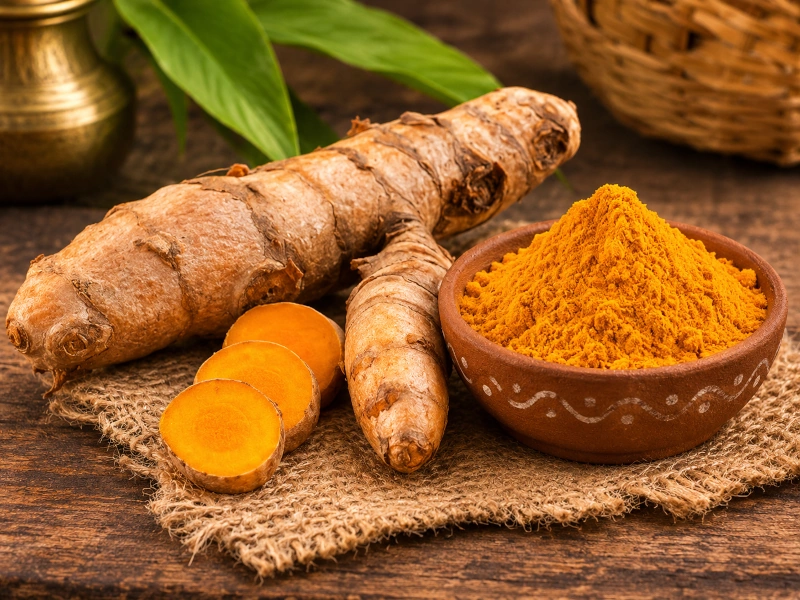
In the forested highlands of southern Odisha, where rolling hills, fertile valleys and monsoon-fed agricultural landscapes support generations of traditional farming communities, grows one of the state’s most distinctive spices. Kandhamal Haladi, renowned for its golden-yellow colour, pronounced aroma and traditional cultivation practices, represents an agricultural heritage closely associated with the indigenous communities of Kandhamal district. Cultivated through farming methods that rely extensively on locally available organic resources, this turmeric has become an important symbol of Odisha’s agricultural diversity and the economic contribution of its tribal farming communities.
Derived from the underground rhizomes of Curcuma longa L., Kandhamal Haladi is distinguished by its rich pigmentation, characteristic fragrance and comparatively high oleoresin and volatile-oil content reported for the traditional local variety. The crop has long been cultivated in the hills and valleys of Kandhamal, where farmers have developed specialised knowledge of planting material, soil preparation, harvesting and processing. Its reputation extends beyond ordinary culinary use, encompassing traditional household practices, regional food preparations and commercial applications involving natural colourants and aromatic spice products.
Kandhamal Haladi received Geographical Indication (GI) registration on 1 April 2019, under India’s Geographical Indications of Goods (Registration and Protection) Act, 1999. The registration was obtained by the Kandhamal Apex Spices Association for Marketing (KASAM), an organisation established to strengthen the livelihoods of spice-growing farmers and promote their agricultural produce. The recognition formally protected the geographical identity of a product whose reputation reflects the relationship between Odisha’s hill environment, traditional agricultural practices and generations of farming experience.
Historical Origins and Agricultural Heritage of Kandhamal Haladi
Turmeric has been cultivated in India for centuries and occupies an important place in the country’s culinary, agricultural and cultural traditions. Known as Haridra in Sanskrit and Haladi in Odia, the spice has historically been used in food preparation, traditional medicinal formulations, religious ceremonies and household practices. Its golden-yellow colour and characteristic aroma have contributed to its enduring importance across different regions of India.
The agricultural history of Kandhamal Haladi is closely associated with the indigenous farming communities of southern Odisha. Kandhamal district, historically connected with the wider Phulbani region, possesses extensive forested uplands and valleys where traditional agricultural systems developed in response to local soil, rainfall and terrain.
The Kandha, or Kondh, communities have played an important role in preserving turmeric cultivation in the region. Their agricultural knowledge includes the selection of suitable rhizomes, preparation of fields, management of organic matter and identification of appropriate harvesting periods. These practices have been maintained through generations, allowing turmeric cultivation to become an established component of local agriculture.
Traditional farming systems in Kandhamal frequently combine turmeric with other crops, including ginger, pulses, maize and oilseeds. The cultivation of several crops helps households diversify agricultural production while making use of the different growing conditions found across the district’s hills and valleys.
Turmeric gradually became an important commercial crop because of its value as a spice and its suitability for processing into dried rhizomes and powder. However, farmers historically faced difficulties obtaining remunerative prices, particularly when they depended on intermediaries to purchase and transport their produce.
The establishment of KASAM in 1998 represented an important development in the organisation of the district’s spice economy. By connecting local producers through a cooperative marketing structure, the association helped create opportunities for collective procurement, processing and commercial sales.
The subsequent recognition of Kandhamal Haladi as a Geographical Indication acknowledged this agricultural heritage while providing a framework for protecting the identity of a spice that had long been associated with the farming communities of the region.
Geographical Origin and Cultivation Areas
Kandhamal Haladi is traditionally cultivated in Kandhamal district, located in the southern-central hill region of Odisha. The district’s varied terrain includes forested uplands, agricultural valleys and settlements where farming communities maintain traditional cultivation practices.
The geographical association of the product is particularly strong in areas surrounding Phulbani, Daringbadi, Raikia, Phiringia, G. Udayagiri and other turmeric-growing parts of the district. These locations possess agricultural environments where seasonal rainfall, suitable temperatures and locally adapted farming practices support rhizome development.
Daringbadi is among the better-known highland areas of Kandhamal, recognised for its relatively cool climate and surrounding agricultural landscapes. The region forms part of a wider network of villages where turmeric and other spice crops contribute to local livelihoods.
Phulbani, the district headquarters, has an important role in the organisation and marketing of turmeric through KASAM. The association’s headquarters and commercial activities provide a connection between rural producers and wider markets.
The district’s hill soils and monsoon-influenced climate support turmeric cultivation where adequate drainage and soil fertility are maintained. Farmers traditionally select fields according to their suitability for rhizome crops, taking into account seasonal moisture, soil conditions and accessibility.
Although the official Geographical Indications Registry records Odisha as the geographical area, the product’s historical identity, registered name and principal cultivation tradition are specifically associated with Kandhamal district. The distinction is important because the commercial reputation of Kandhamal Haladi is rooted in the traditional production system of this particular region.
Its geographical identity therefore encompasses the natural environment of the Kandhamal hills and the agricultural knowledge developed by local communities. Together, these characteristics distinguish the crop from turmeric produced in other parts of India.
Unique Characteristics of Kandhamal Haladi
Kandhamal Haladi belongs to the botanical species Curcuma longa L., a perennial herbaceous plant of the Zingiberaceae family. The plant develops underground rhizomes that contain natural pigments, aromatic compounds and other constituents responsible for turmeric’s colour, flavour and commercial value.
One of the distinctive features of Kandhamal Haladi is its golden-yellow internal colour, which contributes to the appearance of both fresh rhizomes and processed turmeric powder. The traditional local variety is also recognised for its pronounced aroma and suitability for spice-processing applications.
The original GI specification describes plants with pseudostems approximately 85–100 centimetres tall, yellowish-green stems and relatively narrow leaves. The plants generally produce a limited number of shoots, while the rhizomes possess light reddish outer scales and a golden-yellow inner core.
Scientific studies of Kandhamal’s traditional turmeric have reported approximately 2–3% curcumin, 12–15% oleoresin and 5.3% volatile oil. These measurements are representative findings associated with the local variety rather than fixed concentrations guaranteed in every harvested batch.
Curcumin is a naturally occurring pigment responsible for much of turmeric’s characteristic yellow-orange colour. Oleoresin contains concentrated flavour and colouring constituents, while volatile oils contribute to the spice’s distinctive fragrance.
Kandhamal Haladi’s aromatic qualities are particularly significant because the product has developed a reputation for use in culinary preparations and spice-processing applications. Government promotional material highlights its comparatively rich oleoresin and volatile-oil content as important characteristics of the regional product.
The quality of the finished spice also depends on agricultural and processing conditions. Rhizome maturity, soil fertility, harvesting methods, curing, drying and storage can influence the colour, aroma and chemical composition of turmeric.
These characteristics provide the basis for Kandhamal Haladi’s commercial identity, complementing its established geographical association and traditional agricultural heritage.
Traditional Varieties and Local Planting Material
The cultivation of Kandhamal Haladi is closely connected with the preservation of locally adapted turmeric planting material. Farmers traditionally retain healthy rhizomes from previous harvests, selecting suitable portions for planting during the following agricultural season.
The use of locally maintained planting material has contributed to the continuity of turmeric cultivation in Kandhamal. Farmers select rhizomes according to plant health, size, maturity and their experience of performance under the region’s growing conditions.
The traditional local material is sometimes referred to in agricultural research as Phulbani Local or Kandhamal turmeric. Such descriptions reflect its association with the district’s farming systems, although they should not automatically be treated as separate registered geographical indications.
Scientific investigations have compared local turmeric material with improved varieties cultivated elsewhere in Odisha. These studies examine characteristics such as rhizome yield, curcumin concentration and responses to different nutrient-management practices.
The results demonstrate that turmeric productivity and chemical composition depend on the interaction between planting material and agricultural conditions. A variety that produces a high yield under one set of circumstances may not necessarily possess the same chemical characteristics or performance in another environment.
The conservation of traditional rhizomes remains important because locally adapted material represents an agricultural resource developed through repeated cultivation and farmer selection. Its preservation also allows researchers to investigate characteristics that may be useful in future crop-improvement programmes.
Combining traditional planting material with scientific crop management provides opportunities to strengthen turmeric cultivation while maintaining the identity associated with Kandhamal’s agricultural heritage.
Traditional Cultivation and Organic Farming Practices
One of the most important features of Kandhamal Haladi is its association with farming practices that traditionally rely on natural inputs and locally available agricultural resources. Farmers in the district have long cultivated turmeric without depending extensively on synthetic fertilisers and pesticides, contributing to the crop’s reputation in markets for naturally produced spices.
Turmeric is propagated through rhizomes containing viable buds. Farmers select suitable planting material and place it in prepared fields at the beginning of the growing season, generally before or during the arrival of monsoon rainfall.
Field preparation involves loosening the soil and providing conditions that support underground rhizome development. Appropriate drainage is particularly important because prolonged waterlogging can damage turmeric plants and increase the risk of disease.
Organic matter is an important component of traditional soil management. Farmyard manure, compost and agricultural residues may be used to improve soil structure and supply nutrients, while locally adapted cultivation practices help farmers maintain productive fields.
After planting, the emerging shoots develop broad green leaves and establish an underground network of rhizomes. Adequate moisture during the growing season supports vegetative growth, while soil conditions influence the development and eventual yield of the crop.
Farmers undertake weeding and field maintenance as necessary, removing competing vegetation and monitoring plant health. Traditional practices are adapted to the terrain and availability of household labour, reflecting the characteristics of smallholder agriculture in the district.
The original GI specification describes a crop duration of approximately eight months, although the precise period can vary according to planting date, environmental conditions and maturity.
The crop is generally harvested after the foliage begins to yellow and dry, indicating that the underground rhizomes have reached a suitable stage of development. Farmers carefully remove the rhizomes from the soil and separate planting material from the produce intended for processing and sale.
Kandhamal’s reputation for organic cultivation is important, but traditional cultivation without synthetic inputs should be distinguished from formal organic certification. KASAM has supported organised certification arrangements for participating producers, allowing eligible products to be marketed according to the requirements of recognised organic standards.
The combination of traditional cultivation, organised certification and scientific improvements provides a foundation for maintaining the identity of Kandhamal Haladi while strengthening its commercial opportunities.
The Role of Kandhamal’s Climate and Hill Agriculture
The geography of Kandhamal contributes substantially to its agricultural character. The district possesses extensive hills, forested landscapes and valleys that create varied growing environments for turmeric and other crops.
Monsoon rainfall provides much of the moisture required for turmeric cultivation. The crop benefits from adequate soil moisture during vegetative growth, making the distribution of seasonal rainfall an important influence on productivity.
The region’s hill soils require appropriate management to maintain fertility and prevent erosion. Farmers traditionally adapt field preparation and cropping practices to local terrain, while the incorporation of organic matter can help improve soil structure and moisture retention.
Turmeric requires a growing environment that supports underground rhizome development without prolonged saturation. Drainage is therefore particularly important during periods of heavy rainfall.
The agricultural environment of Kandhamal also supports the cultivation of ginger, another important rhizome crop. The coexistence of turmeric and ginger within traditional farming systems reflects the suitability of selected hill landscapes for aromatic and commercial spice production.
KASAM’s description of the district’s agricultural economy identifies turmeric, ginger, mustard, maize, rice, black gram, sesame and niger among the crops traditionally cultivated by participating farmers.
These diverse cropping systems demonstrate how local communities have adapted agriculture to the environmental characteristics of the region. Turmeric cultivation forms part of a wider agricultural landscape rather than an isolated commercial activity.
The geographical identity of Kandhamal Haladi is therefore closely connected with the interaction between monsoon climate, hill agriculture and the farming practices developed by local communities.
Harvesting, Curing and Traditional Processing
The harvesting and processing of Kandhamal Haladi are important stages in preserving the colour, aroma and commercial characteristics of the crop. Turmeric rhizomes develop underground over several months and are generally harvested when the plants begin showing signs of maturity, including the yellowing and drying of their leaves.
Farmers carefully dig the mature rhizomes from the soil, separating them from roots and remaining plant material. Healthy portions may be retained for planting during the following agricultural season, while the harvested produce intended for sale undergoes cleaning and further processing.
Fresh turmeric contains considerable moisture and cannot be stored for extended periods without appropriate treatment. Traditional processing therefore involves washing, curing and drying the harvested rhizomes to prepare them for commercial use.
Curing commonly involves boiling or steaming cleaned rhizomes before drying. This treatment helps produce the characteristic colour and texture of processed turmeric, while suitable drying reduces moisture to levels appropriate for storage.
Sun-drying has traditionally formed part of turmeric processing in rural agricultural communities. The rhizomes are spread on clean surfaces and exposed to sunlight until sufficiently dried, with the duration depending on weather conditions, rhizome size and the method of curing.
Mechanical drying provides an alternative when controlled processing is required or weather conditions are unsuitable. Such systems can improve consistency and reduce problems associated with prolonged exposure to moisture.
After drying, turmeric may be polished to remove surface irregularities and improve its appearance. The dried rhizomes are then graded, packed or ground into powder according to commercial requirements.
KASAM has played an important role in modernising these operations. Its processing infrastructure includes equipment for polishing, grinding, sieving and packaging turmeric, allowing greater value addition within the district.
Improved processing helps maintain the distinctive characteristics of Kandhamal Haladi while creating opportunities for farmers to participate in markets for finished spice products rather than depending exclusively on the sale of raw agricultural produce.
Scientific Characteristics and Chemical Composition
Kandhamal Haladi has attracted scientific and commercial attention because of its characteristic colour, aroma and reported concentrations of curcumin, oleoresin and volatile oils.
Curcumin belongs to a group of naturally occurring compounds known as curcuminoids, which contribute to turmeric’s yellow-orange pigmentation. These compounds have been extensively investigated in scientific research, particularly for their chemical and biological properties.
Research concerning the traditional turmeric cultivated in Kandhamal has reported curcumin concentrations of approximately 2–3%, while oleoresin content has been recorded at approximately 12–15% and volatile oil at around 5.3%. These values represent reported characteristics of local turmeric material and can vary according to cultivation conditions, maturity and processing.
Oleoresin is particularly important in commercial spice processing because it contains concentrated colouring and flavouring constituents. It can be extracted from turmeric and used in suitable food, flavouring and other industrial applications.
Volatile oils contribute to turmeric’s characteristic aroma. Their composition includes naturally occurring aromatic substances that influence the fragrance and flavour of the spice.
The relatively rich aromatic composition reported for Kandhamal Haladi contributes to its commercial reputation. This distinction is important when comparing the product with other GI-recognised turmeric varieties, including Lakadong Turmeric of Meghalaya, which is particularly noted for its high curcumin concentration.
The quality of turmeric cannot be evaluated through a single chemical measurement. Moisture, cleanliness, pigment concentration, essential-oil composition and the absence of undesirable contaminants are all relevant to commercial assessment.
Scientific testing provides a means of evaluating these characteristics and supporting reliable product differentiation. It also creates opportunities for processors to develop consistent turmeric powder and other value-added products.
Culinary Importance and Traditional Uses
Kandhamal Haladi forms part of Odisha’s wider culinary tradition, where turmeric contributes colour, flavour and aroma to everyday food preparations. Its golden-yellow pigmentation makes it an important ingredient in vegetable curries, lentil preparations, rice dishes and regional spice mixtures.
Turmeric is widely used in Odia cooking, particularly in preparations involving vegetables, pulses, fish and other traditional ingredients. Small quantities are generally sufficient to contribute colour and the characteristic earthy flavour associated with the spice.
An interesting traditional use documented in the original GI specification concerns Enduri Pitha, a well-known Odia preparation made using rice and black gram batter, often with a sweet filling. The preparation is traditionally wrapped in turmeric leaves before steaming, allowing the leaves to impart their characteristic fragrance to the food.
This culinary practice demonstrates that turmeric’s importance extends beyond the harvested rhizome. The leaves themselves possess aromatic qualities and have been incorporated into regional cooking traditions.
Turmeric also holds an important place in the cultural and religious practices of Odisha. Its golden colour is associated with auspicious occasions, while turmeric preparations are used in selected household ceremonies and traditional rituals.
In Ayurveda, turmeric is known as Haridra and appears in classical formulations associated with several traditional applications. The spice has also been used in household preparations for skin care and other purposes.
Scientific investigations have examined curcumin and other turmeric constituents for their biological properties. However, traditional medicinal use and laboratory findings should not be interpreted as evidence that ordinary culinary consumption can treat specific diseases.
The continuing importance of Kandhamal Haladi in food, household practices and traditional knowledge contributes to its cultural identity and reinforces its significance as an agricultural product of Odisha.
The Establishment of KASAM and Farmer Empowerment
One of the most significant developments in the modern history of Kandhamal Haladi was the establishment of the Kandhamal Apex Spices Association for Marketing (KASAM) on 1 September 1998.
The organisation emerged from efforts to improve agricultural production and marketing opportunities for farmers cultivating turmeric and other spices in Kandhamal district.
Before the formation of an organised marketing structure, many farmers faced difficulties obtaining suitable prices for their produce. Limited access to processing infrastructure, commercial information and organised buyers increased their dependence on intermediaries.
Government-supported development activities helped establish 61 Spices Development Societies, bringing together farmers involved in turmeric and other agricultural commodities. These societies subsequently formed KASAM as an apex organisation intended to strengthen collective marketing.
KASAM operates as a registered society, with the District Collector serving as its president under the organisation’s governing structure. Its activities include procurement, processing, product development, quality management and marketing.
The association reports a membership base exceeding 12,000 farmers through its constituent societies, although published membership figures vary according to the reporting period.
Its primary objective is to improve the economic position of participating farmers by providing a more organised system for purchasing and marketing their agricultural produce.
The organisation has also supported organic certification initiatives, helping farmers establish systems for documenting cultivation practices and meeting applicable certification requirements.
KASAM’s role is particularly significant because it connects traditional agricultural production with modern commercial institutions. Rather than treating turmeric merely as a raw agricultural commodity, the association has promoted processing and marketing activities intended to increase the value retained within the producing region.
The organisation’s subsequent role in securing GI registration demonstrates the importance of collective producer institutions in protecting geographical agricultural identities.
Processing Infrastructure and Value Addition
The commercial development of Kandhamal Haladi has been supported by investments in processing infrastructure intended to improve product quality and expand marketing opportunities.
KASAM maintains a spice-processing facility at Bandhagad in Phiringia block, where agricultural produce can undergo cleaning, drying-related processing, polishing, grinding, sieving and packaging.
The establishment of local processing facilities is important because farmers traditionally faced difficulties transporting unprocessed agricultural produce to distant commercial centres.
Processing turmeric within the district creates opportunities to retain a greater share of the product’s commercial value. Dried rhizomes, turmeric powder and appropriately packaged products can participate in markets that differ from those purchasing freshly harvested material.
During 2016–17, the Government of Odisha supported the modernisation and expansion of KASAM’s spice-processing infrastructure under the Rashtriya Krishi Vikas Yojana.
According to KASAM, the project increased the facility’s stated processing capacity from approximately 2,000 metric tonnes to 5,000 metric tonnes annually. These figures represent processing capacity rather than verified annual production or sales.
The modernisation included improvements to machinery and related infrastructure, strengthening the organisation’s ability to handle larger quantities of agricultural produce.
Processing infrastructure also creates employment opportunities beyond cultivation. Activities involving cleaning, grading, packaging, administration and marketing can support additional livelihoods within the district.
Such development demonstrates the importance of connecting GI recognition with practical investments that help producers improve quality and participate more effectively in organised agricultural markets.
Geographical Indication Recognition of Kandhamal Haladi
Kandhamal Haladi received formal recognition under India’s Geographical Indications of Goods (Registration and Protection) Act, 1999, following an application submitted by KASAM.
The application was filed on 11 January 2018 under Application No. 610, seeking registration of Kandhamal Haladi as an agricultural product associated with Odisha.
The registration effort was supported by the Intellectual Property Facilitation Centre of the Central Tool Room and Training Centre, Bhubaneswar, operating under the Ministry of Micro, Small and Medium Enterprises.
The application documented the traditional geographical association of Kandhamal Haladi, its agricultural characteristics, chemical composition, cultivation practices and commercial reputation.
The Geographical Indications Registry examined the application through its statutory procedures, including scrutiny of the supporting documents and technical evidence.
The application was published in Geographical Indications Journal No. 115, dated 30 November 2018. The published specification documented the botanical characteristics, traditional uses, processing methods and geographical association of the product.
Following completion of the registration procedure, the registry issued Certificate No. 344 on 1 April 2019, formally recognising Kandhamal Haladi as a registered Geographical Indication under Class 30.
The registration date was particularly significant because it coincided with Utkala Dibasa, or Odisha Day, commemorating the formation of Odisha as a separate province on 1 April 1936.
The registered proprietor is the Kandhamal Apex Spices Association for Marketing, headquartered in Phulbani.
According to the official Geographical Indications Registry, the registration remains valid until 10 January 2028, subject to renewal under the applicable legislation.
The GI recognition provides a legal framework for protecting the geographical identity of Kandhamal Haladi and supporting its use by eligible producers and authorised users.
GI Tag Journey of Kandhamal Haladi
The Geographical Indication recognition of Kandhamal Haladi represents the formal protection of a traditional agricultural product whose identity has developed through generations of cultivation in Odisha’s hill regions.
| Period / Date | Milestone |
|---|---|
| Traditional agricultural period | Indigenous farming communities maintained turmeric cultivation in the hills and valleys of Kandhamal using locally adapted planting material and traditional agricultural practices. |
| Early twentieth century | Historical district records documented the importance of turmeric cultivation in the Kandhamal–Phulbani region. |
| 1990s | Government-supported agricultural development activities encouraged the organisation of spice-growing farmers through local development societies. |
| 1 September 1998 | KASAM was established by 61 Spices Development Societies to improve procurement, processing and marketing. |
| 2000 onwards | KASAM began developing export-oriented marketing activities for organically produced spices. |
| 2016–17 | The modernisation and expansion of KASAM’s processing infrastructure was undertaken with support from Rashtriya Krishi Vikas Yojana. |
| 11 January 2018 | KASAM filed GI Application No. 610 for Kandhamal Haladi. |
| 2018 | Technical and institutional support from CTTC, Bhubaneswar, contributed to the GI application process. |
| 30 November 2018 | Kandhamal Haladi appeared in Geographical Indications Journal No. 115. |
| 1 April 2019 | Kandhamal Haladi received GI Certificate No. 344, coinciding with Odisha Day. |
| 2021 | Government GI promotional material highlighted Kandhamal Haladi’s golden colour, aroma and distinctive chemical characteristics. |
| 2022 | APEDA showcased Kandhamal Haladi among GI-recognised agricultural products at the AAHAR international food and hospitality exhibition. |
| 25 April 2025 | Kandhamal Haladi Powder was showcased at an APEDA-supported agricultural export capacity-building programme in Bhubaneswar. |
| 10 January 2028 | The current GI registration remains valid until this date, subject to renewal. |
The registration and development timeline demonstrates how farmer organisation, processing infrastructure and institutional support contributed to the recognition of Kandhamal Haladi as a geographically distinctive agricultural product.
GI Details at a Glance
| Particular | Details |
|---|---|
| Geographical Indication | Kandhamal Haladi |
| State | Odisha |
| Traditional Production Centre | Kandhamal district |
| Botanical Name | Curcuma longa L. |
| Botanical Family | Zingiberaceae |
| Product Category | Agricultural |
| GI Class | 30 |
| Application Number | 610 |
| Date of Filing | 11 January 2018 |
| Registered Proprietor | Kandhamal Apex Spices Association for Marketing (KASAM) |
| Registered Proprietor’s Address | Netaji Subash Bose Road, Phulbani – 762001, Kandhamal, Odisha |
| GI Journal | No. 115 |
| GI Journal Date | 30 November 2018 |
| Certificate Number | 344 |
| GI Certificate Date | 1 April 2019 |
| Registered Geographical Area | Odisha |
| Principal Cultivation Region | Kandhamal district |
| Characteristic Colour | Golden yellow |
| Reported Curcumin Content | Approximately 2–3% |
| Reported Oleoresin Content | Approximately 12–15% |
| Reported Volatile Oil Content | Approximately 5.3% |
| Traditional Crop Duration | Approximately eight months |
| Principal Farmer Organisation | KASAM |
| KASAM Establishment Date | 1 September 1998 |
| Current GI Status | Registered |
| Registration Valid Until | 10 January 2028 |
Women Farmers and Community Participation
The cultivation and processing of Kandhamal Haladi involve extensive participation by rural farming households, including women engaged in agricultural production and associated activities.
Women contribute to planting, crop maintenance, harvesting, cleaning and post-harvest handling. Their participation is particularly important in smallholder agricultural systems where household labour supports several stages of production.
The development of Self-Help Groups has created additional opportunities for women to participate in processing and marketing. Such organisations can support collective access to equipment, training and commercial markets.
Odisha’s Mission Shakti programme has highlighted women’s involvement in the production and marketing of traditional agricultural products, including turmeric and ginger from Kandhamal.
Women-led organisations have participated in exhibitions and commercial activities promoting the district’s spices. These initiatives have helped introduce regional agricultural products to consumers outside their traditional markets.
The participation of women in value addition is particularly significant because processing and packaging activities can create employment opportunities beyond seasonal cultivation.
Training programmes under food-processing development initiatives also provide opportunities for women entrepreneurs to strengthen their technical and commercial capabilities.
In a reply to the Lok Sabha on 24 July 2025, the Ministry of Food Processing Industries reported that 321 women entrepreneurs in Kandhamal district had received training under the capacity-building component of the PM Formalisation of Micro Food Processing Enterprises scheme by 30 June 2025.
These activities illustrate the relationship between traditional agricultural heritage and rural entrepreneurship. Greater access to training, finance, processing facilities and markets can help women participate more effectively in the commercial development of Kandhamal’s agricultural products.
Economic Importance and Farmers’ Livelihoods
Turmeric is an important cash crop in Kandhamal, contributing to household income and supporting a wider agricultural economy involving cultivation, processing, transportation and trade.
KASAM’s published organisational profile describes turmeric cultivation as a major source of livelihood for participating farmers. Its historical programme estimates refer to approximately 16,000 hectares of turmeric cultivation involving around 60,000 farmers, although these figures should be treated as organisational estimates rather than independently verified production statistics for 2026.
The association has worked to reduce farmers’ dependence on intermediaries by purchasing agricultural produce through an organised marketing structure.
This arrangement can help producers gain access to more predictable procurement channels and participate in collective marketing activities.
Value addition is particularly important because the commercial price of processed turmeric powder differs from that of freshly harvested rhizomes. Cleaning, drying, grinding, packaging and quality testing create additional economic activities that can be undertaken closer to the production region.
KASAM’s processing infrastructure provides a foundation for these operations, while its experience in organic certification and marketing creates opportunities for participation in specialised agricultural markets.
The organisation reports involvement in export-oriented marketing activities since 2000, including the movement of value-added spice products through commercial exporters.
The GI registration adds another dimension to these opportunities by protecting the registered geographical identity of Kandhamal Haladi.
The combination of traditional cultivation, organised marketing, processing facilities and geographical recognition can help strengthen the commercial value of the crop while supporting the farming communities responsible for maintaining its heritage.
Kandhamal Haladi and India’s Organic Spice Economy
India’s organic spice sector offers opportunities for agricultural products cultivated through methods that minimise reliance on synthetic inputs and emphasise appropriate soil and crop management.
Kandhamal possesses a long-standing reputation for traditional cultivation practices involving locally available organic resources. This agricultural background provides a foundation for developing markets that value traceable production and formally certified organic products.
KASAM has supported organic certification arrangements for participating farmers, including the development of internal control systems and compliance procedures required by certification agencies.
Organic certification is distinct from Geographical Indication registration. The GI protects the geographical identity of Kandhamal Haladi, while organic certification verifies compliance with specified agricultural production requirements.
A product may therefore possess GI recognition without automatically being certified organic, and organic turmeric grown outside the registered geographical identity does not thereby become Kandhamal Haladi.
The distinction is important for maintaining accurate product labelling and consumer confidence.
For eligible producers, combining GI recognition with appropriate organic certification can provide opportunities for differentiated marketing, particularly in markets where geographical origin and agricultural production practices influence purchasing decisions.
The development of processing infrastructure, laboratory testing and reliable supply-chain records can further strengthen these opportunities.
Export Promotion and National Recognition
Kandhamal Haladi has received increasing attention through government-supported efforts to promote India’s geographically distinctive agricultural products.
In 2022, the Agricultural and Processed Food Products Export Development Authority showcased Kandhamal Haladi among a selection of GI-recognised products at the AAHAR international food and hospitality exhibition.
The exhibition formed part of efforts to introduce Indian agricultural products to commercial buyers and improve market awareness of their geographical identities.
A further development occurred in April 2025, when APEDA and the Government of Odisha organised an agricultural export capacity-building programme at the Odisha University of Agriculture and Technology in Bhubaneswar.
The programme brought together government representatives, agricultural institutions, farmer producer organisations, women entrepreneurs and exporters.
Kandhamal Haladi Powder was among the GI-recognised agricultural products displayed during the event, alongside several other distinctive products from Odisha.
The programme emphasised the importance of strengthening agricultural exports, particularly through improved market access, producer participation and the promotion of traditional regional products.
Such initiatives are important for Kandhamal Haladi because its commercial recognition depends on the ability of producers and processors to reach buyers beyond local markets.
Participation in organised exhibitions and export-development programmes provides opportunities to communicate the product’s geographical heritage and distinctive characteristics.
Protecting Authenticity and Product Quality
The Geographical Indication registration of Kandhamal Haladi provides a legal framework for protecting its recognised geographical identity.
Maintaining this protection requires appropriate documentation of production origin and compliance with the relevant registration requirements.
KASAM, as the registered proprietor, plays an important institutional role in preserving the identity of Kandhamal Haladi and supporting the participation of eligible producers.
Product authenticity is particularly important because turmeric is widely cultivated across India and marketed in several forms, including fresh rhizomes, dried rhizomes, powder and processed extracts.
Geographical traceability helps distinguish qualifying Kandhamal Haladi from turmeric originating outside the registered production system.
Quality assurance begins with the selection of healthy planting material and extends through cultivation, harvesting, curing, drying, grinding and packaging.
Appropriate processing is essential for maintaining the spice’s characteristic colour and aroma while protecting it from excessive moisture and contamination.
Laboratory analysis can assess curcumin concentration, moisture content and other relevant quality parameters. Such testing provides objective information about the product and can support commercial standards.
Reliable packaging and storage are also important because turmeric powder can deteriorate when exposed to excessive moisture, unsuitable temperatures or contamination.
The combination of geographical protection, scientific quality assessment and transparent marketing provides a foundation for maintaining the reputation of Kandhamal Haladi.
Kandhamal Haladi and India’s GI Agricultural Heritage
India’s Geographical Indications system recognises agricultural products whose distinctive characteristics, quality or reputation are associated with particular geographical regions.
Kandhamal Haladi occupies an important place within this heritage because it represents an agricultural tradition closely connected with the indigenous farming communities of southern Odisha.
Its identity differs from that of several other GI-recognised turmeric products.
Lakadong Turmeric of Meghalaya is particularly recognised for its high curcumin concentration, while Kandhamal Haladi of Odisha is associated with its golden-yellow appearance, traditional cultivation practices and characteristic aromatic composition.
These differences illustrate the diversity of turmeric grown across India’s distinct agricultural environments.
The preservation of regional turmeric varieties is important because each may possess characteristics developed through a combination of local growing conditions, farmer selection and traditional processing methods.
Kandhamal Haladi also demonstrates the importance of producer institutions in the protection of agricultural heritage.
The establishment of KASAM provided a collective framework for organising farmers and developing processing and marketing activities before the product obtained formal GI recognition.
This relationship between farmer organisation and geographical protection is particularly significant for agricultural communities that have traditionally faced challenges in accessing commercial markets.
The recognition of Kandhamal Haladi therefore contributes to the wider preservation of Odisha’s agricultural identity while highlighting the role of indigenous knowledge in sustaining distinctive regional crops.
Future Prospects for Kandhamal Haladi
The future development of Kandhamal Haladi is closely connected with the continued preservation of traditional cultivation practices, improvements in agricultural productivity and the expansion of processing and marketing opportunities.
Scientific research into locally adapted turmeric varieties can help farmers improve rhizome yield, manage soil fertility and preserve desirable chemical characteristics.
The conservation of traditional planting material remains important because it supports the continuity of the variety associated with Kandhamal’s agricultural heritage.
Improved processing infrastructure offers opportunities to strengthen quality and increase value addition within the district.
Modern drying, grinding, testing and packaging facilities can help producers supply consistent products while maintaining the characteristic colour and aroma of Kandhamal Haladi.
The continued development of KASAM and other producer organisations can support collective procurement, agricultural training and commercial marketing.
The involvement of women-led Self-Help Groups and rural entrepreneurs provides additional opportunities for employment and income generation through processing and product development.
Geographical Indication protection also creates opportunities for stronger branding and authenticated marketing.
Reliable traceability and accurate labelling can help distinguish Kandhamal Haladi in domestic and international markets where consumers increasingly value information about the origin of agricultural products.
Government-supported agricultural export programmes offer further opportunities to connect farmers and processors with organised commercial buyers.
Kandhamal Haladi represents a distinctive combination of agricultural knowledge, geographical identity and community enterprise. Its golden-yellow rhizomes, characteristic aromatic composition and traditional cultivation practices reflect the environmental conditions of Odisha’s hill regions and the experience of generations of farming communities.
The Geographical Indication registration granted on 1 April 2019 formally recognised this heritage, while the continuing activities of KASAM and agricultural development institutions provide a foundation for strengthening its commercial future.
From the traditional turmeric fields of Kandhamal’s tribal villages to the expanding markets for India’s premium agricultural products, Kandhamal Haladi remains a living expression of Odisha’s farming heritage, indigenous knowledge and the contribution of organised rural communities to India’s agricultural economy.
References
1. Geographical Indications Registry, Government of India — Kandhamal Haladi, Application No. 610.
Official registration record confirming the filing date, registered proprietor, geographical area, GI Journal details, Certificate No. 344, certificate date and registration validity until 10 January 2028.
https://search.ipindia.gov.in/GIRPublicSearch/Application/Details/610
2. Geographical Indications Registry — Geographical Indications Journal No. 115, 30 November 2018.
Original registration specification documenting the botanical characteristics, cultivation practices, geographical association, traditional uses and commercial characteristics of Kandhamal Haladi. Available through the GI Registry application record.
https://search.ipindia.gov.in/GIRPublicSearch/Application/Details/610
3. Agricultural and Processed Food Products Export Development Authority (APEDA) — Registered Geographical Indications of Odisha.
Official government listing identifying Kandhamal Haladi under Application No. 610, Certificate No. 344 and the registered proprietor KASAM.
https://apeda.gov.in/Odisha
4. Kandhamal Apex Spices Association for Marketing (KASAM) — Mission and Organisational History.
Primary producer-organisation information concerning the formation of KASAM in 1998, its 61 constituent Spices Development Societies, farmer membership, traditional agricultural practices and processing infrastructure.
https://kasamorganic.com/mission
5. KASAM — Organic Spice Production and Marketing.
Organisational information describing cultivation practices, organic certification initiatives, export-oriented marketing and processing expansion undertaken during 2016–17.
https://kasamorganic.com/site/index
6. Department of Horticulture, Government of Odisha — Modernisation and Expansion of KASAM Processing Infrastructure, 18 August 2018.
Official documentation of government-supported improvements to turmeric-processing facilities at Bandhagad in Phiringia block under the Rashtriya Krishi Vikas Yojana.
https://kandhamal.odisha.gov.in/sites/default/files/2023-08/2018082015.pdf
7. Press Information Bureau, Ministry of Commerce and Industry — APEDA and Government of Odisha Organise Capacity-Building Programme to Boost Agricultural Exports, 27 April 2025.
Official report documenting the display of Kandhamal Haladi Powder among GI-recognised agricultural products at the export-development programme held in Bhubaneswar on 25 April 2025.
https://www.pib.gov.in/PressReleasePage.aspx?PRID=2124747
8. Press Information Bureau, Ministry of Commerce and Industry — APEDA Promotes GI Products at AAHAR 2022.
Official documentation identifying Kandhamal Haladi among the GI-recognised agricultural products displayed to domestic and international commercial buyers.
https://www.pib.gov.in/PressReleasePage.aspx?PRID=1821647
9. Government of Odisha — Odisha Review, April–May 2020.
State government publication documenting the GI recognition of Kandhamal Haladi, its agricultural reputation and the historical association of turmeric cultivation with the Kandhamal region.
https://magazines.odisha.gov.in/orissareview/2020/Apr-May/engpdf/goodGovernance.pdf
10. Government of Odisha — Mission Shakti Coffee Table Book.
Official documentation highlighting women’s participation in traditional agricultural enterprises, including turmeric and ginger production in Kandhamal.
https://missionshakti.odisha.gov.in/sites/default/files/2022-03/Coffee-table-book.pdf
11. Asian Journal of Agricultural Extension, Economics & Sociology — Economics of Organic Turmeric (Curcuma longa) Cultivation in Kandhamal District of Odisha.
Research study examining cultivation economics, traditional agricultural practices, farmer livelihoods and the reported curcumin, oleoresin and volatile-oil content of local Kandhamal turmeric.
https://journalajaees.com/index.php/AJAEES/article/view/104
12. Asian Journal of Agricultural Extension, Economics & Sociology — Willingness to Adopt the Recommended Practices of Organic Turmeric among Kandhamal Farmers of Odisha, 2021.
Research examining farmers’ cultivation practices and the adoption of recommended organic turmeric-production methods.
https://journalajaees.com/index.php/AJAEES/article/view/1165
13. Ministry of Food Processing Industries — Lok Sabha Reply, 24 July 2025.
Official parliamentary reply providing information on food-processing entrepreneurship, training and support under the PM Formalisation of Micro Food Processing Enterprises scheme, including Kandhamal district.
https://eparlib.sansad.in/bitstream/123456789/2992342/1/lsd_18_V_24-07-2025.pdf
14. Ministry of Commerce and Industry — Geographical Indications Promotional Brochure, November 2021.
Government publication describing Kandhamal Haladi’s traditional agricultural identity, golden colour, aroma and distinctive oleoresin and volatile-oil characteristics.
https://static.pib.gov.in/WriteReadData/specificdocs/documents/2021/nov/doc2021112441.pdf
You may also like
-
India’s Renewable Energy Capacity Expands as Solar Power Reaches 175 GW and Wind Power Crosses 59 GW
-
India Advances ₹68,816 Crore Ultra-High-Voltage Transmission Corridor to Strengthen National Power Grid
-
India’s Exports Rise 16.66% to $568.84 Billion During April–October 2026–27
-
Lakadong Turmeric of Meghalaya: The GI-Tagged Heritage of the Jaintia Hills’ Golden Spice
-
ISRO Successfully Tests Upgraded PSLV Third Stage at Sriharikota
