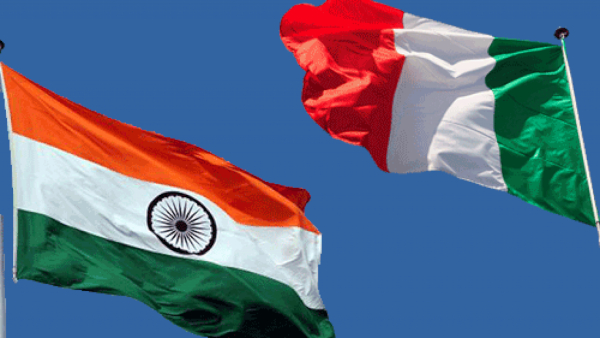
India and Italy have taken an important step towards strengthening their maritime security partnership by holding their inaugural Maritime Security Dialogue in Rome on October 23, 2026. The meeting brought together representatives of both countries to discuss maritime situational awareness, countering illicit activities at sea and safeguarding critical maritime infrastructure.
The Embassy of India in Italy confirmed the dialogue on October 24, describing it as a new chapter in the India–Italy Special Strategic Partnership. The discussions provided an opportunity for both countries to exchange assessments of the maritime security environment and identify areas where closer cooperation could strengthen maritime safety and security.
The Indian delegation was led by Subhashini Narayanan, Joint Secretary (Disarmament and International Security Affairs) in the Ministry of External Affairs. During the visit, the delegation also engaged with several important Italian maritime institutions, including the Italian Naval Academy, the Italian Hydrographic Institute, the National Underwater Dimension Hub and the Italian Coast Guard.
The inaugural dialogue follows the decision taken by Prime Minister Narendra Modi and Italian Prime Minister Giorgia Meloni in May 2026 to establish a dedicated mechanism for maritime security cooperation. Its first meeting marks the implementation of an important commitment under the expanding bilateral strategic partnership.
India and Italy Establish Dedicated Maritime Security Dialogue
The first India–Italy Maritime Security Dialogue was held in Rome on October 23, creating a dedicated bilateral forum for addressing maritime security challenges and identifying opportunities for cooperation.
According to the Embassy of India in Italy, representatives of both countries exchanged assessments of the maritime security environment and examined avenues for strengthening collaboration across several important areas. The discussions focused particularly on maritime situational awareness, preventing illicit maritime activities and protecting critical infrastructure.
The dialogue provides an institutional framework through which the two countries can exchange information, share operational experiences and discuss emerging challenges affecting maritime security. Such engagement is relevant to India and Italy because both countries depend heavily on secure maritime routes for international trade, energy transportation and economic connectivity.
India occupies a central position in the Indian Ocean region, while Italy is an important Mediterranean maritime nation with extensive commercial and strategic interests in European and international shipping routes. Their geographical positions create opportunities for cooperation across maritime corridors connecting the Indian Ocean, the Middle East and Europe.
The establishment of a dedicated dialogue also reflects the growing importance of maritime security within the broader India–Italy relationship. It creates a mechanism for sustained consultations rather than relying exclusively on discussions conducted during wider diplomatic and defence meetings.
Maritime Situational Awareness Emerges as a Major Area of Cooperation
Maritime situational awareness was among the principal subjects discussed during the inaugural dialogue. The concept refers to the ability to understand activities taking place across maritime areas through the collection, analysis and exchange of relevant information.
Effective maritime awareness requires information from various sources, including coastal surveillance networks, maritime patrol aircraft, satellites, ship-reporting systems and other monitoring technologies. These inputs help maritime authorities identify vessels, assess unusual movements and respond to potential security concerns.
For India, maritime awareness is particularly important because of the country’s extensive coastline, island territories, exclusive economic zone and dependence on shipping through the Indian Ocean. Italy has similar interests in maintaining awareness of maritime activity across the Mediterranean and adjacent waters.
Closer cooperation could support the exchange of information and best practices concerning maritime monitoring, commercial shipping movements and the identification of emerging risks.
The October 23 dialogue established maritime situational awareness as an area for further cooperation. However, the available announcement does not identify a new information-sharing agreement or dedicated operational mechanism concluded during the meeting.
Cooperation to Counter Illicit Activities at Sea
India and Italy also discussed ways to strengthen cooperation against illicit maritime activities, an area that encompasses a wide range of security challenges affecting international shipping and coastal regions.
Such activities can include maritime smuggling, trafficking, piracy and other forms of transnational crime involving the movement of goods or people through maritime routes. Addressing these challenges often requires cooperation between naval forces, coast guards, customs authorities and law-enforcement agencies.
The Indian Ocean and Mediterranean Sea form parts of an interconnected network of international shipping routes. Security challenges affecting one region can have consequences for commercial traffic, supply chains and maritime activities elsewhere.
Both countries have experience in maritime security operations and the enforcement of regulations designed to protect legitimate shipping. Cooperation between their maritime authorities can provide opportunities to share operational knowledge and improve understanding of evolving challenges.
The discussions in Rome identified countering illicit maritime activity as a priority for bilateral engagement. Further cooperation in this area can build upon the existing institutional capabilities of the Indian and Italian maritime security establishments.
Safeguarding Critical Maritime Infrastructure Receives Attention
The protection of critical maritime infrastructure formed another important component of the inaugural dialogue.
Maritime infrastructure includes ports, offshore energy installations, subsea communication cables, shipping facilities and other systems essential to international trade and economic activity. Disruptions affecting such infrastructure can have consequences extending well beyond the immediate maritime environment.
Submarine communication cables are particularly important because they carry a substantial proportion of international data traffic. Offshore energy facilities and maritime transportation infrastructure also support essential economic and industrial activities.
India and Italy have recognised the importance of protecting critical infrastructure and associated supply chains within their broader strategic partnership. Their May 2026 Joint Declaration emphasised industrial resilience and the need to strengthen the security of important infrastructure systems.
The October dialogue brought this wider concern into a dedicated maritime security setting. Cooperation in this field could involve exchanges of expertise concerning infrastructure vulnerabilities, maritime monitoring and responses to security incidents.
The meeting represents an initial stage in identifying opportunities for such cooperation, rather than the announcement of a completed joint infrastructure protection programme.
Indian Delegation Engages with Italian Naval and Maritime Institutions
Alongside the formal dialogue, the Indian delegation held interactions with several Italian institutions involved in maritime operations, training, hydrography and underwater technologies.
The delegation visited the Italian Naval Academy, known as the Accademia Navale, an important institution responsible for educating and training officers of the Italian Navy. Engagement with the academy provided an opportunity to understand aspects of Italy’s naval training framework and professional maritime education.
The Indian representatives also interacted with the Italian Hydrographic Institute, which supports maritime navigation and hydrographic activities through the study and mapping of marine environments.
Hydrographic information plays an essential role in safe navigation, naval operations and the planning of maritime activities. Cooperation and professional exchanges in this field can contribute to a better understanding of maritime conditions and operational requirements.
The delegation additionally engaged with the Polo Nazionale della Dimensione Subacquea, Italy’s National Underwater Dimension Hub. The institution forms part of Italy’s efforts to develop expertise and cooperation involving underwater technologies and activities.
Interactions with the Italian Coast Guard provided another opportunity to examine maritime safety, security and regulatory functions. These engagements complemented the formal dialogue by bringing the Indian delegation into contact with institutions responsible for different aspects of Italy’s maritime capabilities.
Maritime Security Dialogue Follows Modi–Meloni Agreement of May 2026
The establishment of the India–Italy Maritime Security Dialogue was agreed upon during Prime Minister Narendra Modi’s official visit to Italy on May 19–20, 2026.
During discussions in Rome, Prime Minister Modi and Italian Prime Minister Giorgia Meloni decided to elevate bilateral relations to the level of a Special Strategic Partnership. The decision reflected their intention to deepen cooperation across political, economic, technological, defence and security sectors.
The Joint Declaration issued on May 20 specifically committed both countries to launching a maritime security dialogue. The stated objective was to strengthen maritime security cooperation, improve coordination and promote the exchange of information and best practices in the maritime domain.
The two leaders also welcomed the expansion of bilateral defence cooperation through ministerial exchanges, interactions between the Armed Forces and naval port visits.
The inaugural meeting on October 23 demonstrates progress in implementing the maritime security commitments made during the leaders’ summit. It also adds a specialised consultation mechanism to the broader institutional framework supporting India–Italy relations.
India–Italy Defence Industrial Roadmap Includes Naval Technologies
Maritime cooperation forms part of a wider expansion in defence relations between India and Italy.
During their May 2026 meeting, the two Prime Ministers welcomed the adoption of a Joint Declaration of Intent and a Defence Industrial Roadmap designed to promote technological cooperation between their defence industries.
The roadmap identifies opportunities for partnerships involving technology development, co-production and co-development of military equipment. Among the areas mentioned are helicopters, naval platforms, marine armament and electronic warfare systems.
Naval technologies are particularly relevant to the maritime dimension of the partnership because modern maritime security depends on advanced sensors, surveillance capabilities, secure communication systems and reliable naval platforms.
India’s expanding domestic defence manufacturing industry and Italy’s established maritime engineering capabilities provide a foundation for exploring cooperation in these fields.
The two countries have also agreed to examine the feasibility of establishing an annual high-level military dialogue. This proposed mechanism would complement the existing Joint Defence Committee and Military Cooperation Group while supporting closer interaction between their Armed Forces.
The October maritime security meeting should be understood as a diplomatic and security consultation. It did not, on the evidence publicly available, announce new defence procurement contracts or specific naval manufacturing agreements.
India and Italy Strengthen Links Between the Indian Ocean and Mediterranean
The maritime relationship between India and Italy is shaped by the economic and strategic importance of the Indian Ocean and Mediterranean regions.
International shipping routes connecting the Indian Ocean with the Mediterranean pass through important waterways and maritime chokepoints, including the Red Sea and the Suez Canal. These routes support trade between Asia, the Middle East and Europe.
India’s location in the Indian Ocean provides access to major shipping corridors connecting East Asia, West Asia, Africa and Europe. Italy’s Mediterranean position makes it an important participant in European maritime trade and transportation networks.
Both countries therefore share an interest in maintaining safe navigation, uninterrupted commercial shipping and reliable maritime infrastructure.
Security incidents affecting important sea lanes can disrupt transportation schedules, increase operating costs and create uncertainty for international supply chains.
Cooperation between India and Italy can contribute to a better understanding of these interconnected maritime challenges. The new dialogue provides a platform for examining security concerns across regions that are economically linked through international shipping.
India–Middle East–Europe Economic Corridor Adds Strategic Dimension
Maritime security cooperation also complements the broader connectivity objectives pursued by India and Italy through the India–Middle East–Europe Economic Corridor (IMEC).
The proposed corridor aims to strengthen trade and connectivity between India, the Middle East and Europe through an interconnected network of transportation and supporting infrastructure.
During their May 2026 summit, Prime Ministers Modi and Meloni reaffirmed their commitment to cooperation on IMEC and recognised its potential to improve international trade, connectivity and economic integration.
They also welcomed the signing of a memorandum of understanding on maritime transport and ports. The agreement provides a separate framework for cooperation in port development and maritime transportation.
The leaders directed the relevant authorities to establish a joint working group for implementing the maritime transport agreement.
Secure shipping routes and reliable port infrastructure are essential for international connectivity initiatives. Maritime security cooperation can therefore complement commercial and infrastructure partnerships by addressing risks affecting maritime transportation.
The October dialogue reinforces this broader relationship between economic connectivity and maritime security, although no new IMEC-specific security arrangement was announced during the meeting.
Existing Maritime Engagement Provides Foundation for Cooperation
India and Italy have previously engaged in maritime discussions and naval cooperation, providing a foundation for the new dedicated dialogue.
In August 2023, the Embassy of Italy in India and India’s National Maritime Foundation jointly organised an Italy–India Maritime Security Seminar in Mumbai. The event coincided with the visit of the Italian naval patrol vessel ITS Francesco Morosini.
The seminar examined maritime security challenges, maritime domain awareness and opportunities for technological cooperation between the two countries.
It also highlighted the shared importance of secure shipping routes and a rules-based maritime environment in the Indo-Pacific.
Italy’s participation in maritime security initiatives and its growing engagement with the Indo-Pacific have provided additional opportunities for cooperation with India.
The country’s involvement in the Indo-Pacific Oceans Initiative, particularly in scientific, technological and academic cooperation, represents another dimension of its engagement with the region.
The inaugural October 2026 dialogue builds upon these existing interactions by establishing a dedicated bilateral mechanism focused on maritime security.
Special Strategic Partnership Creates Wider Framework for Cooperation
India and Italy’s Special Strategic Partnership encompasses several areas beyond maritime and defence cooperation.
The May 2026 Joint Declaration identified political consultations, trade, investment, connectivity, science, technology, innovation, space, energy transition and security as important areas of bilateral engagement.
The two governments also agreed to strengthen institutional mechanisms for reviewing progress under their Joint Strategic Action Plan for 2025–2029.
The expansion of maritime cooperation therefore forms part of a broader effort to translate political commitments into regular institutional engagement.
Dedicated dialogues allow officials and technical specialists to examine particular subjects in greater detail than is ordinarily possible during high-level summits.
They also support continuity by providing opportunities to review emerging developments, exchange assessments and identify practical areas for cooperation.
The first Maritime Security Dialogue demonstrates the growing institutional depth of the India–Italy partnership and reflects the priority both governments attach to maritime affairs.
India and Italy Advance Maritime Cooperation Through Dedicated Dialogue
The inaugural India–Italy Maritime Security Dialogue held in Rome on October 23, 2026, marks an important development in bilateral defence and security engagement.
The discussions addressed maritime situational awareness, illicit activities at sea and the protection of critical maritime infrastructure. These areas are relevant to both countries because of their dependence on secure shipping routes, reliable maritime communications and uninterrupted international trade.
The Indian delegation’s interactions with Italian naval, hydrographic, underwater technology and coast guard institutions added a professional and technical dimension to the visit.
The meeting also fulfilled a commitment made by Prime Ministers Narendra Modi and Giorgia Meloni during their May 2026 summit, when both countries elevated their relationship to a Special Strategic Partnership.
By establishing a dedicated mechanism for maritime security consultations, India and Italy have strengthened the institutional foundation for cooperation between the Indian Ocean and Mediterranean regions.
The dialogue marks a constructive step in the continued development of their strategic relationship, bringing maritime security into sharper focus as both countries expand cooperation in defence, connectivity and critical infrastructure protection.
References
1. Embassy of India, Rome — October 24, 2026.
Official communication concerning the inaugural India–Italy Maritime Security Dialogue held in Rome on October 23, 2026.
Official website: https://www.indianembassyrome.gov.in/
2. Ministry of External Affairs, Government of India — May 20, 2026.
India–Italy Joint Declaration.
Official bilateral document establishing the Special Strategic Partnership and the decision to launch a Maritime Security Dialogue.
https://www.mea.gov.in/bilateral-documents?dtl/41198/IndiaItaly_Joint_Declaration_May_20_2026
3. Prime Minister’s Office, Government of India — May 20, 2026.
Prime Minister Meets with Prime Minister of Italy.
Official account of the Modi–Meloni bilateral discussions in Rome.
https://www.pmindia.gov.in/en/news_updates/pm-meets-with-prime-minister-of-italy/
4. Ministry of External Affairs, Government of India — March 20, 2026.
9th India–Italy Foreign Office Consultations.
Official statement referring to preparations for the first Maritime Security Dialogue.
https://www.mea.gov.in/press-releases?dtl/40948/9th_IndiaItaly_Foreign_Office_Consultations_March_20_2026
5. Embassy of Italy in India — May 21, 2026.
Official Visit to Rome by Indian Prime Minister Narendra Modi, May 19–20, 2026.
https://ambnewdelhi.esteri.it/en/news/dall_ambasciata/2026/05/official-visit-to-rome-by-indian-prime-minister-narendra-modi-may-19-and-20-2026/
6. National Maritime Foundation, India — August 12, 2023.
Italy–India Maritime Security Seminar.
Background on bilateral maritime security cooperation and maritime domain awareness.
https://maritimeindia.org/events/20763/
7. Indo-Asian News Service — October 24, 2026.
India and Italy Hold Inaugural Maritime Security Dialogue in Rome.
Contemporary reporting based on the Embassy of India’s official communication.
https://ianslive.in/india-and-italy-hold-inaugural-maritime-security-dialogue-in-rome–20261024193324
You may also like
-
India and Azerbaijan Agree to Strengthen Security, Trade, Energy and Economic Cooperation
-
Jaishankar Meets Azerbaijan President Ilham Aliyev in Baku, Discusses Trade, Technology and Strategic Cooperation
-
Piyush Goyal Holds High-Level Talks in Berlin to Strengthen India–Germany Trade, Investment and Industrial Cooperation
-
Indian Navy to Host Indo-Pacific Regional Dialogue 2026 with Experts from 18 Countries on Maritime Science and Technology
-
Russia Ratifies Temporary Employment Agreement with India, Expanding Opportunities for Skilled Workers
