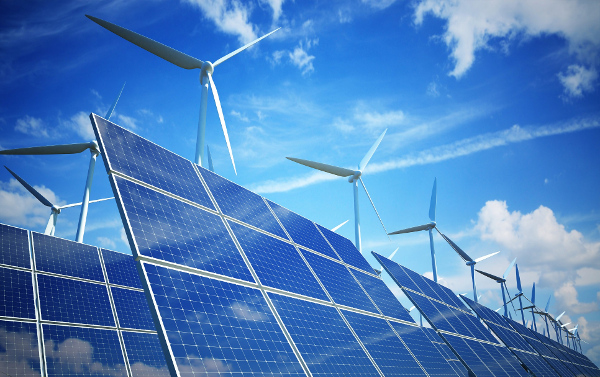
India has achieved a major milestone in its clean energy transition, crossing 300 gigawatts (GW) of installed non-fossil fuel electricity generation capacity. The achievement strengthens the country’s progress towards its target of 500 GW by 2030 and highlights the growing contribution of solar, wind, hydropower and nuclear energy to the national electricity system.
According to the Ministry of New and Renewable Energy, India’s installed non-fossil fuel capacity reached 300.50 GW on 31 July 2026, accounting for more than 54% of the country’s total installed electricity generation capacity. The expansion follows a record addition of 55.29 GW during the financial year 2025–26.
A Press Information Bureau backgrounder released on 19 October 2026 also highlighted the government’s growing emphasis on electricity storage infrastructure. As renewable energy capacity expands, pumped storage hydropower and battery energy storage systems will become increasingly important for maintaining grid reliability and meeting electricity demand.
Solar and Wind Power Lead India’s Clean Energy Expansion
Solar energy has emerged as the largest contributor to India’s non-fossil fuel electricity capacity. As of 31 July 2026, the country had installed 164.59 GW of solar power capacity, followed by 58.14 GW of wind energy capacity.
Large and small hydropower projects collectively contributed 57.24 GW, while bio-power accounted for 11.75 GW. Nuclear power added another 8.78 GW, bringing the total installed non-fossil fuel capacity to 300.50 GW.
These figures demonstrate the growing diversification of India’s electricity generation infrastructure. Solar and wind projects are expanding rapidly, while hydropower and nuclear energy contribute to the broader objective of developing a dependable, low-carbon electricity system.
The country has already achieved more than 60% of its 500 GW non-fossil fuel capacity target for 2030. Continued expansion of renewable energy projects, domestic manufacturing and supporting infrastructure will play a central role in achieving the remaining capacity.
India Adds Record 55.29 GW Non-Fossil Fuel Capacity in 2025–26
India recorded its highest annual addition of non-fossil fuel electricity generation capacity during 2025–26, installing 55.29 GW. This represented a significant increase over the previous record of approximately 29.5 GW in 2024–25.
Solar power accounted for much of this expansion, with 44.61 GW of new capacity installed during the financial year. Wind energy also registered its highest annual capacity addition, contributing 6.05 GW.
Distributed solar energy played an important role in the overall growth. Rooftop solar installations and projects supported through PM-KUSUM together contributed 16.3 GW of the solar capacity added during the year.
The expansion reflects the growing importance of renewable electricity in India’s energy infrastructure, supported by government programmes, investment in generation projects and increased domestic manufacturing capabilities.
India Projects Nearly 74 GW Energy Storage Requirement by 2032
As India increases its dependence on solar and wind power, electricity storage is becoming an essential component of grid planning.
Unlike conventional power stations, solar and wind facilities generate electricity according to sunlight and weather conditions. Their output can therefore vary considerably throughout the day.
Energy storage systems help manage these fluctuations by storing surplus electricity and supplying it when renewable generation decreases or electricity demand rises.
The Central Electricity Authority has projected a requirement of 73.93 GW of energy storage capacity by 2031–32. This includes 26.69 GW from pumped storage projects and 47.24 GW from battery energy storage systems.
Both technologies are expected to perform complementary functions within India’s electricity network. Battery systems can respond quickly to changes in demand and provide grid-balancing services, while pumped storage facilities can deliver electricity over longer periods.
Developing these capabilities alongside new generation and transmission infrastructure will be essential for integrating larger quantities of renewable electricity into the national grid.
Pumped Storage Hydropower to Support Renewable Energy Integration
Pumped storage hydropower is emerging as a major component of India’s long-duration electricity storage strategy.
These facilities generally use two reservoirs located at different elevations. During periods of surplus electricity generation, pumps transfer water from the lower reservoir to the upper reservoir.
When electricity demand increases, the stored water flows back through turbines, generating electricity before returning to the lower reservoir.
The system effectively stores electrical energy in the form of gravitational potential energy, allowing surplus renewable electricity to be used when it is most valuable.
Pumped storage projects can help manage peak electricity demand, reduce the effects of fluctuating renewable generation and strengthen grid stability. Their long operational lives also make them important assets for the development of large-scale electricity infrastructure.
India Has 7.43 GW Operational Pumped Storage Capacity
According to the government’s October 2026 backgrounder, India had 7.43 GW of operational pumped storage capacity across ten projects as of August 2026.
Another 15.87 GW across eleven projects was under construction or implementation, while eight additional projects representing 10.40 GW had received concurrence or appraisal from the Central Electricity Authority.
The country has also identified considerable potential for further development. A total of 320 pumped storage projects, representing an estimated capacity of 345.38 GW, have been identified across different regions.
The Western Region accounts for the largest identified potential at 129.72 GW, followed by the Southern Region with 97.76 GW. Maharashtra, Gujarat, Andhra Pradesh, Telangana and Tamil Nadu are among the states with significant opportunities for developing pumped storage infrastructure.
The Central Electricity Authority has also outlined a longer-term roadmap that envisages cumulative pumped storage capacity reaching approximately 105.56 GW by 2035–36.
This planned expansion would substantially increase India’s ability to store renewable electricity and provide dependable power during periods of high demand.
Government Introduces Measures to Accelerate Pumped Storage Development
The Central Government has introduced several policy and regulatory measures to encourage investment in pumped storage projects.
The Ministry of Power issued dedicated guidelines for developing pumped storage facilities in April 2023. These guidelines established a framework for facilitating project development and addressing important infrastructure requirements.
Government support also covers essential enabling infrastructure such as roads, bridges, railway sidings, communication facilities and transmission connections.
In February 2025, the government notified tariff-based competitive bidding guidelines to establish a transparent mechanism for procuring pumped storage capacity and stored electricity.
Eligible pumped storage projects awarded for construction by 30 June 2028 can receive a complete waiver of Inter-State Transmission System charges for 25 years from the commencement of commercial operations.
The Central Electricity Authority has also reduced the concurrence timeline for detailed project reports from 90 days to 50 days. These reforms are intended to accelerate project preparation, strengthen investment confidence and support faster development of storage infrastructure.
Battery Storage to Complement Hydropower Projects
Battery Energy Storage Systems will provide another important component of India’s future electricity infrastructure.
The Central Electricity Authority projects 47.24 GW of battery storage capacity by 2031–32, reflecting the growing need for flexible and rapidly responding electricity storage systems.
Battery installations can support frequency regulation, manage short-term fluctuations in electricity demand and store electricity generated by renewable energy projects.
They can also be installed close to major consumption centres or renewable energy facilities, helping improve local grid reliability and reduce pressure on transmission infrastructure.
Pumped storage and battery systems will therefore serve different but complementary purposes. Their combined development will allow India to use renewable electricity more efficiently while maintaining dependable power supplies for households, businesses and industries.
India’s Clean Energy Expansion Strengthens Energy Security
Crossing 300 GW of non-fossil fuel capacity marks an important stage in India’s transition towards a more diversified and sustainable electricity system.
The expansion of solar, wind, hydropower and nuclear generation is creating a stronger foundation for meeting the country’s growing electricity requirements while reducing the carbon intensity of its power infrastructure.
Equally important is the development of storage facilities capable of delivering electricity when renewable generation is unavailable or insufficient.
With a national target of 500 GW non-fossil fuel capacity by 2030 and a substantial energy storage development programme underway, India is strengthening the infrastructure required for long-term energy security.
The coordinated expansion of generation, storage and transmission networks will support industrial growth, technological development and the country’s broader commitment to building a cleaner and more self-reliant energy economy.
References
1. Press Information Bureau, Ministry of New and Renewable Energy, Government of India — 9 August 2026.
India Achieves Landmark 300 GW Non-Fossil Fuel Power Capacity.
https://www.pib.gov.in/PressReleasePage.aspx?PRID=2296782
2. Press Information Bureau, Government of India — 19 October 2026.
Pumped Storage Hydropower: Powering India’s Clean Energy Transition. Release ID: 2324992.
https://www.pib.gov.in/PressReleasePage.aspx?PRID=2324992
3. Press Information Bureau, Ministry of New and Renewable Energy — 8 April 2026.
India Ranks Third Globally in Renewable Energy Installed Capacity.
https://www.pib.gov.in/PressReleasePage.aspx?PRID=2250039
4. Central Electricity Authority, Ministry of Power — January 2026.
Report on Roadmap to 100 GW of Hydro Pumped Storage Projects.
https://cea.nic.in/notification/report-on-roadmap-to-100-gw-of-hydro-pumped-storage-projects/
5. Central Electricity Authority, Ministry of Power.
National Electricity Plan 2022–2032.
https://cea.nic.in/wp-content/uploads/notification/2023/06/NEP_2022_32_FINAL_GAZETTE_English.pdf
You may also like
-
Ashok Leyland Developing Hydrogen-Powered Stallion Military Truck, Exploring Autonomous Vehicles and Drones
-
India–UAE Trade Crosses $100 Billion as Strategic Cooperation Expands Across Energy, Defence and Technology
-
India Targets 100 GW Nuclear Power by 2047 to Support AI Growth and Clean Energy Transition
-
Tulaipanji Rice: West Bengal’s Aromatic Heritage Grain from the Dinajpur Region
-
Profitable Banks, Growing Savings and Timely EMI Repayments: Signs of a Healthy and Alive Indian Economy
