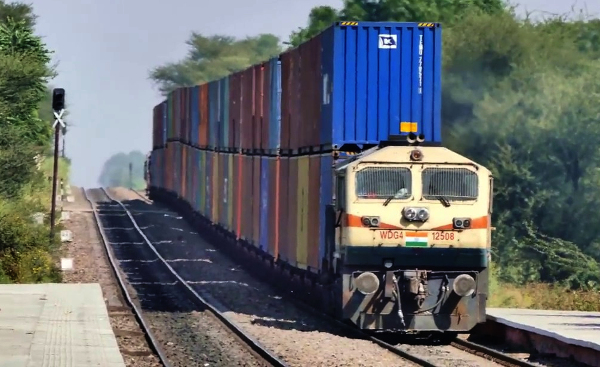
Indian Railways registered 6.14% growth in freight loading during September 2026, transporting 135.35 million tonnes of goods compared with 127.52 million tonnes in September 2025. The increase reflects higher transportation volumes across several major commodity categories, including food grains, coal, clinker, finished steel, iron ore, mineral oil and domestic containerised cargo.
According to figures released by the Ministry of Railways on October 13, 2026, freight loading increased by 7.83 million tonnes over the corresponding month of the previous year. Freight revenue also recorded strong growth, increasing by ₹1,266 crore, or 9.3%, during September. The improvement in both cargo movement and earnings highlights the continuing importance of the national railway network in supporting India’s agricultural, industrial and energy supply chains.
The positive trend extended across the first half of the financial year 2026–27. Indian Railways transported 833.7 million tonnes of freight between April and September 2026, registering 4.1% growth over the corresponding period of the previous financial year. Cumulative freight revenue increased by 3.7%, indicating sustained expansion in railway goods transportation during the six-month period.
Indian Railways Handles 135.35 Million Tonnes of Freight in September
Indian Railways transported 135.35 million tonnes of freight during September 2026, an increase of 7.83 million tonnes compared with the 127.52 million tonnes carried during September 2025. The 6.14% year-on-year increase demonstrates higher demand for railway transportation across several important sectors of the economy. The growth was distributed among agricultural commodities, industrial raw materials, energy resources and containerised goods, reflecting the broad range of industries that depend on the railway network.
Freight transportation remains one of the principal functions of Indian Railways because the network connects production centres, mining regions, agricultural markets, manufacturing facilities, ports and major consumption centres. Industries handling large quantities of raw materials rely on rail transportation for the regular movement of goods over long distances. The increase in September freight loading demonstrates the continued importance of this infrastructure in maintaining the movement of essential commodities and industrial supplies.
The Ministry’s figures indicate that freight growth during the month was not concentrated in a single commodity category. Food grains and clinker recorded particularly strong increases, while coal, steel, iron ore, mineral oil and domestic containers also contributed to the overall improvement. This diversified growth illustrates the extensive role of railway freight services in India’s production and distribution networks.
Food Grain Loading Registers Strong 25% Growth
Food grain loading recorded 25% growth during September 2026, representing the highest percentage increase among the major commodity categories highlighted by the Ministry of Railways. The increase indicates substantially higher movement of agricultural commodities through the railway network compared with September 2025. Food grain transportation is an important component of India’s agricultural logistics system because large quantities of wheat, rice and other grains must be moved between producing regions, storage facilities and consumption centres.
Indian Railways plays a significant role in supporting the country’s food distribution infrastructure. Agricultural production is concentrated in different regions, while demand for food grains extends across the country. Railway transportation allows large consignments to move efficiently between states, helping connect surplus-producing areas with regions requiring supplies. This network also supports the movement of food grains associated with public distribution arrangements and commercial agricultural trade.
The increase in loading during September reflects greater use of railway services for transporting food grains. However, the official announcement does not specify the individual contributions of wheat, rice or other agricultural commodities to this growth. The figures nevertheless demonstrate the importance of reliable railway freight capacity in supporting agricultural supply chains and the nationwide movement of essential food commodities.
Clinker Freight Grows 20% as Cement-Related Cargo Expands
Clinker loading increased by 20% during September 2026, making it another major contributor to the growth in Indian Railways’ freight operations. Clinker is an intermediate product used in cement manufacturing and is produced by heating limestone and other raw materials in cement kilns. It is subsequently ground with gypsum and, depending on the cement type, other materials to manufacture finished cement.
The transportation of clinker is an important requirement for cement companies operating integrated manufacturing plants and separate grinding units. These facilities may be located in different regions, creating a need for large-scale movement of clinker between production and processing centres. Railway freight services provide an established transportation option for such bulk industrial materials, particularly when considerable distances separate manufacturing facilities.
The 20% increase indicates higher railway movement of clinker during September 2026. Cement-related industries are closely associated with construction, housing and infrastructure development, making the transportation of clinker an important part of industrial logistics. Although the freight figures do not independently establish changes in cement production or construction activity, they confirm stronger rail transportation volumes for this commodity during the month.
Domestic Container Loading Increases by 10%
Domestic container freight registered 10% growth during September 2026, reflecting increased movement of containerised goods through the railway network. Container transportation has become an important component of modern logistics because standardised containers allow different categories of goods to move between trains, trucks and logistics terminals with relatively efficient handling arrangements.
Containerised freight supports the transportation of manufactured products, industrial components, consumer goods and other commodities that require organised cargo handling. Unlike conventional bulk freight, which often involves large consignments of individual commodities, container transportation can accommodate a wider range of goods within standardised units. This makes it particularly relevant to manufacturing industries, distribution networks and domestic supply chains.
The increase in domestic container loading highlights the growing contribution of this segment to Indian Railways’ freight operations. Expanding container traffic can help diversify railway cargo beyond traditional bulk commodities such as coal, iron ore and cement-related materials. Continued development of logistics terminals, multimodal transportation facilities and reliable rail services will remain important for attracting additional containerised cargo to the national railway network.
Coal Loading Rises 9% as Supply to Thermal Power Plants Strengthens
Coal loading increased by 9% during September 2026, while railway supplies of domestic coal to thermal power stations also recorded a substantial improvement. The Ministry of Railways reported that the average number of coal rakes supplied to power houses rose from 397 per day in September 2025 to 443 per day in September 2026. This represents an increase of 46 rakes per day, equivalent to approximately 11.6% growth.
Coal continues to occupy a major position in Indian Railways’ freight operations because thermal power plants require regular fuel supplies for electricity generation. Many coal-producing regions are located considerable distances from major power generation facilities, making railway transportation essential for moving large quantities of coal. The coordination of coal loading, rake availability and delivery schedules is therefore important to the functioning of the country’s electricity supply system.
The increase in coal rake supply indicates greater movement of domestic coal to power stations during September 2026. Higher railway transportation volumes can support fuel availability at generating facilities, although actual coal stock levels also depend on consumption, production and other supply factors. The figures demonstrate the continuing contribution of Indian Railways to India’s energy infrastructure and the importance of maintaining dependable freight services for the power sector.
Finished Steel, Iron Ore and Mineral Oil Record Higher Loading
Industrial commodities contributed significantly to freight growth during September 2026, with finished steel loading increasing by 5.5%, iron ore by 5.2% and mineral oil by 6%. These increases demonstrate higher railway transportation volumes for materials associated with manufacturing, mining, energy distribution and industrial production.
Finished steel is transported from steel plants and processing centres to construction companies, fabrication facilities, manufacturing industries and distribution markets. Railway freight services support the movement of heavy steel products over long distances, helping connect major manufacturing centres with industrial consumers. The 5.5% increase in finished steel loading indicates greater transportation activity for this important category of manufactured material.
Iron ore movement also registered positive growth during the month. India possesses significant iron ore resources, and railway connectivity plays an essential role in transporting the mineral from mining regions to steel plants, processing facilities and other destinations. The 5.2% increase in iron ore loading reflects higher use of railway services for this industrial raw material, which forms a fundamental input for steel production.
Mineral oil loading increased by 6%, adding to the overall improvement in railway freight performance. Rail transportation is used for moving petroleum products and other suitable liquid commodities between production facilities, storage installations and distribution centres. The increase indicates higher freight movement in this category, further demonstrating the diversity of commodities handled by Indian Railways.
Other Goods Category Registers 8.2% Growth
The Balance Other Goods category recorded 8.2% growth during September 2026, indicating increased transportation volumes among commodities outside the principal categories separately identified in railway freight reporting. This segment represents an important part of the network’s wider cargo portfolio and contributes to the diversification of railway transportation services.
Indian Railways has historically handled substantial quantities of bulk commodities, particularly coal, iron ore and cement-related materials. However, the railway network also transports many other goods required by manufacturing industries, commercial distribution systems and regional markets. Expanding freight traffic beyond traditional bulk categories can help attract additional customers and improve the utilisation of railway transportation infrastructure.
The increase in the Balance Other Goods category demonstrates that September’s freight growth extended beyond major industrial and energy commodities. Although the Ministry has not provided a detailed commodity-wise breakdown within this category, its performance highlights the wider role of rail freight in supporting commercial and industrial supply chains across India.
Railway Freight Revenue Increases by ₹1,266 Crore
Indian Railways recorded 9.3% growth in freight revenue during September 2026, with earnings increasing by ₹1,266 crore compared with the corresponding month of the previous year. This revenue growth exceeded the 6.14% increase in freight loading, indicating that earnings rose at a faster percentage rate than the total quantity of goods transported.
Freight revenue depends on several operational and commercial factors, including cargo volumes, commodity classification, transportation distances and applicable freight charges. Changes in the composition of goods transported can therefore influence earnings independently of overall tonnage. The Ministry’s announcement does not provide a detailed explanation of the factors responsible for the difference between freight revenue growth and loading growth.
Nevertheless, the simultaneous increase in cargo movement and freight earnings represents a positive development for railway operations. Freight revenue is an important source of income for Indian Railways and contributes to the financial resources required for maintaining infrastructure, operating services and supporting future improvements. The September performance demonstrates higher revenue generation from freight transportation during the month.
Cumulative Freight Loading Reaches 833.7 Million Tonnes in First Half of 2026–27
Indian Railways transported 833.7 million tonnes of freight during April–September 2026, recording 4.1% growth over the corresponding period of the previous financial year. The cumulative figures provide a broader assessment of railway freight performance by measuring transportation volumes across six months rather than relying on the results of an individual month.
Freight movement can fluctuate throughout the year because of agricultural seasons, industrial production schedules, rainfall patterns and changes in demand for energy resources. Evaluating cumulative loading helps establish whether increases in transportation activity are sustained over a longer period. The 4.1% growth recorded during the first half of 2026–27 indicates that Indian Railways handled more freight than during the comparable period of 2025–26.
Freight revenue during April–September 2026 also increased by 3.7% compared with the corresponding six months of the previous year. The growth in both loading and earnings demonstrates an overall improvement in freight operations during the first half of the financial year. These results provide an encouraging basis for the Railways’ continued efforts to expand cargo transportation and improve operational performance.
Railway Freight Supports India’s Agricultural and Industrial Supply Chains
Indian Railways forms an essential part of India’s logistics infrastructure by connecting agricultural regions, mineral-producing areas, industrial clusters, power stations, ports and major consumption centres. Its extensive network allows large quantities of goods to move between geographically distant locations, providing an important transportation option for industries that require regular supplies of raw materials and finished products.
The September freight figures illustrate the contribution of railway services to several interconnected sectors. Food grain transportation supports agricultural distribution, while coal movement serves thermal power generation. Iron ore and finished steel loading contribute to mining and manufacturing supply chains, and clinker transportation supports the cement industry. Domestic container services extend the network’s role into the movement of manufactured and commercially distributed goods.
Reliable freight transportation is important for maintaining continuity across these activities. Industrial facilities depend on the timely arrival of raw materials, while agricultural distribution systems require suitable transportation capacity to move food commodities between regions. The increase in loading across multiple categories demonstrates the continued demand for railway freight services as part of India’s wider economic infrastructure.
Dedicated Freight Corridors Strengthen Long-Term Railway Capacity
India has been expanding its railway freight infrastructure to improve transportation capacity, operational efficiency and connectivity between major industrial regions. The Dedicated Freight Corridor programme is an important component of these efforts, providing specialised railway routes designed primarily for goods trains and reducing their dependence on heavily utilised mixed-traffic railway sections.
The Eastern and Western Dedicated Freight Corridors are intended to strengthen freight connectivity between major production regions, industrial centres, ports and logistics facilities. Dedicated railway capacity can help reduce operational conflicts between passenger and freight services while supporting more reliable movement of goods. Such infrastructure is particularly valuable for transporting bulk commodities and containerised cargo over long distances.
Indian Railways has also been developing freight terminals, improving track infrastructure and strengthening logistics facilities to accommodate changing transportation requirements. These investments support the broader objective of improving railway freight services and increasing the network’s capacity to handle larger cargo volumes. Although the September 2026 announcement does not separately quantify the contribution of these infrastructure initiatives to freight growth, continued capacity development remains important for sustaining higher levels of transportation activity.
Growth in Rail Freight Contributes to Logistics Efficiency
Railway transportation offers important advantages for moving large quantities of goods, particularly across long distances. Freight trains can carry substantial cargo volumes, making them suitable for transporting coal, minerals, food grains, industrial materials and other commodities that require high-capacity transportation systems.
Rail freight can also offer energy-efficiency benefits compared with road transportation, depending on the type of cargo, route characteristics, train utilisation and energy source. Increasing the movement of suitable commodities through railway networks can help improve logistics efficiency while reducing pressure on highways and other road infrastructure.
The 10% growth in domestic container loading is particularly relevant to India’s efforts to develop integrated logistics systems. Standardised containers facilitate the transfer of goods between railways, trucks and logistics terminals, allowing different transportation modes to work together. Greater coordination between these services can improve connectivity between manufacturing centres, warehouses, ports and consumer markets.
The expansion of railway freight services therefore has implications beyond the railway sector itself. Efficient cargo transportation supports industrial operations, agricultural distribution and commercial activity, making freight infrastructure an important component of India’s economic development.
Indian Railways Maintains Positive Freight Momentum in 2026–27
The 6.14% increase in freight loading during September 2026 demonstrates the continuing importance of Indian Railways in transporting essential commodities and industrial goods across India. The movement of 135.35 million tonnes of freight during the month, accompanied by 9.3% growth in freight revenue, reflects higher cargo volumes and earnings compared with September 2025.
Strong increases in food grain, clinker, domestic container and coal loading contributed to the overall performance, while higher transportation volumes for finished steel, iron ore, mineral oil and other goods demonstrated demand across a wider range of economic activities. The increase in average daily coal rake supplies to thermal power stations further highlighted the railway network’s important role in supporting electricity generation.
The cumulative transportation of 833.7 million tonnes during April–September 2026, representing 4.1% growth, confirms that freight operations expanded during the first half of the financial year. The corresponding increase in cumulative freight revenue reinforces the positive trend in railway cargo services.
With continued investment in freight infrastructure, improved logistics facilities and expanding transportation capacity, Indian Railways is strengthening its position as a central component of India’s agricultural, industrial and energy supply chains. Its growing freight operations will support the efficient movement of goods, contribute to national logistics development and reinforce the railway network’s role in India’s economic progress.
References
1. Press Information Bureau, Government of India
Ministry of Railways
Indian Railways Registers 6.14% Growth in Freight Loading in September 2026 over September 2025
Published: October 13, 2026, 1:00 PM
https://www.pib.gov.in/
2. Ministry of Railways, Government of India
Official information on railway freight transportation, commodity loading and infrastructure development.
https://indianrailways.gov.in/
3. Dedicated Freight Corridor Corporation of India Limited (DFCCIL)
Official information on the Eastern and Western Dedicated Freight Corridors and dedicated railway freight infrastructure.
https://dfccil.com/
You may also like
-
Hyundai Motor Group Announces $15.5 Billion Investment in India by 2032
-
Vimag Labs Begins Magnet-Free Electric Motor Manufacturing in Haryana, Plans ₹50 Crore Investment to Expand Production
-
ICAR’s New Soybean Varieties NRC 268 and NRC 270 Show Potential to Nearly Double India’s Average Yield
-
Kalanamak Rice of Uttar Pradesh — The Fragrant Black-Husked Grain of the Himalayan Terai
-
GE Aerospace to Double India Supply Chain Spending to $400 Million by 2030, Strengthening Indigenous Manufacturing
