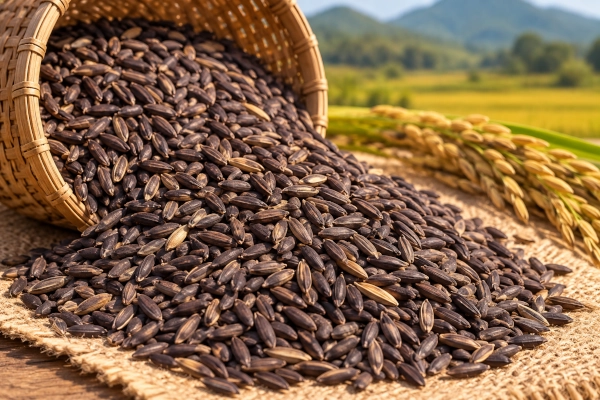
In the forested hills and fertile valleys of southern Odisha, generations of tribal farmers have preserved a remarkable indigenous rice variety known as Koraput Kalajeera Rice (କୋରାପୁଟ କଳାଜିରା ଚାଉଳ). Celebrated for its distinctive fragrance, small grains and traditional culinary value, Kalajeera represents an important part of Koraput’s agricultural biodiversity and cultural heritage.
Popularly known as the “Prince of Rice,” Koraput Kalajeera is a traditional non-Basmati aromatic rice variety recognised for its unique appearance and cooking qualities. Its dark-coloured paddy husk and small, cumin-like grains distinguish it from conventional commercial rice varieties. Once milled, the rice reveals delicate white grains that release a characteristic fragrance during cooking.
The rice received formal recognition under India’s Geographical Indications (GI) system on 2 January 2024, establishing its legally protected geographical identity. The recognition represents an important milestone for the tribal farming communities of Koraput, whose traditional seed conservation and agricultural practices have helped preserve this valuable indigenous variety.
Koraput Kalajeera Rice also belongs to a much wider agricultural heritage. The Koraput region forms part of the Jeypore tract, an internationally recognised centre of rice genetic diversity. Its traditional agricultural system has received recognition from the Food and Agriculture Organization (FAO) as a Globally Important Agricultural Heritage System, highlighting the contribution of indigenous communities to preserving agricultural biodiversity.
Historical Origins and Traditional Heritage of Koraput Kalajeera Rice
The history of Koraput Kalajeera Rice is closely connected with the traditional agricultural practices of the indigenous communities inhabiting the Jeypore-Koraput region of Odisha. This landscape has supported rice cultivation for centuries and contains an exceptionally rich collection of traditional rice varieties.
The Jeypore tract occupies a significant position in the study of rice domestication and diversification. Agricultural researchers recognise the region as an important secondary centre of rice diversity, where generations of farmers have cultivated, selected and preserved rice varieties adapted to different growing conditions.
Kalajeera developed its reputation within this agricultural environment. Tribal farming communities maintained the variety through traditional seed selection, preserving its distinctive grain characteristics and natural aroma. Its continued cultivation reflects generations of agricultural knowledge rather than dependence on modern commercial seed systems.
The precise date when Kalajeera emerged as a distinct rice variety remains undocumented. However, its longstanding cultivation within the region’s traditional agricultural system demonstrates its historical association with Koraput.
Scientific investigations have reinforced the importance of this heritage. A study published in PLOS ONE in 2016 examined 126 indigenous short-grain aromatic rice accessions collected from 19 districts of Odisha. The researchers identified substantial genetic diversity among these varieties and highlighted Koraput’s importance as a centre of aromatic rice diversity.
The continued preservation of Kalajeera therefore represents more than the survival of a distinctive food grain. It reflects the contribution of indigenous farming communities to conserving crop genetic resources that remain valuable for agricultural research and future crop improvement.
Geographical Origin and Cultivation Areas
Koraput Kalajeera Rice originates from Koraput district in southern Odisha, a region characterised by the Eastern Ghats, forested hills, agricultural valleys and diverse tribal farming settlements.
The district forms part of the historic Jeypore tract, which is associated with the development and conservation of numerous indigenous rice varieties. Its agricultural landscape includes upland, medium-land and lowland cultivation systems, each supporting different rice varieties adapted to local conditions.
Kalajeera is traditionally associated with lowland paddy cultivation. Farmers grow the variety in fields that receive seasonal monsoon rainfall and retain sufficient moisture during the growing period.
The region’s geographical diversity has contributed to the development and preservation of traditional rice landraces. Differences in elevation, soil conditions, water availability and agricultural practices have encouraged farmers to maintain varieties suited to their particular environments.
Koraput’s rice heritage also extends into neighbouring areas historically associated with the larger Koraput region. Nabarangpur district, which was separated administratively from Koraput in 1992, shares aspects of this traditional agricultural landscape.
Although Kalajeera-type rice is cultivated in other parts of Odisha, the registered geographical indication specifically identifies the product as Koraput Kalajeera Rice. Its reputation rests on the historical connection between the variety, its distinctive characteristics and the farming traditions of its region of origin.
The official GI registration identifies Odisha as the geographical area, while the product’s specific identity and traditional cultivation are centred on Koraput.
Unique Characteristics of Koraput Kalajeera Rice
Koraput Kalajeera belongs to the species Oryza sativa L. and is distinguished by its small, oval-shaped grains, dark paddy husk and pronounced natural fragrance.
The name Kalajeera combines two words: Kala, meaning black, and Jeera, meaning cumin. The name reflects the appearance of its dark, cumin-like paddy grains. Once the outer husk is removed, the processed rice is white, creating a distinctive contrast between the harvested paddy and the edible grain.
One of the variety’s most celebrated characteristics is its aroma. During cooking, Kalajeera releases a pleasant fragrance that distinguishes it from ordinary non-aromatic rice. This natural characteristic has contributed to its reputation as a premium traditional variety.
The grains are relatively small and compact, unlike the elongated grains of Basmati. Their appearance and cooking behaviour reflect the diversity of aromatic rice varieties found across eastern India.
Kalajeera is also valued for its taste and texture. Its cooked grains develop a tender consistency while retaining the distinctive flavour associated with traditional aromatic rice.
Scientific research has documented its agricultural characteristics. A study examining traditional rice landraces of Koraput identified Kalajeera as a lowland variety with dark husks, strong aroma and a comparatively long maturation period.
These characteristics establish Kalajeera’s identity within India’s indigenous aromatic rice heritage. Its premium reputation comes from the combination of fragrance, grain appearance, traditional cultivation and geographical association rather than grain length alone.
Traditional Cultivation and Agricultural Practices
Farmers cultivate Koraput Kalajeera primarily during the kharif season, relying on the southwest monsoon to support paddy growth.
The variety belongs to the traditional lowland rice group and generally requires a longer growing period than many modern commercial cultivars. Scientific studies of Kalajeera landraces have documented maturity periods of approximately 140–150 days, although crop duration varies with growing conditions and seed characteristics.
Traditional cultivation involves nursery preparation, transplantation, seasonal crop management and careful seed preservation. Many farming communities continue to rely on locally maintained seed material selected from previous harvests.
Seed selection is especially important for conserving the variety’s identity. Farmers preserve suitable grains for subsequent cultivation, maintaining characteristics such as aroma, grain size and maturity.
A 2018 scientific study examining drought-tolerant traditional rice landraces of Koraput identified Kalajeera among the varieties adapted to the region’s agricultural conditions. The research highlighted the importance of indigenous crop genetic resources in understanding agricultural responses to environmental stress.
Traditional landraces often differ from modern high-yielding cultivars in productivity, crop duration and management requirements. Kalajeera’s economic appeal consequently depends heavily on its distinctive quality and specialised market demand.
Scientific support can help farmers improve seed quality, crop management and harvesting practices without losing the characteristics that make the variety valuable.
Culinary Importance and Traditional Uses
Koraput Kalajeera Rice occupies a special place in the traditional food culture of southern Odisha. Its natural fragrance and delicate grains make it particularly suitable for preparations where the aroma and flavour of rice form an essential part of the meal.
The variety is traditionally associated with festive occasions, family celebrations and special meals. Tribal communities have preserved its cultivation partly because of its cultural importance and continued use in traditional food preparations.
Kalajeera is especially appreciated when cooked as plain rice, allowing its fragrance to remain prominent. It can also be used in aromatic pulao, sweet rice dishes, kheer and other preparations that benefit from naturally scented grains.
Its small grain size differentiates it from long-grain aromatic rice varieties. The cooked rice offers a distinct texture and flavour profile, making it suitable for culinary traditions that value fragrance over grain elongation.
A 2026 study published in Frontiers in Sustainable Food Systems identified cultural significance and traditional food preferences among the important reasons farmers continue conserving Kalajeera. The research documented how local communities maintained the variety because of its association with festivals, household food practices and market demand.
The relationship between Kalajeera and traditional cuisine demonstrates how food culture can contribute directly to agricultural conservation. Continued consumer appreciation creates an incentive for farmers to preserve a rice variety that might otherwise face competition from higher-yielding alternatives.
Koraput’s Globally Important Agricultural Heritage
Koraput’s agricultural importance extends beyond Kalajeera Rice. The region possesses one of India’s most significant collections of indigenous crop varieties, maintained through traditional farming systems developed by local communities.
The Food and Agriculture Organization recognises the traditional agricultural system of Koraput under its Globally Important Agricultural Heritage Systems (GIAHS) programme.
This recognition acknowledges the region’s traditional farming practices, agricultural biodiversity and the contribution of indigenous communities to conserving crop genetic resources.
Koraput’s agricultural landscape includes different rice-growing environments, from upland slopes to lower agricultural fields. Farmers historically maintained numerous varieties suited to particular growing conditions, culinary preferences and household requirements.
The region’s agricultural diversity has attracted scientific attention for decades. Early crop germplasm surveys documented extensive collections of traditional rice varieties, demonstrating the importance of Koraput as a reservoir of agricultural genetic resources.
The Press Information Bureau reaffirmed Koraput’s international agricultural heritage status in August 2025, identifying it among India’s three recognised GIAHS sites.
Kalajeera represents a particularly valuable example of this wider heritage. Its preservation demonstrates the importance of maintaining traditional crop varieties through active cultivation rather than relying exclusively on conservation collections.
Geographical Indication Recognition of Koraput Kalajeera Rice
Koraput Kalajeera Rice received formal GI registration under the Geographical Indications of Goods (Registration and Protection) Act, 1999.
The application was submitted by Jaivik Sri Farmers Producer Company Limited, based at Pujariput in Koraput district, Odisha. The producer organisation sought recognition of the variety’s distinctive characteristics and geographical association with Koraput.
The application was filed on 11 January 2022 under Application No. 814.
Following the examination process, the Geographical Indications Registry published the application in Journal No. 178 on 31 August 2023. The publication provided formal notice of the proposed geographical indication as part of the statutory registration procedure.
The GI Registry subsequently issued Certificate No. 543 on 2 January 2024, confirming the registration of Koraput Kalajeera Rice.
The registration created a legal framework for protecting the geographical indication and recognising the traditional rice variety’s association with its region of origin.
GI recognition also strengthened the visibility of Koraput’s agricultural heritage. It established a distinct registered identity for Kalajeera Rice while acknowledging the importance of the farmer communities responsible for its continued cultivation.
GI Tag Journey of Koraput Kalajeera Rice
The journey of Koraput Kalajeera Rice towards Geographical Indication recognition reflects the efforts of indigenous farming communities, agricultural organisations and producer groups to preserve the identity of this traditional aromatic variety.
- Traditional Agricultural Heritage: Tribal farming communities in the Jeypore-Koraput region preserved Kalajeera through generations of cultivation, seed selection and traditional farming practices. Its distinctive fragrance and cumin-like appearance established its reputation as the Prince of Rice.
- 2012 – International Agricultural Heritage Recognition: The FAO recognised Koraput’s traditional agricultural system as a Globally Important Agricultural Heritage System, drawing international attention to the region’s indigenous crop diversity.
- 11 January 2022 – GI Application Filed: Jaivik Sri Farmers Producer Company Limited, based in Pujariput, Koraput district, submitted the application for Koraput Kalajeera Rice under Application No. 814.
- 31 August 2023 – Publication in GI Journal: The Geographical Indications Registry published the application in GI Journal No. 178, formally recording the proposed geographical indication.
- September 2023 – Wider Recognition: The publication attracted attention to the variety’s distinctive identity and the efforts of Koraput’s farmers to protect their traditional agricultural produce.
- 2 January 2024 – GI Certificate Issued: The Geographical Indications Registry issued Certificate No. 543, formally registering Koraput Kalajeera Rice as a Geographical Indication.
- 25 April 2025 – Agricultural Export Promotion: APEDA and the Government of Odisha showcased Koraput Kalajeera Rice during an agricultural export capacity-building programme at Odisha University of Agriculture and Technology, Bhubaneswar.
- 10 January 2032 – Registration Validity: The current GI registration remains valid until this date, subject to renewal under India’s geographical indications legislation.
GI Details at a Glance
- Geographical Indication: Koraput Kalajeera Rice
- State: Odisha
- Product: Agricultural
- Class: 30
- Application Number: 814
- Date of Filing: 11 January 2022
- GI Journal: No. 178
- Journal Availability Date: 31 August 2023
- Certificate Number: 543
- GI Certificate Date: 2 January 2024
- Registered Proprietor: Jaivik Sri Farmers Producer Company Limited, Pujariput, Koraput district, Odisha
- Geographical Area: Odisha, with traditional cultivation centred on Koraput district
- Registration Valid Until: 10 January 2032
Preserving an Indigenous Rice Variety
The preservation of Koraput Kalajeera Rice contributes to the conservation of India’s traditional crop diversity. Koraput’s agricultural landscape contains numerous indigenous rice varieties that have developed distinctive characteristics through generations of farmer selection.
These traditional varieties represent an important genetic resource. Their diversity provides opportunities for studying grain quality, adaptation to agricultural environments and traits relevant to future crop improvement.
Research published in 2016 demonstrated the substantial genetic diversity present among Odisha’s indigenous aromatic rice varieties. The findings reinforced the importance of conserving these varieties and protecting the agricultural knowledge associated with their cultivation.
Kalajeera has particular significance because it remains an actively cultivated landrace. Unlike varieties preserved exclusively within research collections, it continues to form part of local agricultural production and traditional food practices.
Conservation initiatives have also encouraged the revival of indigenous crops that experienced declining cultivation following the expansion of modern high-yielding varieties.
The M. S. Swaminathan Research Foundation and other organisations have supported agricultural biodiversity conservation in the Jeypore-Koraput region. Their work has included efforts to preserve traditional crop varieties and strengthen farmer participation in conservation.
Maintaining Kalajeera’s identity requires continued attention to seed purity, cultivation practices and the protection of traditional agricultural knowledge. These measures can help ensure that commercial expansion does not compromise the characteristics responsible for the variety’s reputation.
Economic Importance and Opportunities for Tribal Farmers
Koraput Kalajeera Rice presents opportunities for tribal farmers seeking better returns through the cultivation of distinctive indigenous agricultural products.
Its natural fragrance, traditional reputation and GI recognition provide a foundation for positioning the variety within specialised markets for premium aromatic rice.
Unlike conventional commercial rice, Kalajeera derives much of its market value from characteristics that distinguish it from widely cultivated varieties. These include its small grains, fragrance, culinary qualities and association with Koraput’s agricultural heritage.
A 2026 study published in Frontiers in Sustainable Food Systems documented growing commercial interest in Kalajeera. The research highlighted the role of the Odisha Rural Development and Marketing Society (ORMAS) and local organisations in strengthening marketing opportunities for traditional rice varieties.
The study reported that Kalajeera produced in Machhara village had reached markets beyond Odisha, including New Delhi. It also documented retail prices reaching approximately ₹300 per kilogram in certain outlets, reflecting the premium positioning of the variety. These figures describe specific marketing circumstances rather than a uniform price received by farmers.
Such developments demonstrate how traditional agricultural products can create economic opportunities when supported by organised marketing, quality assurance and consumer recognition.
Farmer producer organisations can strengthen this process by coordinating procurement, processing, grading and packaging. Collective marketing can also improve market access for small and marginal farmers who may otherwise struggle to reach premium consumers.
GI recognition provides an additional advantage by establishing an identifiable geographical origin. However, sustained commercial success requires effective producer participation, transparent sourcing and consistent product quality.
Koraput Kalajeera Rice and Odisha’s GI Agricultural Heritage
Odisha possesses a rich collection of agricultural products recognised for their geographical identity. These products reflect the state’s varied landscapes, traditional food systems and longstanding agricultural practices.
Koraput Kalajeera Rice forms part of this heritage alongside GI-registered agricultural products such as Kandhamal Haladi, Nayagarh Kanteimundi Brinjal and Ganjam Kewda Flower.
Each product represents a different relationship between geography, farming knowledge and local agricultural specialisation.
While Kandhamal Haladi reflects the turmeric-growing traditions of Odisha’s Kandhamal region, Koraput Kalajeera highlights the importance of indigenous rice cultivation within the Eastern Ghats.
The recognition also strengthens the position of traditional non-Basmati aromatic rice within India’s agricultural landscape. Premium rice production is often associated with long-grain Basmati, but indigenous short-grain varieties such as Kalajeera possess distinct qualities valued by consumers.
Koraput’s international recognition as an agricultural heritage region adds further significance to its GI-tagged rice. The combination of agricultural biodiversity, indigenous farming traditions and legally recognised geographical identity gives Kalajeera a distinctive place among India’s traditional agricultural products.
Koraput Kalajeera Rice Gains Attention in Agricultural Export Promotion
Koraput Kalajeera Rice has received increasing attention through government-supported initiatives promoting Odisha’s distinctive agricultural products.
On 25 April 2025, the Agricultural and Processed Food Products Export Development Authority (APEDA), in collaboration with the Government of Odisha, organised a workshop and capacity-building programme to strengthen agricultural exports from the state.
The event took place at Dr. M. S. Swaminathan Hall, Odisha University of Agriculture and Technology, Bhubaneswar.
The programme brought together farmer producer organisations, agricultural entrepreneurs, government departments and exporters to explore opportunities for expanding Odisha’s agricultural trade.
Koraput Kalajeera Rice featured among the GI-tagged and regional agricultural products displayed during the event. Other products included Nayagarh Kanteimundi Brinjal, Ganjam Kewda Flower products, Koraput Coffee and Kandhamal Haladi.
The initiative provided opportunities for producer organisations to engage with potential buyers and understand the requirements of larger agricultural markets.
For Koraput Kalajeera, these efforts represent an important development beyond traditional local trading networks. Increased participation in organised agricultural marketing can strengthen recognition of the rice’s geographical identity and support the development of value-added products.
Export promotion also draws attention to the importance of consistent quality, packaging, traceability and compliance with food safety requirements. These factors are essential for agricultural products seeking access to organised domestic and international markets.
Future Prospects for Koraput Kalajeera Rice
The future of Koraput Kalajeera Rice is closely connected with the preservation of its indigenous characteristics and the development of sustainable economic opportunities for the farming communities responsible for its cultivation.
Strengthening traditional seed conservation remains a priority. Improved access to quality planting material, scientific agricultural guidance and appropriate crop-management practices can help farmers maintain the variety’s distinctive aroma and grain characteristics.
There is also considerable potential for strengthening local processing and marketing. Cleaning, grading, hygienic packaging and reliable geographical identification can help establish Kalajeera as a recognised premium rice product beyond its traditional markets.
Farmer producer organisations and community-based agricultural enterprises can play an important role in this development. Collective initiatives can improve access to processing infrastructure, strengthen negotiations with buyers and create opportunities for greater participation in the agricultural value chain.
The growing appreciation of India’s indigenous food heritage provides another opportunity. Consumers increasingly recognise the diversity of traditional agricultural products and the importance of their geographical origins. Kalajeera’s distinctive qualities and cultural associations offer a strong foundation for building long-term consumer awareness.
Continued scientific research can further support the conservation of Kalajeera. Studies of its genetic characteristics, agricultural performance and grain quality can help protect the variety while improving cultivation practices.
Koraput Kalajeera Rice represents the enduring connection between Odisha’s indigenous farming communities, the ancient agricultural landscape of the Jeypore-Koraput region and India’s extraordinary rice biodiversity. Its GI recognition protects a distinctive geographical identity, while continued cultivation preserves generations of agricultural knowledge. With farmer-led conservation, scientific support and expanding market opportunities, the Prince of Rice can carry the fragrance and agricultural heritage of Koraput to consumers across India and beyond.
References
- Geographical Indications Registry, Government of India — Koraput Kalajeera Rice, Application No. 814, Certificate No. 543, dated 2 January 2024. Official application details, GI Journal publication and registration validity.
https://search.ipindia.gov.in/GIRPublicSearch/Application/Details/814 - Agricultural and Processed Food Products Export Development Authority (APEDA) — Registered Geographical Indications of Odisha, including Koraput Kalajeera Rice.
https://apeda.gov.in/Odisha - Press Information Bureau, Ministry of Agriculture and Farmers Welfare — National Policy to Promote Globally Important Agricultural Heritage Systems (GIAHS) Sites in India, 19 August 2025.
https://www.pib.gov.in/PressReleasePage.aspx?PRID=2158029 - Food and Agriculture Organization of the United Nations (FAO) — Globally Important Agricultural Heritage Systems: Traditional Agriculture in Koraput, Odisha.
https://www.fao.org/giahs/en/ - PLOS ONE, 2016 — Nuclear and Chloroplast DNA Variation Provides Insights into Population Structure and Multiple Origin of Native Aromatic Rices of Odisha, India. Scientific research examining indigenous aromatic rice diversity across Odisha.
https://doi.org/10.1371/journal.pone.0162268 - Scientific Reports / PubMed Central, 2018 — Physiological Characterization and Allelic Diversity of Selected Drought Tolerant Traditional Rice (Oryza sativa L.) Landraces of Koraput, India. Research documenting the agricultural characteristics of Kalajeera and other indigenous varieties.
https://pmc.ncbi.nlm.nih.gov/articles/PMC6214433/ - Frontiers in Sustainable Food Systems, 2026 — Preserving Agrobiodiversity: Socio-Cultural and Economic Drivers of Landrace Conservation in Odisha, India. Research on traditional rice conservation, including the cultural and commercial importance of Kalajeera.
https://www.frontiersin.org/journals/sustainable-food-systems/articles/10.3389/fsufs.2026.1769950/full - Press Information Bureau, Ministry of Commerce and Industry — APEDA and Government of Odisha Organise Capacity Building Programme to Boost Agricultural Exports from Odisha, 27 April 2025.
https://www.pib.gov.in/PressReleseDetailm.aspx?PRID=2124747 - CSIR–National Institute of Science Communication and Policy Research, Science Reporter, October 2022 — Indigenous Rice Varieties of Koraput Address Food Security. Documentation of traditional rice biodiversity and conservation in Koraput.
https://nopr.niscpr.res.in/bitstream/123456789/60611/3/SR%20OCTOBER%202022%20Full%20Text.pdf
You may also like
-
India Seeks South Korean Shipbuilding Partnerships as Sarbananda Sonowal Begins Four-Day Visit to Busan
-
ICAR Scientists Develop Indigenous Protective Gloves for Cotton Farmers, Sign Commercial Manufacturing Agreement
-
BHEL–Coal India Joint Venture Begins Construction of ₹25,016 Crore Indigenous Coal Gasification Project in Odisha
-
PM Modi to Inaugurate RBI’s Tier IV Data Centre and Cybersecurity Training Institute in Bhubaneswar
-
India Creates 11 Crore Digital Farmer IDs Five Months Ahead of Target, Strengthening AgriStack Infrastructure
