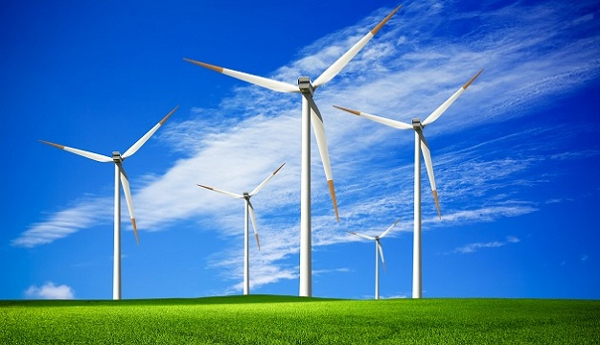
India’s installed wind power capacity reached 59.20 GW by September 30, 2026, marking another milestone in the country’s renewable energy expansion. The sector added a record 6.05 GW during FY2025–26, followed by another 3.11 GW in the first six months of FY2026–27. The growth reflects increasing investment in wind energy projects, stronger domestic manufacturing capabilities and continued efforts to improve renewable energy infrastructure.
Union Minister for New and Renewable Energy Pralhad Joshi highlighted these achievements while inaugurating the eighth edition of Windergy India 2026 in Chennai on October 8. He reaffirmed the government’s target of achieving 100 GW of installed wind power capacity by 2030, supported by an expanding project pipeline, policy measures and investments in domestic manufacturing.
India’s wind energy sector is also becoming an important contributor to industrial development. The country has established substantial manufacturing capabilities in wind turbines, blades, generators, gearboxes and associated equipment, creating opportunities for Indian engineering companies and component manufacturers.
India Records Highest-Ever Annual Wind Capacity Addition
India installed 6.05 GW of wind power capacity during FY2025–26, surpassing its previous annual record of approximately 5.5 GW achieved in FY2016–17. According to the Ministry of New and Renewable Energy (MNRE), the latest addition represented an increase of nearly 46% over FY2024–25, when approximately 4.15 GW was installed.
The momentum continued into the current financial year, with installations increasing from 56.09 GW in March 2026 to 59.20 GW by September. The sector added approximately 681 MW during September alone, following cumulative installed capacity of 58.52 GW in August.
The expansion reflects progress in project execution, transmission connectivity and the development of new wind energy installations. It also indicates greater activity among renewable energy developers and manufacturers supplying turbines and supporting infrastructure.
Wind energy remains an important component of India’s renewable electricity portfolio, particularly in states with favourable wind resources and established manufacturing ecosystems.
Government Targets 100 GW of Wind Power by 2030
The government aims to increase India’s installed wind power capacity to 100 GW by 2030. With 59.20 GW operational at the end of September 2026, the country requires approximately 40.8 GW of additional capacity to achieve the target.
During Windergy India 2026, Pralhad Joshi expressed confidence that annual wind installations would exceed the record achieved in FY2025–26. He highlighted the importance of maintaining a strong project pipeline while addressing administrative, technical and infrastructure-related challenges that can delay renewable energy projects.
The government has identified more than 30 GW of wind projects under implementation, providing a substantial foundation for additional capacity. Converting these projects into operational installations will require timely land acquisition, grid connectivity, financial closure and equipment availability.
Wind power also contributes to India’s broader objective of achieving 500 GW of non-fossil-fuel electricity generation capacity by 2030. Its expansion complements investments in solar energy, hydropower and other clean electricity technologies.
India Develops a Strong Domestic Wind Turbine Manufacturing Industry
India has built a substantial wind turbine manufacturing ecosystem capable of supplying equipment for domestic installations and international markets. According to MNRE, annual manufacturing capacity increased from approximately 10 GW in 2014 to around 24 GW by March 2026.
The industry manufactures turbine blades, towers, generators, gearboxes and other specialised components. Indian companies such as Suzlon Energy, Inox Wind and Adani Wind operate within this expanding manufacturing landscape, alongside numerous suppliers specialising in mechanical engineering, electronics and industrial materials.
Wind turbine production requires expertise across several engineering disciplines. Modern turbines incorporate advanced composite blades, precision-manufactured mechanical components, electrical generators, power electronics and digital control systems designed to operate efficiently under changing wind conditions.
The expansion of domestic manufacturing supports India’s renewable energy targets while creating opportunities for smaller engineering companies. Local production can also reduce dependence on imported components, improve equipment availability and strengthen the industry’s ability to serve export markets.
India’s manufacturing capacity is becoming particularly important as developers adopt larger turbines and more advanced technologies that require specialised materials, precision engineering and reliable maintenance support.
WT-MARUT Portal Strengthens Indigenous Wind Energy Supply Chains
The Ministry of New and Renewable Energy launched the Wind Turbine Materials and Resources Utility Tracker (WT-MARUT) on June 15, 2026, to strengthen coordination across India’s wind equipment manufacturing industry.
Developed with support from the Indian Wind Turbine Manufacturers Association, the digital platform helps manufacturers identify domestic suppliers and improve visibility across the industry’s component supply chains. It also supports efforts to increase indigenous sourcing and strengthen compliance with applicable manufacturing requirements.
Wind turbine production depends on a wide range of components, including bearings, electrical systems, electronic controllers, composite materials and precision-engineered assemblies. Manufacturers must coordinate procurement across specialised suppliers while maintaining demanding quality and performance standards.
WT-MARUT seeks to improve this process by connecting manufacturers with available domestic capabilities. Better supply-chain information can support production planning, reduce procurement bottlenecks and help Indian component suppliers participate in larger manufacturing programmes.
The initiative complements the government’s Approved List of Models and Manufacturers framework and its broader efforts to strengthen India’s renewable energy manufacturing base.
Gujarat, Tamil Nadu and Karnataka Drive Wind Energy Expansion
India’s wind power development is concentrated in states with favourable wind resources, suitable land availability and established transmission infrastructure. Gujarat, Tamil Nadu, Karnataka, Maharashtra and Rajasthan remain important contributors to the country’s installed wind energy capacity.
Gujarat has emerged as a major destination for renewable energy investment, supported by strong wind resources and expanding energy infrastructure. Tamil Nadu has a longstanding wind industry, with extensive installations and an established network of turbine manufacturers, engineering companies and service providers.
Karnataka has also recorded substantial wind energy development, while Maharashtra and Rajasthan continue to attract investments in renewable electricity generation. According to MNRE, Gujarat, Karnataka and Maharashtra were among the principal contributors to capacity additions during FY2025–26.
State governments play an important role in facilitating projects through land allocation, regulatory clearances, transmission connectivity and the resolution of Right-of-Way issues. Delays in these areas can affect project schedules even when equipment and financing are available.
During Windergy India 2026, several states received recognition for their contributions to land facilitation, project approvals and administrative coordination. These measures are increasingly important as India seeks to accelerate wind installations across multiple regions.
Tamil Nadu Advances Repowering of Older Wind Turbines
Tamil Nadu is exploring opportunities to increase electricity generation from existing wind energy locations through turbine repowering. The approach involves replacing older, lower-capacity turbines with modern machines capable of generating more electricity from suitable wind resources.
Many early wind farms were developed using turbines with relatively small generation capacities. Advances in blade design, generators, control systems and turbine engineering now allow newer installations to capture more energy from comparable wind conditions.
Repowering can improve electricity generation at established wind sites while making more effective use of existing infrastructure. It may also reduce the number of turbines required to achieve a given level of installed capacity.
However, replacing older equipment requires careful planning. Developers must address land agreements, grid connectivity, financing and existing power purchase arrangements before proceeding with repowering projects.
Tamil Nadu’s experience could provide useful lessons for other Indian states with ageing wind turbine installations. The approach offers a complementary route to increasing renewable electricity generation alongside the development of entirely new wind farms.
Windergy India 2026 Brings Global Manufacturers to Chennai
The eighth edition of Windergy India 2026 was held in Chennai from October 7 to 9, bringing together renewable energy developers, manufacturers, investors, technology companies and government representatives.
The exhibition featured approximately 400 exhibitors from more than 20 countries, alongside around 500 delegates. Dedicated country pavilions represented Denmark, Germany and Spain, reflecting the participation of established international wind technology industries.
Discussions covered advanced turbine platforms, large-capacity gearboxes, manufacturing competitiveness, offshore wind development and the integration of digital technologies into wind farm operations. Industry participants also examined project financing, contractual arrangements and measures to improve equipment reliability.
The event provided opportunities for Indian manufacturers to engage with international technology providers and explore new industrial partnerships. Such cooperation can support improvements in manufacturing processes, equipment testing and component quality.
Two reports, Energy Transition in Tamil Nadu and Reimagining Contractual Mechanism for Indian Wind Sector, were also released during the event. They addressed regional renewable energy development and commercial challenges affecting the wind industry.
International Partnerships Support Wind Technology Development
Several international cooperation initiatives were announced during the inauguration of Windergy India 2026, including engagements involving the Indian Wind Turbine Manufacturers Association and overseas industry and technical organisations.
The initiatives included cooperation with BWE, Germany’s wind energy industry association, and PTB, Germany’s national metrology institute. An additional engagement involved the Organisation for Economic Co-operation and Development.
These partnerships are intended to support industry cooperation, technological advancement and improvements in manufacturing practices. International engagement is particularly relevant to wind energy because turbine performance depends on precise engineering, reliable materials and consistent product quality.
Modern turbines operate under demanding mechanical and environmental conditions. Their components must withstand repeated loading, variations in wind speed and continuous operation over extended periods.
Improved testing methods, measurement standards and manufacturing processes can strengthen equipment reliability and help Indian companies compete in international markets.
Offshore Wind Opens Opportunities for Indian Engineering Companies
India’s renewable energy development strategy also includes the exploration of offshore wind resources. Offshore wind farms operate in marine environments, where wind conditions can support substantial electricity generation.
Developing offshore projects requires specialised engineering capabilities, including marine foundations, subsea electrical cables, heavy-lift equipment and installation vessels. Turbines must also withstand challenging environmental conditions, including high winds, saltwater exposure and wave activity.
These requirements create opportunities for India’s shipbuilding, steel, electrical equipment and heavy engineering industries. Domestic companies involved in marine construction and precision manufacturing could contribute to the development of an offshore wind supply chain.
The government has identified offshore wind potential along parts of India’s coastline, particularly near Gujarat and Tamil Nadu. Resource assessment, infrastructure planning and project-development mechanisms remain important steps towards commercial deployment.
The growth of offshore wind would diversify India’s renewable energy portfolio while encouraging additional technological capabilities in marine engineering and advanced electricity infrastructure.
Artificial Intelligence Improves Wind Turbine Operations
Digital technologies are becoming increasingly important in the management of wind power installations. Modern turbines incorporate sensors and monitoring systems that collect information about mechanical performance, electrical output and operating conditions.
Artificial intelligence and advanced data analytics can help operators examine this information to identify potential equipment problems, predict maintenance requirements and improve operational efficiency.
Predictive maintenance is particularly valuable because wind turbines contain large mechanical components that can be expensive and time-consuming to repair. Identifying developing faults early can reduce unplanned downtime and improve equipment availability.
Digital monitoring also allows operators to assess turbine performance across different wind conditions and optimise maintenance schedules. These capabilities become more important as wind farms expand and individual turbines increase in size.
Indian software developers, engineering companies and industrial automation specialists have opportunities to contribute technologies that improve the performance and reliability of renewable energy assets.
Wind and Solar Power Strengthen India’s Electricity Infrastructure
Wind energy complements solar power by providing electricity under different weather and operating conditions. While solar installations generate electricity primarily during daylight hours, wind turbines can operate during the day or night whenever sufficient wind resources are available.
The two technologies can therefore provide complementary generation patterns, particularly in regions where wind speeds increase during the monsoon season or at times when solar output is limited.
Hybrid renewable energy projects combine wind and solar generation, enabling developers to make more effective use of land, transmission infrastructure and available renewable resources. Integrating energy storage can further improve the management of variable electricity generation.
As renewable energy capacity increases, India’s electricity system will require continued investment in transmission networks, forecasting technologies, storage systems and grid management.
These investments are essential for integrating larger quantities of renewable electricity while maintaining reliable power supplies for households, industries and public infrastructure.
The growth of wind energy also creates demand for electrical equipment, power electronics, transformers and associated engineering services, extending its economic contribution beyond turbine manufacturing.
India Builds Momentum Towards 100 GW Wind Energy Capacity
India’s achievement of 59.20 GW of installed wind capacity by September 2026 demonstrates the continuing expansion of its renewable electricity infrastructure. Record annual installations, followed by strong additions during the first half of FY2026–27, have brought the country closer to its 100 GW target.
The sector’s development is supported by a substantial domestic manufacturing base, an expanding project pipeline and policy initiatives aimed at improving supply chains and accelerating installations. Repowering older turbines, developing offshore resources and adopting digital technologies will provide additional opportunities for technological advancement.
Windergy India 2026 highlighted the growing connection between renewable energy deployment and industrial development. India’s manufacturers are increasingly positioned to supply advanced equipment, participate in international technology partnerships and strengthen domestic engineering capabilities.
The continued expansion of wind power will support India’s transition towards cleaner electricity while creating opportunities across manufacturing, infrastructure, research and skilled employment. With stronger domestic capabilities and sustained project development, wind energy is becoming an increasingly important part of India’s long-term economic and energy transformation.
References
- Ministry of New and Renewable Energy, Press Information Bureau, October 8, 2026. Union Minister Shri Pralhad Joshi Inaugurates Windergy India 2026 in Chennai; Outlines Path to 100 GW Wind Capacity by 2030.
https://www.pib.gov.in/PressReleseDetailm.aspx?PRID=2320750&lang=1®=3 - Ministry of New and Renewable Energy, September 2026. Physical Achievements — Installed Renewable Energy Capacity as of September 30, 2026.
https://mnre.gov.in/en/physical-progress/ - Ministry of New and Renewable Energy, Press Information Bureau, October 5, 2026. Union Minister Shri Pralhad Joshi to Inaugurate Windergy India 2026 in Chennai.
https://www.pib.gov.in/PressReleaseIframePage.aspx?PRID=2319302&lang=2®=48 - Ministry of New and Renewable Energy, Press Information Bureau, April 6, 2026. India Achieves Highest-Ever Annual Wind Energy Addition of 6.05 GW in 2025–26.
https://www.pib.gov.in/PressReleasePage.aspx?PRID=2249408&lang=1®=1 - Ministry of New and Renewable Energy, Press Information Bureau, June 15, 2026. Union Minister Pralhad Joshi Launches First-Ever Wind Supply Chain Portal.
https://www.pib.gov.in/PressReleasePage.aspx?PRID=2273087&lang=1®=6 - Akashvani News, October 8, 2026. Government Committed to Strengthening Wind Energy Manufacturing Sector: Pralhad Joshi.
https://newsonair.gov.in/government-committed-to-strengthening-wind-energy-manufacturing-sector-pralhad-joshi/
You may also like
-
JSW Steel’s Crude Steel Production Rises 5% to 7.27 Million Tonnes in Q2 FY2027
-
Jubilant Pharmova Announces CAD 94.5 Million Expansion of Canadian Radiopharmaceutical Facility
-
Kabra Extrusiontechnik’s GEON Commissions 20 MWh Battery Storage Project in Rajasthan
-
GST Council Recommends Major Compliance Reforms, Raises Prosecution Threshold to ₹5 Crore
-
NTPC Subsidiary NVVN Targets 1,000 MWh Battery Storage Capacity by March 2027
