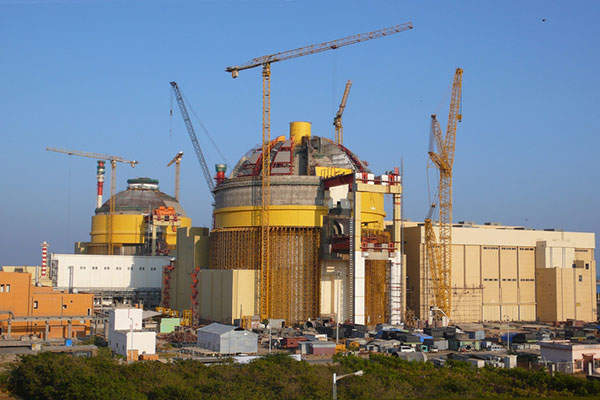
India’s largest power generation company, NTPC Limited, has reportedly identified three locations in Madhya Pradesh, Bihar and Odisha for developing nuclear power plants, marking another step in its expansion into atomic energy. The proposed projects form part of the public sector company’s long-term objective of establishing 30 gigawatts (GW) of nuclear power capacity by 2047.
According to reports published on 8 October 2026, NTPC has submitted detailed feasibility reports for the three locations to the Atomic Energy Commission for consideration. The company is also exploring partnerships with international nuclear technology providers to develop large pressurised water reactor projects.
The initiative reflects NTPC’s growing involvement in nuclear power generation as India works towards its national target of 100 GW of nuclear capacity by 2047. While the three sites remain at the proposal stage, their identification represents progress in developing a wider pipeline of nuclear projects across the country.
NTPC Identifies Nuclear Project Locations in Three States
NTPC’s proposed nuclear expansion covers three geographically distinct regions, with sites identified in Madhya Pradesh, Bihar and Odisha. Reports indicate that the company is considering facilities with generating capacities ranging from 2 GW to 4 GW at each location, potentially creating a combined development pipeline of up to 12 GW.
The Financial Express has identified the proposed locations as Basai in Madhya Pradesh, Banka in Bihar and Nabarangpur in Odisha. These locations remain subject to regulatory examination, technical assessments and the necessary government approvals.
Selecting a nuclear power plant site requires extensive investigation of geological stability, seismic conditions, water availability, population distribution and environmental considerations. Technical studies must also establish whether the proposed location can support the necessary infrastructure, emergency preparedness arrangements and electricity transmission facilities.
Submission of feasibility reports represents an early project-development milestone rather than final authorisation. The proposed facilities will require further scrutiny and statutory clearances before construction can begin.
NTPC Explores Nuclear Technology Partnerships with Four Global Companies
NTPC is reportedly evaluating potential technology partnerships with major nuclear energy companies from the United States, Russia and France. These include Westinghouse Electric Company and Holtec International of the United States, Rosatom of Russia and Électricité de France (EDF).
Discussions are focused on the possible deployment of pressurised water reactors, a reactor technology widely used in commercial nuclear power generation. Such reactors use ordinary water under high pressure as a coolant, allowing heat generated through nuclear fission to be transferred to a separate steam-generation system.
International collaboration could provide NTPC with access to reactor designs, engineering expertise, manufacturing processes and specialised nuclear equipment. However, the company has not publicly confirmed a final technology selection for the three reported sites.
Technology transfer and domestic manufacturing are expected to influence future decisions. Greater participation by Indian engineering companies could help develop a manufacturing ecosystem covering reactor components, heavy forgings, precision equipment, electrical systems and specialised construction services.
Fuel supply arrangements will also require consideration because reactor technologies differ in their fuel requirements. Pressurised water reactors typically use enriched uranium, making reliable fuel procurement and long-term supply arrangements important elements of project planning.
NTPC’s 30 GW Nuclear Target Forms Part of India’s 2047 Energy Strategy
NTPC’s nuclear expansion is aligned with the Government of India’s objective of achieving 100 GW of nuclear power capacity by 2047.
In a written reply to the Lok Sabha on 5 February 2026, Minister of State for Power Shripad Naik confirmed that NTPC was planning to establish 30 GW of nuclear capacity by 2047. The Ministry of Power outlined two principal routes for implementing the programme: a joint venture with Nuclear Power Corporation of India Limited and a wholly owned subsidiary established specifically for nuclear power development.
Nuclear energy offers a source of low-carbon electricity that can operate independently of daily variations in sunlight and wind. Its ability to supply steady electricity makes it a potentially important component of India’s future generation mix as renewable energy capacity expands.
NTPC’s proposed nuclear portfolio would complement its thermal, hydroelectric and renewable energy assets. The company is also developing battery storage and pumped-storage capabilities to support electricity supply management and grid flexibility.
Together, these technologies could allow NTPC to operate a more diversified power generation portfolio while supporting India’s long-term energy security requirements.
Mahi Banswara Project Establishes NTPC’s Nuclear Power Foundation
NTPC’s entry into nuclear electricity generation is already progressing through the Mahi Banswara Rajasthan Atomic Power Project in Rajasthan. The project is being developed by Anushakti Vidhyut Nigam Limited (ASHVINI), a joint venture between NTPC and Nuclear Power Corporation of India Limited (NPCIL).
The Mahi Banswara project will comprise four indigenous 700 MW pressurised heavy water reactors, providing a combined generating capacity of 2,800 MW. Unlike the foreign pressurised water reactor technologies being evaluated for future projects, these reactors belong to India’s domestically developed nuclear reactor programme.
The project received siting consent and environmental clearance in May 2025, while Prime Minister Narendra Modi laid its foundation stone on 25 September 2025. According to the Ministry of Power’s February 2026 statement, initial testing of the first 700 MW unit is projected for FY2032–33.
Mahi Banswara will provide NTPC with experience in developing nuclear generation infrastructure through its partnership with NPCIL. The experience gained in project execution, engineering coordination and nuclear power operations can contribute to the company’s subsequent projects.
NTPC Parmanu Urja Nigam to Support Future Nuclear Projects
NTPC has established a dedicated subsidiary, NTPC Parmanu Urja Nigam Limited (NPUNL), to advance its nuclear power ambitions. The company was incorporated on 7 January 2025 following the necessary government clearances.
The subsidiary provides NTPC with a specialised corporate structure for pursuing nuclear energy projects, evaluating technologies and developing technical capabilities. Its activities complement those of ASHVINI, which is responsible for the Mahi Banswara project.
NTPC’s January 2026 investor presentation confirmed that the company had identified potential nuclear sites in several states and signed memoranda of understanding with Madhya Pradesh and Chhattisgarh. It also disclosed that NTPC had sought authorisation from the Department of Atomic Energy for NPUNL to build, own and operate nuclear power plants.
NTPC has begun strengthening its internal nuclear expertise. Its Nuclear Training Centre at the Power Management Institute in Noida commenced its first training programme in September 2025, supporting the development of personnel for the company’s expanding nuclear activities.
Nuclear Expansion Creates Opportunities for Indian Manufacturing
Large nuclear power projects require specialised equipment, high-quality materials and extensive engineering capabilities. Reactor pressure vessels, steam generators, pumps, valves, heat exchangers, control systems and electrical equipment must meet demanding technical and safety requirements.
India already possesses domestic capabilities in several areas of nuclear equipment manufacturing, supported by decades of indigenous reactor development. Companies involved in heavy engineering, precision manufacturing, instrumentation and specialised construction could find additional opportunities as NTPC expands its nuclear project portfolio.
The extent of domestic participation in projects using foreign reactor technologies will depend on the eventual technology agreements, manufacturing arrangements and regulatory requirements. Localisation could extend beyond component production to include design engineering, inspection, maintenance and specialised technical services.
A larger nuclear manufacturing ecosystem would also support the development of highly skilled employment in metallurgy, mechanical engineering, electronics, instrumentation and nuclear safety.
What Comes Next for the Three Proposed Nuclear Sites?
The immediate priority for NTPC’s three proposed locations will be completing the necessary site assessments and obtaining approvals from the relevant authorities. The company must also determine the most suitable reactor technology, establish project financing arrangements and assess electricity transmission requirements.
In Odisha, site exploration has already attracted attention. State government officials reported in September 2026 that NTPC was examining locations in Deogarh and Nabarangpur districts after preliminary assessments eliminated two other prospective sites. Subsequent reporting identified Nabarangpur as one of the three locations being prioritised nationally.
Final project decisions will require detailed evaluation of construction costs, reactor technology, nuclear fuel arrangements, water availability and long-term operating requirements. Regulatory approval and nuclear safety considerations will remain central to the development process.
NTPC’s selection of potential sites in Madhya Pradesh, Bihar and Odisha illustrates the geographical expansion of its nuclear ambitions. Its parallel work on Mahi Banswara, international technology partnerships and specialised nuclear institutions provides a foundation for the next phase of development.
As India pursues 100 GW of nuclear generating capacity by 2047, NTPC’s planned contribution of 30 GW could establish the company as one of the country’s major nuclear power developers, complementing its established position in thermal, hydroelectric and renewable energy generation.
References
- Ministry of Power, Government of India — NTPC Plans Setting Up of Nuclear Power Projects. Press Information Bureau, 5 February 2026.
https://www.pib.gov.in/PressReleasePage.aspx?PRID=2223660 - NTPC Limited — Operational and Financial Snapshot, Q3/9M FY2025–26. Official investor presentation, January 2026.
https://www.ntpc.co.in/sites/default/files/inline-files/OFS%20Q3%20FY26_FINAL.pdf - NTPC Limited — Diversified Growth. Official corporate information.
https://ntpc.co.in/diversified-growth - Financial Express — NTPC Zeroes In on Three Sites for 12 GW Nuclear Capacity. 7 October 2026.
https://www.financialexpress.com/business/news-ntpc-zeroes-in-on-three-sites-for-12-gw-nuclear-capacity-4355841/ - The Times of India — NTPC Identifies Three Locations for Nuclear Power Projects. 8 October 2026.
https://timesofindia.indiatimes.com/india/ntpc-identifies-3-locations-for-nuclear-power-projects/articleshow/134778436.cms - The New Indian Express — NTPC, Adani Group Get Nod for Nuclear Feasibility Studies. 24 September 2026.
https://www.newindianexpress.com/states/odisha/2026/Sep/24/ntpc-adani-group-get-nod-for-nuclear-feasibility-studies
You may also like
-
GST Council Recommends Major Compliance Reforms, Raises Prosecution Threshold to ₹5 Crore
-
NTPC Subsidiary NVVN Targets 1,000 MWh Battery Storage Capacity by March 2027
-
DFCCIL Sets New Freight Operations Record with 946 Train Interchanges in a Single Day
-
Seven Indian SMEs Debut on Stock Exchanges as Electronics, Software and Engineering Firms Access Public Markets
-
DRDO Advances Indigenous Submarine AIP System as ₹1,990 Crore Kalvari-Class Integration Programme Progresses
