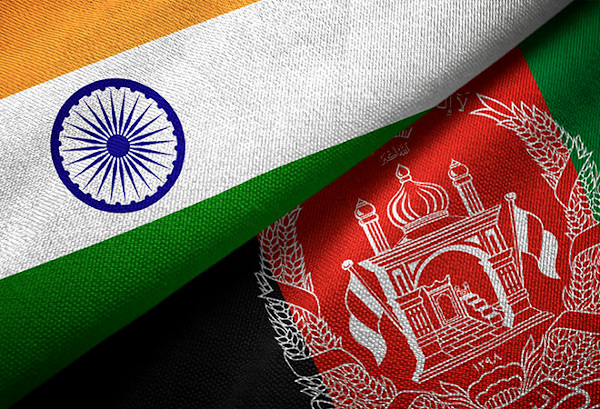
India and Afghanistan are again placing trade connectivity at the centre of their commercial engagement, with cargo movement, customs cooperation, banking channels, agricultural trade and pharmaceuticals among the areas being discussed through the bilateral Joint Working Group on Trade, Commerce and Investment. The renewed attention comes at a time when both sides are looking for practical ways to expand trade despite Afghanistan’s landlocked geography and continuing regional transit constraints.
For time-sensitive goods such as fresh and dried fruits, saffron, medicinal products and other high-value cargo, air freight remains one of the most direct commercial routes between Afghan producers and the Indian market. The renewed focus on cargo connectivity has therefore brought the earlier India–Afghanistan Air Freight Corridor back into relevance as both countries work to strengthen trade flows.
Trade Connectivity Returns to the Bilateral Agenda
The India–Afghanistan Joint Working Group on Trade, Commerce and Investment met virtually on September 1, 2026, with officials from commerce, industry, customs, regulatory authorities and diplomatic missions participating from both countries. The discussions covered trade facilitation, customs cooperation, visa arrangements for Afghan traders, banking and financial cooperation, pharmaceuticals, agriculture, energy, investment, tariff concessions, cargo connectivity and port-related issues.
The inclusion of cargo connectivity within a much wider commercial agenda is significant because transport alone cannot restore trade. Banking channels, customs procedures, trader mobility and regulatory cooperation all influence whether goods can move reliably between the two countries. The latest discussions therefore point to an effort to rebuild the wider commercial framework rather than focusing on a single transport route.
The Air Freight Corridor Began in 2017
India and Afghanistan established a dedicated Air Freight Corridor in June 2017 to create a more direct commercial connection between the two countries. The first cargo flight from Kabul to Delhi arrived on June 19, 2017, and a Kandahar–Delhi service followed later that month.
The corridor was designed to give landlocked Afghanistan quicker access to Indian markets while helping Afghan farmers, traders and exporters move perishable and high-value products without depending entirely on overland routes. It became particularly useful for goods whose commercial value could fall sharply when transit times were long or unpredictable.
Nearly 1,000 Cargo Flights Operated Before 2021
The air corridor expanded steadily in the years that followed and became an important part of India–Afghanistan trade. Official Indian records show that the corridor handled close to 1,000 cargo flights by 2020, carrying goods valued at more than US$216 million.
The network also expanded beyond the original Kabul–Delhi connection and included routes involving Kandahar and Mumbai. This demonstrated that direct air freight could support a wider commercial network and give Afghan exporters access to more than one major Indian market.
Afghan Agricultural Exports Were a Natural Fit for Air Cargo
Afghanistan’s export basket made air freight particularly useful. The country is known for dry fruits, fresh fruits, saffron, asafoetida, nuts, medicinal plants and other agricultural products that benefit from quick movement and better control over transit time.
Fresh produce is especially sensitive to delays because quality and market value can deteriorate quickly. Air cargo offered a way to shorten delivery times and reduce uncertainty, particularly during periods when surface transport faced restrictions or logistical bottlenecks.
For Indian importers, direct air freight also made it easier to source premium Afghan agricultural goods with greater predictability. This helped the corridor become commercially meaningful rather than merely symbolic.
India’s Pharmaceutical Sector Offers Trade in the Other Direction
The commercial relationship between India and Afghanistan has never been one-sided. India has long been an important supplier of pharmaceuticals, medical products, machinery and manufactured goods to Afghanistan, making these sectors natural candidates for renewed cargo connectivity.
The inclusion of pharmaceuticals and regulatory cooperation in the September 2026 Joint Working Group meeting therefore has practical importance. Medicines and medical supplies are well suited to air transport because they are relatively high in value and often require dependable delivery schedules.
A stronger cargo network could consequently support Afghan agricultural exports to India while also facilitating Indian pharmaceutical and manufactured exports to Afghanistan. This two-way flow is important for making any air-cargo arrangement commercially sustainable.
Banking and Payments Remain Essential to Trade Revival
Cargo capacity alone cannot revive bilateral trade if exporters and importers lack predictable financial channels. The 2026 discussions therefore also included banking and financial cooperation, which remains one of the most important practical issues in India–Afghanistan commerce.
Exporters need reliable payment mechanisms, trade finance, customs documentation and channels for settling transactions. Without these, even available transport routes cannot operate at full commercial capacity.
The inclusion of banking alongside cargo connectivity shows that both sides are looking at the trade system as a whole. That is essential because physical connectivity and financial connectivity must work together for regular commercial flows to develop.
Customs Cooperation Could Reduce Delays
Customs coordination is another important part of the current effort to strengthen trade. Both sides have discussed improving customs cooperation and data sharing, which can reduce delays, improve transparency and make cargo clearance more predictable.
For agricultural products and pharmaceuticals, faster customs processing is particularly valuable because delays can damage perishable goods or interrupt time-sensitive deliveries. Better digital coordination between regulatory agencies could therefore make both air and maritime cargo routes more commercially viable.
Chabahar Gives Trade a Second Route
Air freight is only one part of India–Afghanistan connectivity. The Chabahar Port route through Iran provides another important pathway that avoids dependence on traditional land transit corridors.
Before 2021, Afghanistan had already used Chabahar for shipments of agricultural and mineral products to India, while India used the port extensively for wheat and other supplies destined for Afghanistan. The route therefore demonstrated that bilateral trade could be supported through a combination of maritime and overland movement.
Air cargo and Chabahar serve different purposes. Sea and land routes are better suited to heavier and lower-value shipments, while aircraft are more appropriate for perishable, urgent and high-value cargo. Together, they can provide a more balanced trade network.
India–Afghanistan Agricultural Cooperation Is Also Expanding
Trade discussions in 2026 have been accompanied by renewed engagement in agriculture. Indian and Afghan officials have reviewed cooperation in irrigation, livestock, agricultural research, education, capacity building and agri-trade, while also discussing a dedicated mechanism for longer-term agricultural cooperation.
This wider agricultural engagement strengthens the case for better cargo connectivity because farming remains one of the clearest sectors where improved market access can produce direct commercial benefits. Afghan growers can gain wider access to Indian consumers, while Indian companies can find opportunities in seeds, irrigation, farm machinery, processing and agricultural services.
Air Cargo Can Complement, Not Replace, Surface Trade
The return of air freight to the trade agenda should not be seen as a substitute for all other transport routes. Aircraft are expensive compared with sea or road transport and are most economical for products that are high in value, sensitive to time or vulnerable to spoilage.
Bulk commodities, construction materials and many industrial goods remain better suited to maritime or overland transport. The most practical India–Afghanistan trade network is therefore a combination of air freight for premium and time-sensitive cargo and Chabahar-linked movement for heavier consignments.
A Practical Route for Rebuilding Commercial Ties
The latest bilateral discussions show that India and Afghanistan are again trying to strengthen the infrastructure around trade rather than limiting engagement to individual consignments. Cargo connectivity, customs cooperation, banking, visas, pharmaceuticals and agricultural trade are now being addressed within the same institutional framework.
That gives the earlier Air Freight Corridor renewed importance. Its previous record showed that direct cargo flights could support meaningful trade volumes, particularly for Afghan agricultural products that benefited from faster access to Indian markets.
References
Ministry of Commerce and Industry, Government of India — India–Afghanistan Joint Working Group on Trade, Commerce and Investment, September 2026.
Ministry of External Affairs, Government of India — Official material on the India–Afghanistan Air Freight Corridor.
Prime Minister’s Office, Government of India — Official release on the first Kabul–India Air Freight Corridor flight, June 2017.
Ministry of External Affairs, Government of India — India–Afghanistan bilateral trade and connectivity information.
Ministry of Agriculture & Farmers’ Welfare, Government of India — India–Afghanistan cooperation in agriculture, irrigation, livestock and agri-trade.
You may also like
-
India’s Recent Oil and Gas Discoveries: New Finds, Offshore Frontiers and How Much Crude India Produces at Home
-
India’s Hidden Gold Mountain: How Households Came to Own an Estimated 31,000 Tonnes of Gold
-
India’s Defence Shipyards Build Common Indigenous Supply Chain for Specialised Naval Cables
-
Maruti Suzuki Commissions 300 kW Green Hydrogen Plant at Manesar to Cut Manufacturing Emissions
-
Nagpur Produces 28 Tonnes of CNG Daily from Waste as India Expands Waste-to-Fuel Projects
