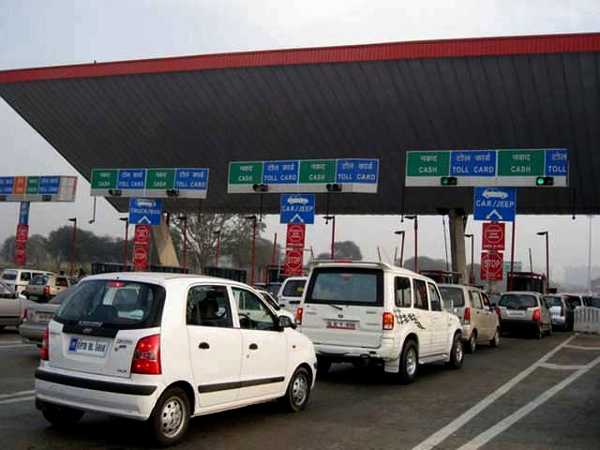
FASTag users can now switch from one issuing bank to another without removing or replacing the FASTag already affixed to their vehicle, following the introduction of NHAI’s new ‘OneTag’ portability service on the Rajmargyatra mobile application.
The service introduces a portability mechanism similar in principle to switching service providers while retaining an existing identifier. Instead of purchasing another FASTag when changing issuers, an eligible vehicle owner can retain the same physical tag and FASTag ID while transferring the associated service to a new issuer.
The National Highways Authority of India announced the availability of OneTag on September 17 as part of an expansion of citizen services offered through its Rajmargyatra application.
Same FASTag, Different Issuing Bank
Until now, changing a FASTag issuer could require the vehicle owner to close the existing account and obtain another physical FASTag from the new provider.
OneTag changes this process by allowing the existing FASTag to remain attached to the vehicle.
After successful portability, the FASTag ID associated with the vehicle registration number remains unchanged, while the financial relationship and wallet move to the newly selected issuer.
This eliminates the inconvenience of removing an existing tag, waiting for another one to be issued and attaching the replacement to the windscreen.
It can also help prevent the accumulation of multiple FASTags associated with the same vehicle, simplifying management for both motorists and issuers.
How FASTag Portability Works
The portability process is handled through NHAI’s Rajmargyatra app.
A FASTag user begins by logging into the application and entering the vehicle registration number. The system then checks whether the FASTag is eligible for portability.
If eligible, the user’s existing issuer sends a six-digit Mobile Verification Code (MVC) to verify and authorise the request.
The motorist can then select a new FASTag issuer and complete the customer-verification and wallet-onboarding procedures required by that provider.
Once these steps are completed successfully, the FASTag is transferred to the new issuer without changing either the physical tag or its FASTag ID.
Existing Wallet Balance Will Be Refunded
Switching issuers does not mean that the balance remaining with the previous provider is lost.
After portability has been completed, the previous issuer will close the existing FASTag wallet and refund the available balance after making any applicable adjustments.
The user then operates the FASTag through the wallet or payment arrangement established with the new issuer.
There is, however, a restriction intended to prevent frequent switching. An interoperable FASTag that has been ported will be subject to a six-month cooling period before it becomes eligible for another portability request.
Greater Choice for FASTag Users
The most immediate benefit of OneTag is greater freedom to choose between FASTag issuers.
FASTags are distributed by multiple banks and financial institutions, and differences can exist in areas such as customer service, wallet management and associated digital services.
With portability, dissatisfaction with an issuer no longer necessarily requires changing the physical FASTag itself.
This separates the tag installed on the vehicle from the institution providing the associated FASTag service, making the system more flexible for motorists.
Fewer Replacement Tags Could Reduce Costs
NHAI also expects portability to improve management of FASTags throughout their operational life.
Every unnecessary replacement involves production of another physical tag along with associated inventory, processing and dispatch costs. Allowing motorists to retain functioning tags when changing issuers reduces the need for repeated production and reissuance.
At the scale of India’s electronic tolling network, even relatively small improvements in FASTag lifecycle management can translate into significant operational efficiencies.
The system also reduces inconvenience for motorists because switching providers becomes primarily a digital process rather than one involving replacement of hardware installed on the vehicle.
Rajmargyatra Becoming a Wider Highway Services Platform
OneTag joins a growing collection of highway-related services available through the Rajmargyatra application.
The platform already provides access to the FASTag Annual Pass, FASTag Local Pass and National Highway emergency helpline 1033, among other services.
Adding FASTag portability increasingly positions the application as a common digital interface through which motorists can manage services associated with travelling on India’s National Highway network.
FASTag Network Now Covers Around 13 Crore Users
The scale at which OneTag is being introduced is considerable.
According to NHAI, FASTag has achieved a penetration rate of more than 98% and has around 13 crore users, making electronic toll collection the dominant method of paying tolls on India’s highway network.
FASTag uses Radio Frequency Identification technology to identify vehicles at toll plazas and enable electronic payment without requiring motorists to complete a conventional cash transaction.
The introduction of portability represents another stage in the evolution of that infrastructure. Earlier expansion concentrated primarily on increasing FASTag adoption and interoperability across toll plazas. OneTag now addresses interoperability between issuers from the consumer’s perspective.
For motorists, the concept is straightforward: the bank behind a FASTag can now change without the FASTag on the windscreen having to change with it.
Reference: https://www.pib.gov.in/PressReleaseDetail.aspx?PRID=2311392®=48&lang=1
You may also like
-
Berg Propulsion to Open Mumbai Office as India Shipbuilding Business Expands
-
Indian Steel Gains Wider Duty-Free Access to EU as New Quota Regime Takes Effect
-
India’s Textile Exports Jump 16.1% to ₹29,776 Crore in August, Handicrafts Surge 41%
-
India Begins First Soil Carbon Payments, Over 2,500 Farmers to Receive ₹2.9 Crore
-
D-Propulse: The Indian Startup Developing Rotating Detonation Engines for the Next Generation of High-Speed Flight
