India’s installed electricity generation capacity has reached approximately 552 GW, with more than 300 GW now based on non-fossil energy sources, as the country simultaneously expands renewable power, energy storage, nuclear capacity and the conventional generation required to support rapidly rising electricity demand.
Union Minister for Power and Housing and Urban Affairs Manohar Lal highlighted the scale of India’s changing power system during the G20 Energy Abundance Working Group meetings in Houston on September 15. Addressing discussions on energy security and affordable baseload power, the minister said India was pursuing a diversified energy strategy designed to combine reliability, affordability and energy security with the continuing expansion of cleaner sources of electricity.
The latest official data shows that India’s non-fossil capacity had reached 300.50 GW by July 31, 2026, representing more than 54% of total installed generation capacity. This includes solar, wind, hydro, bioenergy and nuclear power. India had crossed the 50% non-fossil threshold in June 2025, more than five years before the deadline associated with its Nationally Determined Contribution under the Paris Agreement.
Solar Becomes the Largest Non-Fossil Source
Solar power has emerged as the largest component of India’s non-fossil electricity capacity, reaching 164.59 GW by the end of July 2026. This represents an extraordinary expansion from just 2.8 GW in 2014 and reflects more than a decade of utility-scale solar development, rooftop installations, solar parks and increasingly large renewable-energy tenders.
Wind power has also expanded to 58.14 GW, while large and small hydropower together account for 57.24 GW. Bio-power contributes another 11.75 GW, while India’s existing nuclear fleet provides 8.78 GW. Together, these sources take India’s total non-fossil capacity to 300.50 GW.
The figure also means that India has already installed more than 60% of the 500 GW of non-fossil power capacity targeted for 2030. Reaching the remaining target will require continued additions across solar and wind while also expanding transmission networks, storage systems, hydroelectric projects and nuclear generation.
Installed Capacity Is Not the Same as Electricity Generation
The 54% figure requires an important distinction. It represents the proportion of India’s installed electricity-generation capacity that comes from non-fossil sources; it does not mean that more than half of all electricity generated in India currently comes from those sources.
Different power technologies operate for different numbers of hours during the year. Solar generation is limited to daylight hours and varies with weather, while wind output changes according to wind conditions. Nuclear, coal, gas and some hydropower stations can provide power for considerably longer periods when required.
Coal consequently continues to provide a large share of India’s actual electricity generation despite accounting for a smaller proportion of installed capacity than in the past. India’s energy transition is therefore not simply a process of replacing one source with another but of integrating very large quantities of variable renewable power while maintaining sufficient firm generation to keep the grid reliable.
This explains why the government increasingly discusses renewable energy together with energy storage, nuclear power, transmission expansion and reliable baseload capacity.
Storage Becomes Critical as Renewable Capacity Expands
The rapid expansion of solar and wind makes electricity storage increasingly important to India’s power system.
Solar power can generate very large quantities of electricity during the middle of the day, while demand may remain high after sunset. Battery systems and pumped-storage hydropower can absorb electricity when generation is abundant and return it to the grid when required.
India consequently has a large pipeline of storage projects under development. Government figures earlier in 2026 showed around 11,620 MW/69,720 MWh of pumped-storage projects under construction, with another 6,580 MW/39,480 MWh concurred but yet to begin construction.
Battery storage is expanding even more rapidly. Around 9,654 MW/26,729 MWh of Battery Energy Storage System capacity was under construction, while nearly 19,798 MW/61,013 MWh was at the tendering stage.
The development of such capacity will increasingly determine how much additional solar and wind India can integrate without creating periods of surplus renewable generation followed by shortages when those resources are unavailable.
Nuclear Power Returns to the Energy-Security Discussion
Nuclear energy also featured prominently in India’s discussions in Houston.
During a bilateral meeting with US Energy Secretary Chris Wright, Manohar Lal discussed India’s plans for electricity infrastructure capable of supporting artificial intelligence, high-performance computing and data centres, alongside the country’s nuclear expansion roadmap. India and the United States also reaffirmed cooperation under the US-India Energy Security Partnership, covering clean energy, resilient infrastructure and emerging technologies.
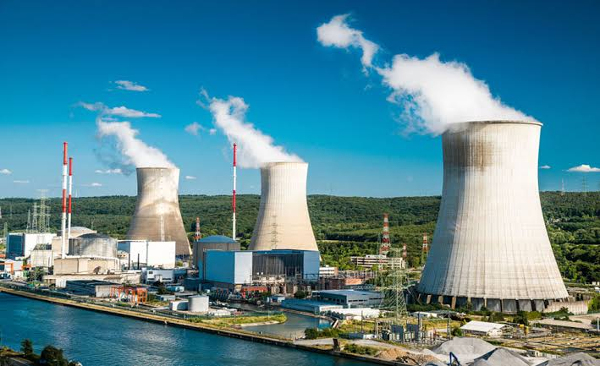
The emphasis on nuclear energy reflects the changing requirements of India’s electricity system. Solar and wind can provide large quantities of low-carbon electricity, but nuclear plants can produce electricity continuously and therefore provide another source of reliable non-fossil power.
Government figures indicate that 6.6 GW of nuclear generating capacity is already under construction and targeted for completion by 2029-30, while another 7 GW is progressing through various stages of planning and approval.
The expansion of nuclear generation is therefore becoming increasingly connected with the wider challenge of supplying round-the-clock electricity while reducing the carbon intensity of the grid.
AI and Data Centres Create a New Power Challenge
India’s discussion with the United States also highlighted a relatively new source of electricity demand: artificial intelligence and large-scale computing infrastructure.
AI data centres require enormous quantities of electricity not only to operate high-performance processors but also for cooling, storage, networking and supporting infrastructure. As India expands domestic AI computing capacity, semiconductor production, cloud infrastructure and data centres, the electricity system will need to accommodate industrial loads that can operate continuously.
India’s overall electricity demand is already expected to grow by more than 30% by 2030, with emerging sectors including AI-enabled data centres and electric mobility adding to conventional industrial, commercial and residential demand.
This makes the growth of generation capacity only one part of the challenge. New transmission infrastructure, substations, storage systems and reliable baseload generation will also be needed to deliver electricity where emerging industrial and digital clusters are developing.
India Highlights Faster Infrastructure Approvals
The second major theme addressed by India in Houston concerned the time required to build energy infrastructure.
During the G20 session on Permitting and Regulatory Efficiency, Manohar Lal highlighted India’s use of digital platforms including the National Single Window System, PARIVESH and PM Gati Shakti to streamline project approvals and improve regulatory predictability.
Large power projects frequently require coordination between multiple government agencies because they involve land, environmental clearances, transmission corridors, rail and road access and connections with existing infrastructure.
Delays at any one stage can affect the commissioning of an entire project. This becomes increasingly important as India attempts to add hundreds of gigawatts of generation and transmission capacity within relatively short periods.
PM Gati Shakti allows infrastructure planning across different government departments to be coordinated through a common geospatial platform, while PARIVESH provides a digital mechanism for environmental, forest, wildlife and coastal-regulation approvals. The National Single Window System is intended to simplify the wider investment approval process.
India’s argument at the G20 was therefore that energy abundance depends not only on capital and technology but also on the ability to move infrastructure projects through regulatory processes efficiently.
Canada Discussions Extend to Offshore Energy
India also used the Houston meeting to expand energy discussions with Canada.
Manohar Lal met Corey Hogan, Parliamentary Secretary to Canada’s Minister of Energy and Natural Resources, with the two sides discussing energy efficiency, low-emission technologies and offshore exploration. India invited Canadian companies to explore opportunities associated with the country’s expanding exploration and production sector, including under the Samudra Manthan initiative.
The talks demonstrate the broad nature of India’s current energy strategy. While renewable and nuclear capacity are expanding rapidly, the country continues to seek greater domestic production of conventional energy resources because oil and gas remain important to transportation, petrochemicals, industry and other sectors.
India is therefore approaching energy security through diversification rather than dependence on a single technology.
India Backs a Technology-Neutral Energy Transition
This approach was also reflected in India’s intervention at the G20.
Manohar Lal argued for technology-neutral and inclusive energy pathways, highlighting international initiatives including the International Solar Alliance, One Sun One World One Grid and the Global Biofuels Alliance.
A technology-neutral strategy allows different energy sources to perform different roles within the system. Solar and wind can provide increasingly large quantities of low-cost renewable electricity, hydro and batteries can help balance the grid, nuclear can provide continuous non-fossil generation, while conventional thermal power can continue providing reliability as storage and other technologies scale.
This approach is particularly relevant to India because electricity demand is rising at the same time that the country’s generation mix is undergoing a fundamental transition.
Unlike mature economies where electricity consumption may grow relatively slowly, India must decarbonise while simultaneously constructing large amounts of new generating capacity to support industrialisation, urbanisation, electric vehicles, data centres and rising household consumption.
More Than 300 GW Added Since 2014
The scale of India’s power expansion becomes clearer when the present 552-GW system is compared with the position just over a decade ago.
India had approximately 249 GW of installed power capacity in 2014. By July 2026, capacity had risen to around 552 GW, meaning that more than 300 GW of generating capacity had been added over the period.
Much of the change has come from renewable energy. Solar capacity increased from 2.8 GW to nearly 165 GW, while wind power expanded from around 21 GW to more than 58 GW. During 2025-26 alone, India added a record 55.29 GW of non-fossil capacity, including 44.6 GW of solar and 6 GW of wind.
Such rapid additions also create a corresponding infrastructure requirement. Generation projects need transmission lines capable of moving electricity from renewable-rich regions to major demand centres, while distribution systems must be upgraded to handle more complex two-way electricity flows and increasingly variable generation.
Transmission and DISCOM Reform Become Equally Important
Generation capacity alone cannot guarantee reliable electricity.
India’s transmission network has already expanded beyond five lakh circuit kilometres, but further investment will be required as large renewable-energy zones emerge in Rajasthan, Gujarat, Tamil Nadu, Karnataka and other regions.
Green Energy Corridors and other transmission projects are intended to move renewable electricity from these regions towards industrial centres and cities. Inter-state transmission will become increasingly important as solar and wind generation become more geographically distributed.
At the distribution level, the government is also pursuing reforms involving smart meters, more cost-reflective tariffs and improvements in the operational and financial condition of electricity distribution companies.
The energy transition therefore extends from power plants through the transmission network and ultimately into the financial and technological structure of India’s distribution system.
The Next Challenge Is Reliability at Scale
Crossing 300 GW of non-fossil capacity is an important milestone, but the more difficult phase of India’s energy transition is now beginning.
Adding solar and wind capacity becomes progressively more complex as their share of the grid increases. Electricity generated during favourable weather conditions must either be consumed immediately, transported elsewhere or stored. At other times, the system must have alternative generation available to compensate for lower renewable output.
India must therefore expand several parts of the system simultaneously. Renewable generation must continue growing, storage capacity must scale rapidly, nuclear development must accelerate where feasible, transmission networks must expand and conventional generation must remain capable of maintaining grid stability during the transition.
The rise of AI, electric mobility, semiconductor manufacturing and other electricity-intensive industries means that this transformation is occurring while overall demand is increasing rather than remaining static.
India’s 552-GW installed power system, with more than 300 GW now based on non-fossil technologies, demonstrates the scale that has already been achieved. The discussion in Houston, however, also underlined the next challenge: transforming a rapidly expanding collection of generating assets into a reliable, flexible and increasingly secure electricity system capable of supporting India’s economic growth for decades to come.
You may also like
-
Southern Railway Achieves 100% Electrification of Entire 5,068-km Broad-Gauge Network
-
India Removes Registration Barrier for Export Shipments Up to ₹3 Lakh in Major MSME Trade Reform
-
Sber Says India-Russia Payments Now Settle Within Minutes as Local-Currency Trade Infrastructure Expands
-
Bengaluru’s Kerael Robotics Develops Indigenous Propulsion for Heavy-Lift UAV Platform Targeting 2,500-kg Payloads
-
India’s First Commercial Silicon-Carbide Fab Moves Ahead in Odisha With ₹3,406-Crore Investment
