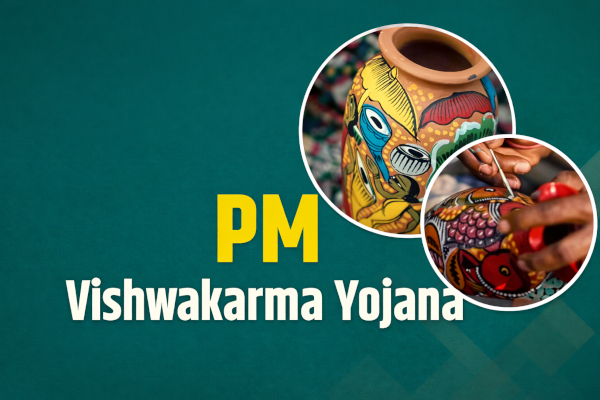
The PM Vishwakarma Scheme has reached its target of registering 30 lakh traditional artisans and craftspeople, three years after its launch, marking a major milestone in the government’s programme to bring traditional occupations into the formal ecosystem of skills, finance, modern tools and market support.
The Ministry of Micro, Small and Medium Enterprises will mark the scheme’s third anniversary on September 17, 2026, in Kolkata, where beneficiaries from different traditional trades will participate alongside government institutions, banks, local bodies and organisations involved in implementing the programme.
Launched on September 17, 2023, PM Vishwakarma covers artisans and craftspeople working across 18 identified traditional trades. The programme is intended to support workers who continue to depend substantially on manual skills and traditional tools while helping them improve productivity, obtain institutional finance and gain better access to modern markets.
30 Lakh Beneficiaries Complete Verification
According to the Ministry of MSME, 30 lakh beneficiaries have now been registered after completing the prescribed three-stage verification process, fulfilling the registration target set under the scheme.
Registration is only the first part of the programme. PM Vishwakarma combines formal recognition with skill development, improved tools, affordable credit, digital-payment incentives and marketing assistance so that traditional craftspeople can gradually strengthen their businesses rather than receiving support through a single intervention.
Beneficiaries receive PM Vishwakarma certificates and identity cards, establishing formal recognition of their traditional occupation while also enabling access to the other components of the programme.
Nearly 24.5 Lakh Artisans Receive Skill Training
Skill development has emerged as one of the largest components of PM Vishwakarma. Around 24.50 lakh Vishwakarmas have received Basic Skill Training through the Ministry of Skill Development and Entrepreneurship.
The training programme is intended to strengthen existing traditional skills while exposing artisans to improved techniques, modern tools, productivity practices and business-related knowledge. The objective is not to replace traditional craftsmanship but to help artisans increase efficiency and adapt their occupations to changing consumer and market requirements.
This is particularly important for trades where knowledge has traditionally passed from one generation to another through families or local communities, often without access to organised technical training.
₹5,297 Crore in Concessional Loans Extended
Access to formal credit is another major component of the scheme. The government says 6.18 lakh Vishwakarmas have received loan support of up to ₹1 lakh at a concessional interest rate of 5 per cent per annum, with loans sanctioned or extended under this component amounting to ₹5,297 crore.
The credit mechanism is intended to help artisans finance working capital, equipment and expansion without depending entirely on informal sources of borrowing. For small traditional businesses, access to relatively affordable institutional finance can provide the resources required to purchase raw materials, improve workshops and increase production.
Credit support under PM Vishwakarma is therefore closely linked with the scheme’s broader objective of helping traditional craftspeople develop sustainable micro-enterprises while retaining their specialised skills.
More Than 18 Lakh Modern Toolkits Delivered
The modernisation of tools has also reached a significant scale. According to the MSME Ministry, 18.15 lakh modern toolkits have been delivered directly to Vishwakarmas through India Post.
Better tools can have an immediate impact on productivity, precision and working conditions in trades that continue to rely heavily on manual craftsmanship. The toolkit component seeks to introduce improved equipment without separating artisans from the traditional skills that form the basis of their occupations.
By combining modern tools with skill training, the scheme attempts to improve both the productivity and quality of products produced by traditional craftspeople.
From Traditional Skills to Small Enterprises
PM Vishwakarma was designed as an end-to-end support programme rather than simply an artisan-registration scheme. Its different components cover recognition, skill upgradation, toolkit incentives, institutional credit, incentives for digital transactions and marketing assistance.
The structure reflects a wider challenge facing India’s traditional craft economy. Many highly skilled artisans operate at very small scales and may have limited access to banking, branding, modern equipment or organised markets. Their technical skills can therefore be considerable even when their ability to expand commercially remains constrained.
Providing finance and modern equipment addresses part of that gap, while market linkage and digital-payment support are intended to connect traditional producers with a broader customer base.
West Bengal Joins Scheme in 2026
The third-anniversary programme will be held at the Dhono Dhanyo Auditorium in Kolkata on September 17. West Bengal joined the PM Vishwakarma programme in May 2026, and around 3,000 beneficiaries have already completed the three-stage verification process and registered under the scheme.
Skill training for the state’s registered beneficiaries is currently underway.
The Kolkata event will include the distribution of PM Vishwakarma certificates, Basic Skill Training certificates, loan certificates and toolkits. An exhibition will also showcase products made by local artisans and craftspeople, providing participating beneficiaries with an opportunity to display and sell their work.
Union Minister for MSME Jitan Ram Manjhi, West Bengal Chief Minister Suvendu Adhikari, Minister of State for MSME Shobha Karandlaje and other central and state representatives are scheduled to participate in the anniversary programme.
Preserving Skills While Improving Livelihoods
India’s traditional craft economy encompasses occupations that have survived for generations, often through family-based transmission of specialised knowledge. Their continued survival, however, increasingly depends on whether artisans can combine those inherited skills with better technology, affordable finance and access to contemporary markets.
Three years after its launch, PM Vishwakarma has now created a formal network covering 30 lakh verified artisans, while skill training, concessional credit and modern-tool distribution have reached millions of beneficiaries.
The next stage will increasingly depend on whether this institutional support translates into higher productivity, stronger market access and sustainable incomes for artisans. If those linkages continue to deepen, the scheme could help traditional occupations move beyond subsistence activity and develop into stronger micro-enterprises without losing the craftsmanship and specialised knowledge on which they are built.
You may also like
-
India Targets One Crore AI-Trained Youth as Semiconductor Ecosystem Expands
-
Lam Research Deepens India Semiconductor Push With ₹10,000-Crore Silicon Manufacturing and R&D Expansion
-
Oil India Turns to Advanced Technology to Unlock Historic Heavy-Oil Discovery North of Brahmaputra
-
Aule Space: Indian Autonomous Docking Technology for Satellite Life Extension and Orbital Servicing
-
Mahishaka in the Mahabharata: The Ancient Southern Country of the Upper Kaveri
