China’s rise as the manufacturing centre of the world was supported by an enormous expansion of coal-fired electricity. Factories, steel mills, industrial cities and export zones grew alongside a power system capable of supplying vast quantities of relatively inexpensive electricity. India is now entering its own period of large-scale industrial expansion, but it is doing so under very different technological conditions.
Solar power is no longer a marginal or expensive source of electricity. Wind generation has expanded considerably, battery storage is beginning to move into utility-scale deployment, and large industrial consumers can increasingly procure renewable electricity through open-access arrangements and long-term power contracts. This gives India a development option that was not available to China when its manufacturing boom accelerated in the 1990s and early 2000s.
The contrast is captured well in Ember’s 2026 study, India’s Electrotech Fast-Track: Where China Built on Coal, India Is Building on Sun. The report does not argue that India has already become a renewable-powered economy. Coal remains the backbone of the Indian power system and continues to generate most of the country’s electricity. Its central argument is more important: India is reaching a major phase of industrialisation at a time when solar, wind, storage and electrification are mature enough to carry a much larger share of future growth.
That distinction matters because the industries driving the next phase of economic expansion are increasingly dependent on electricity rather than direct fossil-fuel consumption.
India Is Expanding Its Power System Differently
India’s electricity demand is growing rapidly as incomes rise, cities expand, air-conditioning spreads and industry consumes more power. At the same time, the composition of new generating capacity is changing.
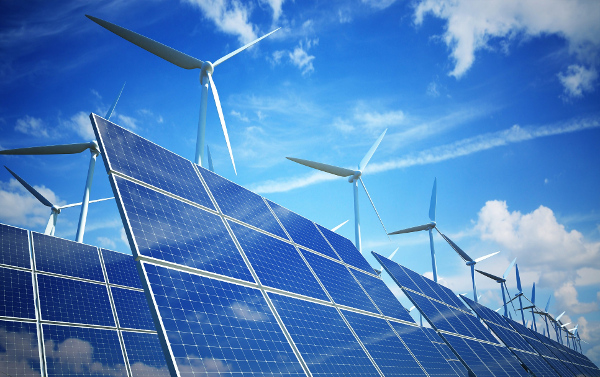
By August 2026, India had installed around 295 GW of renewable-energy capacity, including more than 168 GW of solar and around 58 GW of wind. When nuclear power is included, the country’s non-fossil generating capacity had crossed 300 GW. Solar capacity alone has expanded from only a few gigawatts little more than a decade ago to well above 160 GW today.
Coal, however, still produces most of the electricity actually consumed. Installed capacity and electricity generation are not the same thing. Solar plants generate only during daylight hours and wind generation varies with weather conditions, while coal plants can operate throughout the day. India therefore remains heavily dependent on thermal generation for dependable electricity.
The important change lies in where much of the new capacity is coming from. Renewable energy now represents a large share of annual additions to the power system. If this continues, India can increase electricity consumption substantially without increasing coal generation at the same rate as economic growth.
This creates a different industrial pathway from the one followed by many earlier manufacturing economies.
The New Industries Run on Electricity
The timing of this energy transition is particularly important because many of the industries India is trying to develop are highly electricity-intensive.
Artificial-intelligence infrastructure depends on vast computing clusters filled with GPUs and specialised processors. Semiconductor plants require uninterrupted electricity for clean rooms, lithography machines, vacuum systems, cooling equipment and process-control systems. Battery factories require power for electrode production, climate-controlled manufacturing, formation and testing. Robotics, electronics, precision engineering and automated manufacturing all rely on large and dependable electricity supplies.
The same is true of data centres, which are effectively large industrial consumers of electricity. Unlike a steel plant or oil refinery, a data centre does not need coal or petroleum as a feedstock. Its main requirements are electricity, cooling, connectivity and reliable infrastructure.
This makes the nature of the power system particularly important for the next generation of Indian industry.
The International Energy Agency expects Indian electricity demand to continue rising strongly through the end of the decade. Industry will account for a significant part of that increase, alongside cooling, transport electrification and digital infrastructure. Solar power is expected to meet a large portion of this additional demand.
India therefore has an opportunity to expand its digital and advanced-manufacturing economy while gradually reducing the amount of fossil fuel required for every additional unit of economic output.
Data Centres Show Why This Matters
Data centres provide perhaps the clearest example of the connection between industrial growth and renewable electricity.
India is attracting increasingly large investments in cloud computing and artificial-intelligence infrastructure. Google has announced major investment in an AI and data-centre hub in Visakhapatnam. Microsoft continues to expand its cloud infrastructure in India, including its Hyderabad region, while Amazon Web Services is expanding large data-centre operations in Mumbai and Hyderabad.
These companies are not looking only for land and fibre connectivity. Electricity availability is becoming one of the most important factors in deciding where large computing facilities are built.
Modern hyperscale data centres can consume hundreds of megawatts of power. Future AI campuses may require even more. Such facilities operate continuously, which means their electricity demand is large, predictable and long term.
That makes them attractive customers for renewable-energy developers.
A solar or wind project becomes easier to finance when a large industrial customer is willing to sign a long-term power-purchase agreement. At the same time, the data-centre operator gains greater certainty over electricity costs and can reduce exposure to fossil-fuel price volatility.
This relationship is already beginning to appear in India. Large technology companies operating data centres in the country have signed agreements linked to solar, wind and hybrid renewable projects. As AI infrastructure expands, the scale of these arrangements is likely to increase.
Renewable Power Is Useful Only If It Is Reliable
There is, however, an important limitation.
A data centre cannot operate only when the sun is shining. Semiconductor equipment cannot simply shut down at sunset. AI training clusters may run continuously for days or weeks. Advanced manufacturing plants require stable electricity throughout their production cycle.
For this reason, the future of renewable-powered industry in India will depend less on solar capacity alone and more on the development of firm and dispatchable electricity.
This requires several technologies to work together.
Solar generation provides large quantities of inexpensive electricity during daylight hours. Wind can complement solar in regions where generation patterns differ. Batteries can store surplus electricity for several hours and release it during evening demand peaks. Pumped-hydro storage can provide longer-duration balancing, while conventional hydro, nuclear power and thermal generation can continue supplying firm electricity when renewable output is insufficient.
India has already begun moving in this direction. Renewable-energy tenders are increasingly being designed around round-the-clock supply rather than simple solar or wind generation. Some projects combine several renewable sources with battery storage so that electricity can be delivered according to a schedule rather than simply when weather conditions permit generation.
This is the transition that matters most for industry.
The challenge is no longer simply to build more renewable generation. It is to make renewable electricity available when factories, data centres and cities actually need it.
Storage Will Decide How Far Solar Can Go
Battery storage is therefore becoming one of the most important parts of India’s energy transition.
India’s solar fleet will increasingly generate very large amounts of electricity during the middle of the day. Without sufficient storage or flexible demand, part of that electricity may be difficult to absorb efficiently. Batteries allow some of this power to be shifted into the evening, when solar generation disappears but electricity demand remains high.
Large industrial consumers can benefit directly from this arrangement.
A data-centre campus could use solar electricity during the day, battery power during evening peaks and grid electricity during longer periods of weak renewable generation. Similar combinations can be used by semiconductor plants, battery factories and other advanced manufacturing facilities.
Pumped-storage projects can perform the same role at a much larger scale. Water is pumped uphill when electricity is abundant and released through turbines when the grid requires additional power.
The stronger these storage systems become, the more useful renewable energy becomes to industry.
India’s Geography Is Also an Advantage
India has another advantage that is sometimes overlooked. Its renewable resources are geographically diverse.
Western India has excellent solar conditions. Gujarat and Tamil Nadu have strong wind resources. Rajasthan has enormous solar potential. Karnataka has developed both wind and solar generation. Himalayan and peninsular regions provide hydro and pumped-storage opportunities.
Because these resources do not all produce electricity at the same time, a stronger national transmission network can allow them to complement one another.
An industrial user in one part of India does not necessarily need to depend entirely on generation located nearby. Electricity can be contracted from renewable projects in another state and moved through the national grid.
This changes the relationship between industry and geography.
Historically, heavy industry often developed close to coalfields, ports or major fuel routes. Electricity-intensive digital and advanced manufacturing can be located according to a wider set of factors, including land, water, connectivity, skilled labour and access to renewable power.
Green Power Can Reduce Exposure to Imported Energy
Renewable electricity also has an energy-security advantage.
A solar or wind plant requires significant investment to build, but once it is operating it does not need to import fuel every day. There is no LNG cargo to purchase, no oil shipment to protect and no international coal price to absorb.
For India, which imports large quantities of oil, gas and other energy commodities, this distinction has strategic value.
The more economic activity that can be electrified and supplied from domestic renewable resources, the less exposed parts of the economy become to international fuel-price shocks and disruptions in global shipping.
This does not mean renewable energy makes India completely energy-independent. Solar modules, batteries, critical minerals and power electronics have their own supply chains, and India is still developing domestic capacity in many of these sectors.
Even so, electricity generated from domestic sunlight and wind is fundamentally different from electricity produced by continually burning imported fuel.
For industries that consume enormous amounts of power over decades, that difference can become economically important.
Deep Tech Fits Naturally Into an Electrified Economy
India’s emerging deep-tech sector is particularly well aligned with this transition.
Drones, industrial robots, satellite systems, electronics, communication equipment, electric vehicles, precision motors, sensors and semiconductor devices are all products of an increasingly electrified industrial system.
Their factories may still use steel, chemicals and other energy-intensive materials, but the manufacturing processes themselves rely heavily on electricity.
This means India does not necessarily have to repeat the exact industrial pathway followed by Europe, the United States or China.
The country can expand directly into sectors where electricity is the dominant form of energy consumption while simultaneously increasing the renewable share of that electricity.
The connection between energy policy and industrial policy therefore becomes much stronger.
A new semiconductor plant is also a power-system issue. A new AI data centre is a transmission issue. A new battery factory is a renewable-energy procurement issue. Large-scale industrial planning can no longer be separated from decisions about generation, storage and grid capacity.
Heavy Industry Will Remain More Difficult
The transition will be much harder in sectors such as steel, cement, fertilisers, refining and aviation.
These industries require very high temperatures, chemical feedstocks or energy-dense fuels that cannot always be replaced easily by electricity. Coal and natural gas will therefore remain important in several industrial sectors for a long time.
India will also continue to depend on coal-fired electricity while storage capacity, renewable generation, transmission and other forms of firm power expand.
The realistic goal is therefore not an immediate end to fossil fuels.
The more meaningful objective is to reduce the amount of additional fossil-fuel consumption required for each additional unit of economic growth.
If industrial output, computing capacity and electricity consumption can rise faster than coal consumption, the structure of the economy will gradually change even before coal generation begins to decline in absolute terms.
That is the transition now beginning to take shape.
Data Centres Must Be More Than Green on Paper
There is also a danger in describing every renewable-energy contract as proof that a data centre is fully powered by clean electricity.
Electricity accounting is complicated.
A company may purchase enough renewable electricity over the course of a year to match its total consumption, while the data centre itself continues drawing electricity from a coal-heavy grid during periods when solar and wind generation are unavailable.
This is why large technology companies are beginning to focus increasingly on matching electricity consumption with clean generation on an hourly basis rather than simply balancing the totals over an entire year.
India will need more storage, stronger grids and greater diversity of generation if this becomes the standard.
Water use must also be taken seriously. Large data centres require cooling, and cooling can place pressure on local water resources if facilities are poorly designed or located. Renewable electricity alone does not automatically make a data centre sustainable.
Efficiency, cooling technology, water recycling, hardware utilisation and the lifetime of computing equipment will all matter alongside the source of electricity.
Renewable Energy Can Become an Industrial Asset
The most important opportunity lies in treating renewable electricity as an industrial asset rather than only as an environmental policy.
India is simultaneously expanding solar manufacturing, battery production, grid infrastructure, semiconductor investment, AI computing capacity and advanced manufacturing.
These developments reinforce one another.
Large industrial electricity users can provide long-term demand for new renewable projects. More renewable projects create larger markets for Indian solar, wind and battery manufacturers. Storage makes renewable power more useful to factories and data centres. Stronger transmission brings more generation into industrial regions. Reliable and competitive electricity then makes those regions more attractive for additional investment.
If managed well, this can create a self-reinforcing cycle between energy infrastructure and industrial growth.
India’s next generation of factories may therefore help finance the power system that supplies them.
India Does Not Have to Follow the Same Energy Path
The comparison with China should be understood carefully.
China today is the world’s largest producer and installer of solar panels, wind turbines, batteries and electric vehicles. It is no longer simply a coal-based industrial economy.
The difference lies in the historical moment at which industrialisation occurred.
When China began its extraordinary manufacturing expansion, coal was cheap, solar was expensive and grid-scale batteries were not commercially viable. A coal-heavy industrial system was therefore the most practical option available.
India is industrialising under very different conditions.
Solar power is cheap. Wind power is mature. Batteries are improving rapidly. Electricity can be moved over large interconnected grids. Renewable power can increasingly be combined with storage and firm generation. Digital and advanced industries depend primarily on electricity rather than direct combustion of fossil fuels.
India therefore has choices that earlier industrial powers did not have.
Coal will remain part of the Indian energy system for years, and renewable power will not replace it overnight. But the technologies used to meet the country’s next wave of electricity demand will determine the energy intensity and competitiveness of Indian industry for decades.
The important question is no longer whether India will consume more electricity. It certainly will.
The question is what will generate that electricity.
For the data centres, semiconductor plants, battery factories, robotics companies and deep-tech industries now beginning to scale across India, the answer could increasingly be solar, wind, storage and a much stronger national grid.
That would not make India a completely green economy.
It would, however, allow the country to industrialise in a way that was simply not possible for earlier industrial powers.
You may also like
-
The Factory Must Keep Running: How Expanding BRICS Trade Could Reduce Dependence on the American Market
-
Overcoming Tariffs and the Weaponisation of Markets: How India’s FTA Network Is Building Trade Resilience
-
Neuland Expands Commercial Peptide Manufacturing With 6,370-Litre Facility at Bonthapally
-
PM Modi to Inaugurate SEMICON India 2026 as India Expands Semiconductor Manufacturing Ecosystem
-
RVNL-TMH Showcase Vande Bharat Sleeper Programme as India-Russia Rail Partnership Expands
