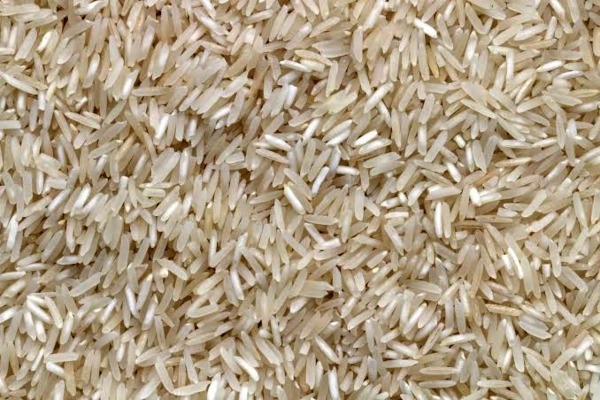
Among Assam’s remarkable indigenous rice varieties, Chokuwa Rice is distinguished by a characteristic that seems almost tailor-made for the modern age: after appropriate traditional processing, it can be eaten without conventional cooking. The prepared rice needs only to be soaked in ordinary or lukewarm water until it softens, creating what Assamese food culture knows as komal chaul, or soft rice.
Chokuwa belongs to Assam’s traditional group of semi-glutinous, low-amylose rice varieties. Farmers have maintained numerous Chokuwa landraces for generations, selecting them not simply for yield but for softness, grain quality and suitability for preparing traditional foods. Assam Agricultural University classifies Chokuwa as one of the state’s major speciality rice groups alongside Joha, Bora, Bao and black rice.
Its distinctive qualities, historical reputation and close association with Assam eventually led to registration of Chokuwa Rice of Assam as a Geographical Indication, protecting a rice tradition deeply rooted in the Brahmaputra Valley.
Geography — A Rice of Upper Assam and the Brahmaputra Valley
Chokuwa rice is traditionally associated particularly with the Upper Assam region of the Brahmaputra Valley. The landscape here is shaped by the Brahmaputra and its tributaries, extensive alluvial plains, monsoon rainfall and fertile agricultural soils. These environmental conditions have allowed Assam to develop one of India’s richest collections of indigenous rice varieties.
The traditional Chokuwa and komal chaul production belt includes districts such as Tinsukia, Dhemaji, Dibrugarh, Lakhimpur, Sivasagar, Jorhat, Golaghat, Nagaon, Morigaon and Sonitpur. The wider GI geographical area, however, is officially identified as the state of Assam.
Rice agriculture in this region developed around highly specific local conditions. Farmers historically selected different varieties according to elevation, field depth, soil texture, seasonal flooding and the expected culinary use of the harvested grain. Chokuwa consequently evolved not merely as another rice crop but as a specialised component of Assam’s traditional farming system.
The Brahmaputra Valley therefore provides both the physical environment and cultural setting in which Chokuwa acquired its unusual properties and reputation.
History — A Soft Rice with Centuries of Tradition
Chokuwa rice has a documented history stretching back well beyond modern agricultural breeding. The GI literature cites W.W. Hunter’s nineteenth-century Statistical Account of Assam, published in 1879, which recorded numerous Assamese rice varieties and referred to Chokuwa as being sufficiently soft to be eaten after soaking rather than boiling.
The tradition is believed to be considerably older. Historical accounts associated with the Ahom period describe komal chaul as a convenient food for soldiers. A grain that could be prepared with water rather than requiring a cooking fire had obvious advantages for people travelling, campaigning or working away from permanent settlements. The GI documentation refers to historian S.K. Bhuyan’s work on the Ahom military system in connection with this use.
Over generations, Assamese farmers preserved numerous Chokuwa landraces rather than allowing the rice to become a single standardised variety. Traditional names include Saru Chokuwa, Bor Chokuwa, Boga Chokuwa, Haru Chokuwa, Kagoli Chokuwa, Kalomdani Chokuwa, Lahi Chokuwa, Maju Chokuwa, Malbhog Chokuwa, Nepali Chokuwa, Sam Chokuwa, Pozo Chokuwa and Paro Chokuwa, among others.
This diversity demonstrates how Chokuwa developed within community farming systems. Individual landraces were maintained because farmers recognised subtle differences in maturity, grain form, field adaptation and suitability for traditional processing.
What Makes Chokuwa Rice Special
The defining feature of Chokuwa rice is its semi-glutinous character and relatively low amylose content. Assam Agricultural University places the amylose content of Chokuwa at approximately 10–15 per cent, although studies of individual traditional cultivars have recorded some variation. This places it between highly glutinous Bora rice and ordinary non-glutinous table rice.
Amylose is one of the principal starch components determining how rice behaves during cooking and cooling. Rice with very high amylose tends to remain comparatively firm and separate, while lower-amylose grains generally become softer and more cohesive. Chokuwa’s starch composition is therefore fundamental to the softness for which it is valued.
The grain types range from medium-bold to medium-slender, reflecting the genetic diversity within the Chokuwa group. The rice is consequently defined more by its physicochemical and processing qualities than by one fixed grain shape.
Research on Assam’s traditional rice has increasingly recognised Chokuwa as a distinct semi-glutinous class. Modern grain-quality studies separate Assam’s Sali rice into groups including ordinary Sali, aromatic Joha, glutinous Bora, semi-glutinous Chokuwa and deep-water Bao. This scientific classification reinforces what Assamese farmers had already understood through generations of selection and use.
From Chokuwa Paddy to Komal Chaul
One of the most important distinctions in understanding this GI product is that Chokuwa rice provides the raw material from which traditional komal chaul is prepared. Its famous “no-cooking” quality is achieved through the interaction between the special grain and an established processing method.
After harvesting, the paddy undergoes controlled soaking and heat treatment similar to parboiling. The processed paddy must then be dried carefully, traditionally under sunlight. GI documentation emphasises thorough same-day drying, followed by a tempering period that allows moisture within the grain to equalise.
The resulting rice can subsequently be prepared for eating without conventional boiling. Assam Agricultural University states that it generally requires only around 20–30 minutes of soaking in water, although the exact time can vary with the variety, processing method and water temperature.
This means Chokuwa is sometimes described as “zero-fuel rice,” “soft rice” or “magic rice.” These popular names reflect the convenience of the finished product, although the process is not literally free of heat: an important thermal-processing stage has already occurred before the rice reaches the consumer.
Traditional Assamese knowledge therefore transformed the physical properties of a low-amylose rice into an exceptionally convenient stored food long before industrial ready-to-eat foods became commonplace.
Traditional Cultivation
Chokuwa is principally cultivated during Assam’s Sali season, the main winter-rice cycle of the state. Sali rice is normally established during June and July with the arrival of the monsoon and harvested during November and December, although exact timings vary according to location and variety.
Traditional Chokuwa cultivars are relatively tall and long-duration plants. Assam Agricultural University records an average plant height of approximately 158 centimetres, with maturity around 160 days. Their yield potential is generally around 2 to 2.5 tonnes per hectare.
These figures help explain why Chokuwa remained a speciality rice rather than replacing modern high-yielding varieties. Its productivity is modest by contemporary commercial standards, while tall traditional plants can also be more vulnerable to lodging under adverse weather conditions.
Farmers nevertheless continued cultivating Chokuwa because its value lies in qualities that ordinary high-yielding rice cannot easily replace. Its semi-glutinous texture, processing behaviour and association with komal chaul give it a specialised culinary and commercial identity.
Preserving Chokuwa cultivation therefore also means maintaining the genetic diversity contained within its numerous landraces. These traditional varieties represent a valuable agricultural resource for future research into rice quality, starch characteristics and convenient food products.
Season, Cuisine and Market
Chokuwa rice has an important place within Assam’s broader tradition of jalpan, the light rice-based meals commonly eaten at breakfast, during festivals or when welcoming guests. Once processed into komal chaul, the rice can be softened with water and eaten with milk, curd, jaggery, sugar, molasses or coconut. Savoury accompaniments such as salt, oil, pickles and vegetables may also be used according to preference.
Its simplicity historically made Chokuwa especially useful for farm workers, travellers and soldiers, as well as during situations where normal cooking was difficult. That same characteristic gives the grain new relevance today.
A food that can be rehydrated quickly without requiring another cooking cycle has obvious potential for ready-to-eat products, travel foods, emergency supplies and low-energy food preparation. Chokuwa therefore represents an interesting meeting point between traditional knowledge and modern demand for convenient foods.
Government information has also highlighted Chokuwa or soft-rice products as part of Assam’s speciality-food economy. Its consumption remains strongly connected with local culture and festival seasons, but packaged and value-added forms have gradually become more visible in urban markets.
GI protection can strengthen this opportunity by helping consumers distinguish rice genuinely associated with Assam from products that merely use the name. For small farmers and traditional processors, this creates the possibility of earning a premium from characteristics preserved over generations rather than competing solely through volume.
Chokuwa and Boka Chaul — Closely Related, but Separate GI Names
The terminology surrounding Assam’s soft rice can sometimes be confusing because expressions such as Boka rice, soft rice, magic rice, Chokuwa and komal chaul overlap in everyday descriptions. Assam Agricultural University itself notes that Chokuwa is popularly referred to by some of these names.
However, the Geographical Indications Registry separately records “Boka Chaul” and “Chokuwa Rice of Assam” as two registered GI names, with different application numbers. Chokuwa Rice of Assam is registered under Application No. 572, while Boka Chaul has its own GI registration.
For the Chokuwa tradition, an especially useful distinction is to think of Chokuwa as the traditional low-amylose rice class, while komal chaul describes the soft ready-to-eat product obtained through appropriate processing of such rice. Regional vocabulary and traditional practices nevertheless mean that the names can overlap considerably in popular usage.
GI Information
- GI Name: Chokuwa Rice of Assam
- State: Assam
- Category: Agricultural
- Class: 30
- GI Application Number: 572
- Date of Filing: 14 December 2016
- Applicant: Seuj Satirth
- Applicant Location: Dimow, Sivasagar district, Assam
- Geographical Area: Assam
- GI Journal Number: 124
- Journal Availability Date: 24 October 2019
- Certificate Number: 362
- Certificate Date: 26 February 2020
- Current Registration Valid Until: 13 December 2026
- Country: India
Chokuwa Rice of Assam demonstrates how traditional farmers could develop food technologies through observation and experience without laboratories or industrial processing plants. By selecting rice with the right starch characteristics and combining it with carefully controlled traditional processing, communities in Assam created a grain that could be turned into a satisfying meal using little more than water.
Its importance therefore goes well beyond the novelty of being a “magic rice.” Chokuwa preserves a distinctive group of indigenous rice genetics, an old processing tradition and a food culture shaped by the rhythms of agricultural life in the Brahmaputra Valley.
In an age increasingly interested in convenient foods, energy-efficient preparation and conservation of traditional crop diversity, Chokuwa offers something unusually modern from an ancient agricultural tradition. Its GI protection ensures that this remarkable soak-and-eat rice remains identified with the land and communities of Assam that preserved it.
You may also like
-
India’s Quick Commerce Market Could Reach US$90 Billion by FY31 as Retail Shopping Undergoes Major Transformation
-
India Targets 10% of Global 6G Patents and Standards, Pushes Indigenous Telecom Technologies
-
India’s Satellite Broadband Industry Nears Commercial Launch as Bharti OneWeb, Jio and Starlink Await Final Approvals
-
India’s Defence Electronics Industry Expands as BEL, Astra Microwave and Private Manufacturers Strengthen Indigenous Supply Chains
-
India’s Private Space Sector Creates New Opportunities for Young Engineers, Helps Reduce Brain Drain
