India and Uzbekistan have moved towards strengthening their long-term uranium supply partnership, placing nuclear fuel security and critical minerals among the increasingly important pillars of their expanding strategic relationship.
The issue figured prominently during Prime Minister Narendra Modi’s State Visit to Uzbekistan on 29–30 August 2026, when he held extensive talks with Uzbek President Shavkat Mirziyoyev in Tashkent. According to the Prime Minister’s Office, Modi welcomed the progress being made on a long-term arrangement for the supply of uranium from Uzbekistan to India and emphasised the importance of expanding bilateral cooperation in critical minerals.
The development is strategically significant for India as it prepares for a major expansion of its civil nuclear programme. Uzbekistan, meanwhile, has rapidly increased uranium production and possesses substantial proven reserves, making the Central Asian country an increasingly important potential source of nuclear fuel for India.
The latest understanding builds upon a nuclear fuel relationship that already stretches back several years rather than creating it from scratch.
India and Uzbekistan Already Have a Uranium Supply Relationship
India’s uranium cooperation with Uzbekistan predates the latest summit by more than a decade.
Government records show that India had entered into an earlier arrangement with Uzbekistan’s Navoi Mining and Metallurgical Combinat for the supply of natural uranium ore concentrate. A more definitive long-term contract was subsequently signed on 18 January 2019 for the supply of 1,100 metric tonnes of uranium, expressed as MTU, during the period from 2022 to 2026.
The contract was formally exchanged in the presence of Prime Minister Modi and President Mirziyoyev during the Vibrant Gujarat Global Summit in January 2019. At the time, the Indian government described it as an agreement for the long-term supply of uranium ore concentrate to meet India’s energy requirements.
The original 2019 contract therefore reaches the end of its stated 2022–2026 supply period this year. Against that background, the reference made by the Prime Minister’s Office in August 2026 to progress on a “long-term arrangement” is particularly important. It strongly indicates that the two sides are working on the next phase of their uranium relationship.
However, neither the Indian government’s official list of outcomes from the August 2026 visit nor the bilateral Joint Statement specifies a new uranium quantity, contract value or delivery schedule. The precise commercial terms of the future arrangement therefore remain to be publicly disclosed.
No Separate Uranium Contract Listed Among Visit Agreements
The distinction is important because several reports have characterised the outcome as a newly signed uranium supply agreement.
The official Indian list of agreements and announcements issued after the summit records eleven agreements and memoranda covering areas including geology and mineral resources, higher education, environmental protection, Ayurveda, tourism, archives and economic cooperation. It also records the elevation of bilateral relations to a Comprehensive Strategic Partnership and a commercial agreement enabling Indian UPI applications to work with Uzbekistan’s UZQR payment network.
A separate uranium supply contract is not included in that list.
The Indian government’s own account instead says that Prime Minister Modi “appreciated the progress made in the long-term arrangement for supply of Uranium from Uzbekistan to India.” This wording suggests that negotiations or implementation work surrounding a longer-term supply framework has advanced, but it does not establish that a new commercial uranium contract was formally signed during the summit itself.
For publication, the more accurate description is therefore that India and Uzbekistan have advanced their long-term uranium supply arrangement, potentially preparing the ground for supplies beyond the expiry of the existing 2022–2026 contract.
Uzbekistan Emerging as a Major Uranium Producer
The importance of Uzbekistan to India’s nuclear fuel strategy has increased substantially because of the Central Asian country’s expanding uranium industry.
Official Uzbek government data released in February 2026 shows that Uzbekistan produced approximately 7,000 tonnes of uranium in 2025. The country’s proven uranium reserves were reported at around 139,000 tonnes.
Uzbekistan is also developing additional uranium deposits. The government identified Arnasay, Western Qizilqoq, Southern Jongeldi and Eastern Agron among the deposits scheduled for further development as the country seeks to expand production and processing capacity.
This growing production base gives Uzbekistan considerable strategic importance in the international nuclear fuel market.
For India, establishing durable relationships with major uranium-producing nations can reduce dependence on any single supplier while providing greater predictability for the expansion of its safeguarded nuclear reactor fleet.
Uranium Is Essential to India’s Nuclear Expansion
India currently operates a nuclear power fleet with an installed capacity of approximately 8.78 GW, excluding Rajasthan Atomic Power Station Unit 1. Under the government’s Nuclear Energy Mission, that capacity is planned to rise to around 22 GW by 2031–32 and ultimately to 100 GW by 2047.
Achieving such an expansion will require not only construction of reactors but also a dependable long-term fuel supply.
India possesses domestic uranium resources and has been expanding exploration and production through the Uranium Corporation of India Limited. Domestic supplies remain strategically important, particularly for India’s indigenous nuclear programme.
At the same time, India has for years imported uranium for nuclear reactors placed under International Atomic Energy Agency safeguards. Government records show that India has previously secured uranium or nuclear fuel from suppliers including Kazakhstan, Canada, France, Russia and Uzbekistan.
Diversification reduces vulnerability to supply disruptions and provides a larger commercial pool from which India can secure fuel as its nuclear generating capacity expands.
The 100-GW Nuclear Energy Mission Changes the Scale of Fuel Requirements
India’s future uranium requirements could become substantially larger if the government’s nuclear roadmap is realised.
The Nuclear Energy Mission envisages reaching 100 GW of nuclear generating capacity by 2047, compared with less than 9 GW at present. The government expects indigenous 700-MW Pressurised Heavy Water Reactors to play a significant role, alongside larger reactors developed with foreign cooperation and a new generation of Small Modular Reactors.
The roadmap envisages NPCIL eventually accounting for around 54 GW of the total, while the remaining capacity could be developed by other public-sector enterprises, state governments, private companies and joint ventures under new business models.
Such a transformation would inevitably increase the importance of nuclear fuel security.
Uranium supply agreements are therefore not merely commodity transactions. They are an essential part of the long-term infrastructure required to sustain reactor operation over several decades.
Natural Uranium and India’s PHWR Fleet
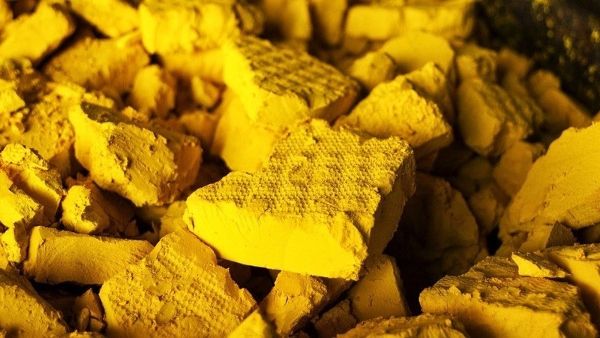
Uzbekistan has traditionally supplied India with natural uranium ore concentrate, rather than finished enriched reactor fuel.
This is relevant because much of India’s indigenous nuclear power programme is based on Pressurised Heavy Water Reactors, which are designed to operate using natural uranium fuel.
Uranium ore concentrate represents an upstream material in the nuclear fuel cycle. It must undergo processing and conversion before being fabricated into the fuel required by reactors.
Long-term procurement agreements consequently provide India with greater certainty over access to the raw material required for nuclear fuel fabrication while preserving significant downstream processing and fuel-cycle capabilities within the country.
Nuclear Energy Added to a Wider Critical Minerals Partnership
The August 2026 summit placed uranium cooperation within a broader strategic framework involving minerals, mining and energy.
In their Joint Statement, Modi and Mirziyoyev agreed to explore deeper collaboration in geology, mining, nuclear energy, industrial cooperation and critical and strategic minerals. The two sides also expressed interest in mineral processing, value-added production and recycling, while encouraging Indian companies to participate in the development of prospective mineral deposits in Uzbekistan.
India and Uzbekistan separately signed an MoU between India’s Ministry of Mines and Uzbekistan’s Ministry of Mining Industry and Geology covering cooperation in geology and mineral resources.
The two governments also expressed interest in expanding peaceful uses of nuclear energy, indicating that the partnership could eventually extend beyond the simple buyer-seller relationship associated with uranium.
Prime Minister Modi described cooperation in critical minerals, clean energy and nuclear energy as among the sectors making the India-Uzbekistan relationship increasingly future-oriented.
From Strategic Partnership to Comprehensive Strategic Partnership
The uranium discussions formed part of a much broader strengthening of India-Uzbekistan relations.
During the visit, the two countries formally elevated their relationship from a Strategic Partnership to a Comprehensive Strategic Partnership. The leaders also set a target of raising bilateral trade to $5 billion by 2030 and agreed to create a mechanism led by their Foreign Ministers to oversee implementation of major bilateral initiatives.
Uzbekistan’s official account said bilateral trade had risen by 33% during the previous year to approximately $1.3 billion, while the two governments identified energy, critical minerals, pharmaceuticals, healthcare, electronics, engineering and agriculture as areas offering substantial new opportunities.
The move towards a deeper uranium relationship therefore forms part of a much larger shift in which energy security, digital infrastructure, minerals, defence cooperation and industrial investment are becoming increasingly prominent components of bilateral ties.
A Strategic Fuel Partnership for India’s Nuclear Future
The timing of the uranium discussions is especially noteworthy.
India’s original 1,100-MTU Uzbekistan contract was designed to cover supplies from 2022 through 2026. With that period now approaching completion, progress towards a longer-term arrangement could provide continuity at exactly the point when India’s nuclear expansion plans are becoming considerably more ambitious.
Uzbekistan, meanwhile, is increasing uranium output and developing additional deposits, giving it the potential to become an increasingly important long-term supplier.
The final importance of the latest development will depend on the commercial details that follow. The amount of uranium involved, duration of any successor contract, delivery schedule and supplier arrangements have not yet been officially disclosed.
Nevertheless, the political signal from the Tashkent summit is clear. India and Uzbekistan intend to deepen cooperation in uranium, nuclear energy and strategic minerals, moving their relationship beyond the existing 2019 supply contract towards a broader and potentially longer-lasting energy partnership.
For India, such diversification could become increasingly important as the country attempts one of the largest nuclear power expansions in its history—raising installed capacity from around 8.78 GW today to 100 GW by 2047 while simultaneously ensuring that its expanding reactor fleet has secure access to nuclear fuel.
You may also like
-
India and Brazil Set $30 Billion Trade Target for 2030 as Economic Partnership Deepens
-
India Moves to Build Port Cranes at Home, Reducing Dependence on Chinese Equipment
-
India’s Telecom Base Crosses 1.35 Billion as Broadband Connections Near 1.1 Billion
-
How India’s Indigenous RuPay Credit on UPI Could Challenge Visa and Mastercard in India
-
India to Push Cross-Border Digital Payments and CBDC Linkages at BRICS Summit
