GI Produce of India — 13
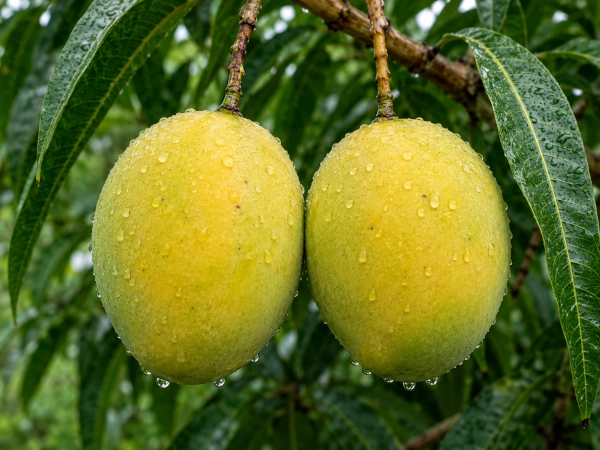
Along the humid coast of Uttara Kannada, where the Western Ghats descend towards the Arabian Sea, grows a mango whose reputation has remained remarkably local despite its exceptional eating quality. Kari Ishad Mango, centred on Ankola and its surrounding villages, is celebrated for its powerful aroma, luscious sweetness, thin skin and unusually generous quantity of pulp.
The fruit is large and characteristically oblique to oval, but its greatest attraction becomes apparent only after it is opened. A ripe Kari Ishad yields abundant soft pulp with a distinctive fragrance that can fill a room, yet this richness comes with a serious commercial limitation: the fruit deteriorates rapidly after ripening and generally has a shelf life of only about five days. That combination of outstanding flavour and extreme perishability has kept Kari Ishad intimately tied to the coastal region where it evolved.
The mango’s regional identity received formal protection when Kari Ishad Mango was registered as a Geographical Indication on 31 March 2023. The official Intellectual Property India record identifies Matha Totagars Farmer Producer Company Limited of Ankola as the registered applicant, with the registration valid through 1 March 2032.
Ankola — The Heartland of Kari Ishad
Kari Ishad is most strongly associated with Ankola taluk in Uttara Kannada district, although cultivation also extends into Karwar and, to a smaller degree, Kumta. GI-linked documentation identifies villages such as Belse, Shetgeri, Belambara, Mogata and Vandige among the important traditional centres where the mango has been maintained by growers.
Ankola lies within an extraordinary geographical transition zone between the Arabian Sea and the forested uplands of the Western Ghats. Uttara Kannada possesses a coastline of roughly 140 kilometres, extensive forests, perennial rivers and exceptionally heavy monsoon rainfall, while only a relatively small proportion of the district’s land is available for agriculture and horticulture.
The Gangavali or Bedti River flows through Ankola taluk, contributing to a landscape of river valleys, coastal plains, lateritic uplands and forest margins. This mixture of heavy monsoon rainfall, warm coastal temperatures and varied soils has supported a distinctive horticultural culture in which mango, coconut, arecanut, cashew and other perennial crops coexist within relatively small agricultural areas.
A Mango of the Western Coastal Monsoon Belt
Uttara Kannada receives some of Karnataka’s heaviest rainfall, and Ankola experiences a particularly strong southwest monsoon. Historical district rainfall records repeatedly show annual totals around several thousand millimetres in the coastal taluks, creating an environment dramatically different from the drier mango-growing plains of interior Karnataka.
For mango trees, this climate creates both opportunity and difficulty. Heavy monsoon rain replenishes soil moisture and supports vigorous perennial vegetation, but mango flowering and fruiting occur largely during the drier months when humidity and rainfall have temporarily declined. The success of the crop therefore depends upon the annual transition from a rain-saturated landscape towards the comparatively dry flowering season.
Once flowering has passed and young fruit has formed, temperatures begin climbing again towards the pre-monsoon summer. Kari Ishad develops through this warm period and reaches harvest around May and June, just as the coast begins preparing for the return of heavy seasonal rain. This timing places the fruit within a narrow climatic window that contributes to both its quality and its vulnerability.
The Large, Oblique-Oval Mango
The GI descriptions emphasise Kari Ishad’s large fruit size and oblique-to-oval shape, characteristics that help distinguish it from many smaller commercial mango cultivars. A mature fruit develops enough pulp to make the variety particularly rewarding despite its comparatively fragile skin and short post-harvest life.
Each flowering panicle generally carries only a small number of fruits to maturity, and GI-linked documentation notes that a well-developed tree can bear as many as 2,000 mangoes during a productive season. Such figures naturally vary with tree age, crop load, weather and orchard management, but they illustrate the considerable productivity that old Kari Ishad trees can achieve under favourable conditions.
The mango’s commercial reputation, however, does not rest on size alone. What makes Kari Ishad memorable is the relationship between the thin outer skin, relatively small amount of non-edible material and exceptionally generous quantity of sweet pulp inside.
Kari Ishad and Bili Ishad — Two Faces of the Ishad Tradition
The traditional Ishad mango is generally described as occurring in two principal forms: Kari Ishad and Bili Ishad. Kari Ishad possesses thinner skin, more pulp and greater sweetness, while Bili Ishad has thicker skin and comparatively less pulp and sweetness.
This distinction is important because the GI registration specifically protects Kari Ishad Mango, rather than treating every fruit carrying the broader Ishad name as identical. Generations of local selection appear to have preserved meaningful variation within the Ishad mango tradition, with Kari Ishad ultimately acquiring the stronger reputation for premium eating quality.
The contrast also demonstrates how local agricultural communities classify fruit through characteristics that matter directly to consumers. Skin thickness, pulp recovery, aroma and sweetness may appear to be simple observations, but together they distinguish one horticultural line from another and influence which trees farmers choose to propagate.
Thin Skin and Abundant Pulp
A good Kari Ishad is notable for the relatively high proportion of edible flesh hidden beneath its thin skin. When fully ripe, the pulp becomes soft, juicy and intensely aromatic, making the mango suitable for eating directly as well as for extracting pulp for traditional preparations.
The thin skin contributes to the pleasurable eating quality but also creates a practical weakness. Fruit with a delicate outer covering is more susceptible to handling damage, rapid softening and deterioration, particularly once ripening has advanced.
Kari Ishad therefore represents a recurring trade-off found among traditional fruit varieties. The characteristics that make a mango exceptional when eaten near the orchard can become disadvantages when the same fruit is expected to survive long-distance transport, mechanised handling and lengthy supermarket distribution chains.
The Aroma That Defines Kari Ishad
GI-linked descriptions repeatedly identify unique aroma as one of Kari Ishad’s most important distinguishing qualities. A properly ripened fruit develops a strong fragrance that accompanies its sweet, luscious pulp and gives the mango an identity extending beyond appearance alone.
Aroma is especially important in traditional mango appreciation because colour can be misleading. Some cultivars develop dramatic golden or red skin, while others remain comparatively restrained externally even after their internal flavour has matured.
Experienced buyers therefore assess a mango using several characteristics together, including fragrance near the stem, softness, shoulder development, weight and familiarity with the cultivar’s season. In the case of Kari Ishad, aroma becomes one of the strongest clues that the fruit has reached the stage at which its celebrated flavour is fully expressed.
A Mango With an Extremely Short Life
Perhaps no characteristic has shaped Kari Ishad’s commercial history more strongly than its very short shelf life. GI-linked accounts generally describe the fruit as remaining marketable for only about five days after harvest and ripening, while field observations suggest that once it reaches peak softness the ideal eating window can be even shorter.
This creates a fundamentally different market from that surrounding tougher commercial cultivars. Fruit intended for long-distance distribution normally needs enough firmness and post-harvest resilience to survive grading, packing, transportation, wholesale handling and retail display, whereas Kari Ishad quickly moves from ripe to overripe.
The result is a mango whose traditional market remained concentrated around Ankola, Karwar and Hubballi. Its fame therefore grew most strongly among people able to obtain the fruit quickly rather than through large national marketing campaigns.
A Mango Best Eaten Close to Home
The short shelf life has helped preserve a distinctive relationship between Kari Ishad and the communities of Uttara Kannada. Unlike a mango designed to spend days travelling through refrigerated logistics networks, Kari Ishad historically moved rapidly from tree to market and from market to household.
This proximity gives local buyers an important advantage because fruit can be harvested at a more advanced stage of physiological maturity. Mangoes required to travel long distances are often picked relatively firm, while fruit consumed close to the producing orchard can remain on the tree longer and develop more of its final flavour before harvesting.
Kari Ishad’s reputation is therefore inseparable from immediacy. The mango rewards consumers who eat it during the brief period when fragrance, softness and sweetness converge, but it punishes delays in handling and transportation.
The May–June Harvest
Kari Ishad generally begins entering markets from around mid-May, with the principal season extending through the late summer period before the monsoon becomes fully established. The harvest window naturally shifts with flowering, temperature and rainfall conditions in individual years, but May and June remain central to its seasonal identity.
This timing creates an intense period of activity within the producing villages. Farmers monitor fruit maturity closely, traders organise collection and local consumers begin looking for authentic Kari Ishad as soon as the first significant arrivals reach Ankola’s markets.
The season is brief enough that abundance can disappear almost as quickly as it arrives. Once the monsoon begins dominating coastal Karnataka, the annual Kari Ishad harvest is effectively over, leaving consumers to wait until the following summer.
Vandige, Belse and the Village Orchard Network
The GI-era documentation gives unusual insight into the village-level geography of Kari Ishad. Vandige was identified as one of the strongest producing villages, with historical production figures cited around 600 tonnes in a season, while Belse was reported to contain about 1,500 Kari Ishad plants at the time the GI was being documented.
These figures should be understood as snapshots from the period surrounding the GI application rather than permanent production totals. Mango yields fluctuate substantially from year to year, while tree numbers change as old orchards disappear and farmers plant new material.
Nevertheless, the village data reveal how concentrated the mango’s heritage remains. Kari Ishad is not simply a generic Karnataka mango grown evenly across the state; its strongest cultural and commercial identity rests within a relatively small network of coastal communities centred on Ankola.
A Tradition Said to Stretch Back Four Centuries
Local accounts associated with the GI campaign describe Ishad mango cultivation in the Ankola region as extending back roughly four centuries. Precise documentation for every stage of that history is limited, so the four-hundred-year figure is best understood as a longstanding regional tradition rather than an exact date for the origin of the first Kari Ishad tree.
What is clear is that the mango was established deeply enough in local agriculture to develop separate Kari and Bili forms, specialised processing traditions and a strong reputation before the twentieth century. Such a history requires repeated propagation and farmer selection across many generations.
Traditional mango cultivars rarely begin with a formal breeding programme. More often, an exceptional seedling is recognised, its desirable characteristics are preserved through vegetative propagation, and successive growers gradually transform one tree into a regional variety.
Grafting Preserves the Ishad Identity
Like other famous Indian mango cultivars, Kari Ishad cannot be reliably reproduced simply by planting the stone of an excellent fruit. Seed-grown mangoes produce genetic variation, meaning the resulting tree may eventually bear fruit differing in sweetness, skin thickness, aroma, size or season from the parent.
Farmers therefore depend upon vegetative propagation to preserve desirable characteristics. Scion material from a recognised Kari Ishad tree can be grafted onto a suitable mango rootstock, allowing the new tree’s canopy to retain the fruit-producing genetics of the selected cultivar.
This makes genuine planting material essential to the future of the GI. A wrongly labelled graft may take years to reveal its true identity, by which time the farmer has already invested labour, land and resources in a tree that cannot deliver the expected fruit.
The Old Trees of Coastal Homesteads
Traditional Kari Ishad trees are frequently associated with household land, village farms and mixed horticultural holdings rather than enormous single-variety industrial plantations. This pattern reflects Uttara Kannada’s broader agricultural geography, where forests dominate much of the district and cultivable land represents only a relatively small portion of the total area.
Old mango trees can become very large and remain productive for decades, but their size eventually creates practical difficulties. Tall canopies make harvesting dangerous, while overcrowded branches reduce air movement and make pest and disease management more difficult.
Field accounts from Ankola have documented attempts to rejuvenate ageing Kari Ishad trees through pruning, allowing fresh branches to emerge and gradually restoring manageable fruiting canopies. Such practices could become increasingly important if the region wishes to conserve old orchards rather than simply replace them when harvesting becomes inconvenient.
A Remarkable Processing History Beginning in 1908
One of the most fascinating chapters in Kari Ishad’s history concerns mango pulp processing in Ankola during the early twentieth century. Historical accounts record the establishment of Oriental Canneries in 1908, creating a local industry that converted Ishad mangoes into preserved pulp at a time when modern refrigerated fruit logistics did not exist.
The cannery was more than a local outlet for surplus mangoes. Contemporary accounts describe tins of mango pulp being shipped abroad, including historical exports connected with Britain, while old promotional material cited in later reporting showed Ishad pulp being recommended for juice, syrup, salad, ice cream and numerous other preparations.
This processing history is particularly significant because it solved the very problem that restricts fresh Kari Ishad trade. A mango that survives only a few days in ripe form can nevertheless travel enormous distances once the pulp has been preserved.
From Perishable Fruit to Preserved Pulp
Processing fundamentally changes the economics of Kari Ishad. Fresh fruit must move rapidly, but pulp can remain usable long after the mango season has ended, allowing the distinctive sweetness and aroma of the variety to reach consumers who could never receive ripe fruit from Ankola in time.
Traditional and commercial pulp can be used for juice, aamras, desserts, ice cream and other preparations. Lower-grade fruit that remains sound internally but does not possess perfect skin appearance can also retain economic value through processing rather than being discarded.
This relationship between premium fresh fruit and value-added pulp is especially important in years of heavy production. When markets become temporarily saturated, processing offers farmers an alternative outlet and reduces the risk that an extremely perishable crop will lose its entire value within days.
The Modern Farmer Producer Company
The Matha Totagars Farmer Producer Company Limited of Ankola became central to Kari Ishad’s modern GI journey. Intellectual Property India records the organisation as the applicant and registered proprietor, while NABARD documentation shows that institutional support helped the producer group prepare documentation and navigate the GI registration process.
Recent NABARD district planning documents indicate that the FPO contains roughly 300-plus members and is actively involved in Kari Ishad value addition. The organisation has pursued mango pulping and marketing, including processing linkages intended to turn the short-lived fresh fruit into products capable of reaching wider markets.
This is an important evolution in the mango’s history because GI protection becomes meaningful only when growers can translate recognition into income. The farmer organisation provides a structure through which small producers can aggregate fruit, process pulp, build a common identity and eventually negotiate markets that would be difficult for individual orchard owners to access alone.
NABARD and the GI Registration Effort
NABARD has identified Kari Ishad as one of its geographical-indication interventions in Karnataka. Its recent state and district documents state that financial and institutional assistance was provided for the registration process, including coordination of documentation and interaction between Matha Totagars FPO members and the GI Registry.
The importance of such support extends beyond paying for paperwork. Many traditional agricultural products are maintained by dispersed smallholders who possess deep practical knowledge of their crops but may lack the legal, technical and institutional capacity required for a GI application.
Kari Ishad demonstrates how producer knowledge and institutional assistance can work together. Farmers supply the living cultivar and its geographical history, while formal organisations help convert that heritage into a protected intellectual-property identity.
The Road to Geographical Indication Recognition
The official application for Kari Ishad Mango was filed on 2 March 2022 by Matha Totagars Farmer Producer Company Limited of Ankola. Intellectual Property India assigned it Application No. 843 under Class 31 for agricultural goods, with Karnataka recorded as the geographical area.
The application was subsequently published in Geographical Indications Journal No. 166, which became available on 30 November 2022. After completion of the registration process, Certificate No. 475 was issued on 31 March 2023, formally adding Kari Ishad to India’s register of protected agricultural geographical indications.
The registration is currently valid through 1 March 2032, after which it can be renewed under India’s GI framework. APEDA’s Karnataka GI listing independently records Matha Totagars Farmer Producer Company Limited as the registered proprietor and confirms Certificate No. 475 and the same validity period.
GI Details at a Glance
- Geographical Indication: Kari Ishad Mango
- State: Karnataka
- Product: Agricultural
- Class: 31
- Application Number: 843
- Date of Filing: 2 March 2022
- GI Journal: No. 166
- Journal Availability Date: 30 November 2022
- Certificate Number: 475
- GI Certificate Date: 31 March 2023
- Registered Proprietor: Matha Totagars Farmer Producer Company Limited
- Geographical Area: Karnataka
- Registration Valid Until: 1 March 2032
The Authorised Growers Behind the GI
The Intellectual Property India database currently records several authorised users for Kari Ishad, with addresses concentrated within Ankola taluk. Growers are listed from places including Belambar, Basgod, Manjuguni and Shirur, demonstrating that the protected identity is being connected directly with farmers inside the traditional production belt.
Authorised-user registration is important because a GI owned only on paper does little to help the people maintaining the crop. Farmers need a legal route to identify their produce with the protected name, while consumers need confidence that a mango marketed as Kari Ishad originates from genuine producers.
As more growers enter organised GI supply chains, authentication can become stronger. Traceable packaging, producer identification and collective marketing could eventually help the mango reach premium consumers without allowing the Kari Ishad name to become detached from Ankola’s orchard community.
What the GI Tag Protects
The GI registration does not mean that Kari Ishad genetics become biologically incapable of growing outside their traditional region. Mango scions can be transported and grafted elsewhere, and a tree sharing the same cultivar characteristics could theoretically survive wherever environmental conditions are suitable.
The protection applies to the geographical identity and reputation of Kari Ishad Mango associated with its registered origin. This distinction becomes especially important when a rare regional fruit begins receiving wider attention and traders elsewhere may be tempted to use the recognised name for visually similar mangoes.
Geographical indication protection therefore connects reputation with place. The sweetness and aroma attract the consumer, but the GI is intended to ensure that the commercial value created by those qualities remains associated with genuine producers from the recognised geographical landscape.
Karnataka’s Second GI-Protected Mango Tradition
Kari Ishad joined Appemidi Mango among Karnataka’s geographically protected mango identities. The two represent dramatically different horticultural traditions, with Appemidi celebrated principally as a highly aromatic tender mango for pickling and Kari Ishad valued as a ripe, sweet, high-pulp table and processing fruit.
This contrast illustrates Karnataka’s extraordinary mango diversity. The state contains dry interior mango belts, Malnad forests, Western Ghats germplasm and humid coastal regions, each preserving cultivars adapted to different culinary uses and environmental conditions.
Kari Ishad therefore expands the idea of what a Karnataka GI mango can represent. Instead of another commercially standardised dessert cultivar, it protects a fragile coastal heirloom whose greatest qualities emerge precisely because it remains closely tied to its local landscape.
From Ankola to Bengaluru
For many years Kari Ishad’s market remained largely restricted to Ankola, Karwar and nearby urban centres because of the fruit’s extreme perishability. GI recognition has begun increasing curiosity outside this traditional belt, creating opportunities to introduce the mango to consumers elsewhere in Karnataka.
In 2024, the GI-tagged Kari Ishad appeared as a notable attraction at the mango and jackfruit mela at Lalbagh in Bengaluru. Such events provide a valuable marketing route because farmers can move fruit directly into a concentrated seasonal market where consumers actively seek unusual cultivars rather than depending upon ordinary wholesale channels.
The challenge remains logistics. A mango with a five-day shelf life cannot be handled like a conventional long-distance fruit, so successful expansion will require tightly coordinated harvesting, rapid transport and sale within a very short window.
Fresh-Fruit Expansion Versus Processing
The future of Kari Ishad is unlikely to depend upon a single commercial strategy. Fresh mangoes can command premium prices among consumers who value rarity and flavour, while processed pulp offers a more practical route for reaching distant markets.
Fresh-fruit marketing should therefore focus on speed, authenticity and premium positioning rather than attempting to compete as a mass commodity. Pulp processing can simultaneously absorb fruit that would otherwise spoil and carry Kari Ishad flavour into ice creams, beverages, desserts and other products throughout the year.
Recent NABARD documentation indicates that Matha Totagars FPO is already pursuing precisely this value-addition approach, with mango pulping and sale forming part of its business activity. The strategy reconnects modern producer organisation with a processing tradition that existed in Ankola more than a century ago.
The Challenge of Shelf-Life Improvement
Extending Kari Ishad’s market without destroying its character will require careful post-harvest research. Refrigeration, improved packaging, harvest-maturity assessment and rapid cooling may help slow deterioration, but mangoes can suffer chilling injury if stored at unsuitable temperatures.
Breeding or selecting firmer-fruited material presents another possibility, but such work must proceed cautiously. If a selection gains several additional days of shelf life while losing the aroma, thin skin or rich pulp that define Kari Ishad, the improvement would undermine the very reputation that GI protection seeks to preserve.
The most promising future may therefore involve modest shelf-life gains combined with better logistics rather than radically changing the fruit. Kari Ishad does not necessarily need to become a mango capable of sitting for weeks in a supermarket if premium supply chains can deliver it quickly while it remains close to peak quality.
Heavy Winds and the Vulnerability of Large Fruit
Kari Ishad’s large fruit size creates particular vulnerability during pre-monsoon storms. Strong winds can detach developing or nearly mature mangoes, causing losses only days or weeks before farmers expect to harvest them.
GI-era reports from Ankola documented substantial fruit loss after episodes of heavy wind, illustrating the risks associated with a coastal crop ripening close to the changing monsoon season. Large mangoes represent a significant investment of tree resources, so every fruit lost shortly before harvest carries considerable economic weight.
Canopy management can reduce some risk by removing weak branches and preventing excessively crowded trees, while appropriate windbreaks may help in exposed orchards. Even with careful management, however, weather remains one of the largest uncertainties facing a traditional mango whose crop develops during the volatile pre-monsoon period.
Climate Variability and the Future Crop
Climate variability may intensify these challenges by altering winter temperatures, flowering patterns and the timing of pre-monsoon weather. Mango flowering depends strongly upon seasonal conditions, and changes in temperature or untimely rainfall can influence both blossom development and successful fruit set.
Later in the season, extreme heat can increase moisture stress while early thunderstorms can cause premature fruit drop. Because Uttara Kannada’s climate is strongly organised around the southwest monsoon, even relatively small shifts in the timing of seasonal transitions can affect orchard performance.
Future Kari Ishad cultivation will therefore benefit from better local weather forecasting, irrigation management, canopy care and integrated pest and disease monitoring. Preserving a heritage cultivar does not mean freezing agricultural practice in the past; it means applying new knowledge without losing the fruit characteristics that generations of growers considered worth preserving.
The Need to Document the Orchard Landscape
One challenge noted during the early GI period was the lack of a complete scientific assessment of the total area under Kari Ishad cultivation. The mango’s trees are scattered through multiple villages and mixed agricultural holdings, making simple plantation-style acreage calculations difficult.
A detailed orchard census could therefore become valuable for future planning. Mapping tree numbers, age, productivity, village distribution and mother-tree sources would help growers estimate production, identify ageing orchards and plan propagation programmes.
Such information would also strengthen the GI itself. A geographical indication becomes more credible when the producing landscape is documented not only historically but as a living agricultural system with identifiable farmers and traceable fruit.
Conserving Mother Trees and Genuine Planting Material
The survival of Kari Ishad ultimately depends upon authentic trees. Old mother plants and high-quality descendants should be identified, documented and used as sources of scion wood so that new orchards reproduce the characteristics for which the variety received its reputation.
This work is particularly important because a famous GI name can create incentives for nurseries to sell planting material of uncertain origin. Farmers purchasing an incorrectly labelled graft may discover the mistake only years later when the tree begins producing fruit.
A coordinated nursery programme involving the FPO, horticulture authorities and experienced growers could protect both genetic identity and farmer investment. GI protection would then operate from the earliest stage of the value chain rather than beginning only after fruit reaches the market.
Preserving Kari and Bili Ishad Together
Although Kari Ishad holds the GI registration and stronger commercial reputation, the related Bili Ishad should not be ignored. Its thicker skin, lower pulp proportion and milder sweetness may appear less desirable in the current premium market, but those characteristics represent part of the genetic diversity of the Ishad mango tradition.
Traditional crop diversity often contains traits whose future value is not immediately obvious. Thicker skin, for example, could potentially be relevant to shelf life or resistance to physical damage, while other differences between Kari and Bili Ishad may prove useful to horticultural research.
Conserving both forms would therefore protect a broader biological heritage. The GI can promote Kari Ishad commercially while the wider Ishad germplasm remains available for future study and selection.
A GI That Could Strengthen a Coastal Rural Economy
Uttara Kannada’s limited cultivable land makes high-value horticulture especially important. NABARD identifies Kari Ishad among the district’s distinctive agricultural products and has supported the FPO as part of wider efforts to strengthen farmer collectivisation, processing and market access.
A successful GI strategy could improve farmer returns without requiring enormous expansion of cultivated area. Higher prices for authenticated fresh fruit, organised pulp processing and stronger branding can increase the value produced by existing trees.
The greatest benefit would come if that premium reaches orchard owners rather than disappearing entirely within downstream trade. Producer-led marketing therefore remains central to transforming Kari Ishad from a celebrated local mango into a sustainable rural economic asset.
The Mango That Must Be Eaten Before It Disappears
Kari Ishad possesses almost the opposite qualities from a fruit designed for modern mass distribution. It is thin-skinned rather than rugged, rapidly perishable rather than long keeping, strongly local rather than universally available, and at its finest during a fleeting period when the mango has only just reached full ripeness.
Yet these apparent disadvantages are precisely what give the fruit much of its character. Kari Ishad demands proximity, timing and familiarity, rewarding the consumer who encounters it during the brief May–June season with abundant sweet pulp and the intense aroma for which Ankola’s growers have preserved it across generations.
The 31 March 2023 GI registration gives this regional reputation legal protection, while the Matha Totagars Farmer Producer Company and its growers now face the larger challenge of converting recognition into sustainable value. Pulp processing, organised marketing, authentic planting material and carefully expanded fresh-fruit distribution could allow the mango to reach new consumers without severing its connection with the coastal villages that gave it identity.
Kari Ishad therefore represents much more than another entry in India’s growing catalogue of GI mangoes. It is Ankola’s fragrant coastal heirloom—a large, thin-skinned and extraordinarily fleeting mango shaped by the monsoon landscape of Uttara Kannada, preserved by village growers and remembered for a sweetness that must be enjoyed almost as soon as the fruit leaves the tree.
You may also like
-
India and UAE Deepen Investment Partnership at 14th High Level Joint Task Force Meeting
-
Indian Experts to Participate in Moscow Startup Summit as Global Technology Leaders Gather in Russian Capital
-
Midwest Energy Builds India’s First Sintered Rare-Earth Magnet Plant to Cut Import Dependence
-
India Flags Off First LNG-Powered Train as ₹1,472 Crore Railway Projects Open in Ahmedabad
-
Three Indian Women-Led Startups Win Asia Tracks at TiE Women Summit 2026
