India and Japan have discussed deeper cooperation in critical minerals and e-waste recycling, as the two countries seek to build more resilient supply chains for materials essential to advanced manufacturing, clean energy, electronics and strategic technologies.
Union Environment, Forest and Climate Change Minister Bhupender Yadav held talks with Japan’s State Minister for Environment Tsuji Kiyoto in New Delhi on August 21, 2026. According to News on AIR, the discussions focused on strengthening critical-mineral supply chains through resource circulation, expanding e-waste recycling and advancing India-Japan cooperation for a more sustainable industrial future.
The meeting builds on a much broader economic-security partnership between the two countries. At the 16th India-Japan Annual Summit in July 2026, Prime Minister Narendra Modi and Japanese Prime Minister Sanae Takaichi identified critical minerals as one of the key areas for project-based bilateral cooperation alongside semiconductors, information and communication technology, clean energy and pharmaceuticals.
Critical Minerals Become an Economic Security Priority
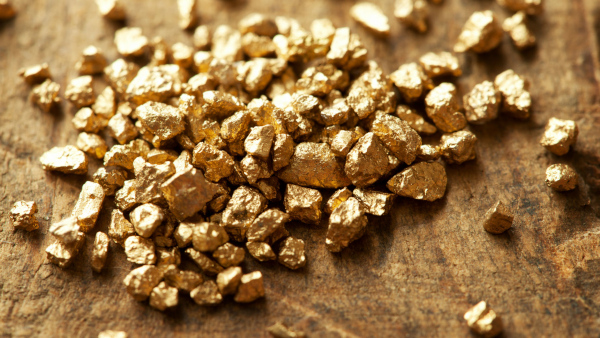
Critical minerals such as lithium, cobalt, nickel, graphite and rare-earth elements have become indispensable for modern industrial economies. They are used in electric-vehicle batteries, renewable-energy systems, electronics, telecommunications equipment and advanced manufacturing.
They are also strategically important because many advanced defence systems rely on specialised metals and rare-earth elements for radars, sensors, communication equipment, permanent magnets, guidance systems and high-performance electronics.
India and Japan have therefore increasingly treated secure access to these materials as an economic-security issue rather than simply a mining concern.
The July India-Japan summit highlighted concerns about export restrictions, market concentration and other practices that could disrupt supplies of critical minerals. Both governments stressed the importance of creating diversified, reliable and resilient global supply chains that do not depend excessively on a single country.
Recycling Could Become a New Source of Strategic Materials
The latest talks place particular emphasis on recovering valuable minerals from discarded products.
Electronic waste and used lithium-ion batteries contain significant quantities of metals that can potentially be recovered and returned to industrial supply chains. Instead of depending entirely on newly mined material, countries can use recycling to create a secondary domestic source of strategically important resources.
India has already moved in this direction through the National Critical Mineral Mission. The government approved a ₹1,500-crore incentive scheme for critical-mineral recycling, covering material recovered from e-waste, lithium-ion battery scrap and other secondary sources. The scheme is intended to support domestic processing capacity and reduce exposure to disruptions in overseas mineral supplies.
A 2026 NITI Aayog-supported study also highlighted the potential for lithium-ion battery and electronic waste to become a source of minerals including lithium, cobalt, nickel and rare-earth elements, helping India reduce dependence on volatile international supply chains.
Japan Brings Valuable Recycling Expertise
Japan has decades of experience in resource efficiency, electronics recycling and circular-economy technologies. For a country with limited domestic mineral resources, recovering valuable materials from manufactured products has long formed an important part of its resource strategy.
Closer cooperation could therefore potentially involve recycling technologies, material-recovery processes, industrial standards, research collaboration and investment in processing infrastructure.
For India, such cooperation could complement efforts to expand domestic mining and acquire mineral assets overseas. Recycling offers a comparatively faster route to obtaining some materials because new mines can require many years of exploration, approvals and development before reaching production.
Cooperation Extends Beyond Bilateral Projects
India and Japan are also working together through wider international mechanisms.
At their July summit, the two governments supported cooperation among like-minded countries to strengthen critical-mineral supply chains through institutions including the World Bank Group’s Resilient and Inclusive Supply-chain Enhancement Partnership and the Asian Development Bank’s Critical Minerals-to-Manufacturing Financing Partnership Facility.
Critical minerals have also become an important area of cooperation within the Quad involving India, Japan, the United States and Australia. The four countries have been developing mechanisms intended to support more diversified mineral production, processing and manufacturing chains across the Indo-Pacific.
From Waste Management to Strategic Resource Security
The August 21 India-Japan discussions show how e-waste policy is increasingly becoming connected to industrial and strategic policy.
Recovering minerals from discarded batteries, electronics and other equipment can reduce waste while simultaneously creating a domestic source of materials needed for new batteries, electronics and advanced manufacturing.
For India, the combination of domestic exploration, overseas mineral partnerships and large-scale recycling could form the foundation of a more resilient critical-minerals strategy.
Japan’s technology and experience in resource circulation could complement India’s rapidly expanding manufacturing base and growing demand for critical materials. The latest discussions therefore represent another step towards turning the India-Japan strategic partnership into practical cooperation across the entire mineral value chain, from resource recovery to advanced manufacturing.
You may also like
-
ICAR Scientists Develop Indigenous Protective Gloves for Cotton Farmers, Sign Commercial Manufacturing Agreement
-
India and Italy Hold First Maritime Security Dialogue in Rome, Strengthen Strategic Maritime Cooperation
-
BHEL–Coal India Joint Venture Begins Construction of ₹25,016 Crore Indigenous Coal Gasification Project in Odisha
-
India and Azerbaijan Agree to Strengthen Security, Trade, Energy and Economic Cooperation
-
PM Modi to Inaugurate RBI’s Tier IV Data Centre and Cybersecurity Training Institute in Bhubaneswar
