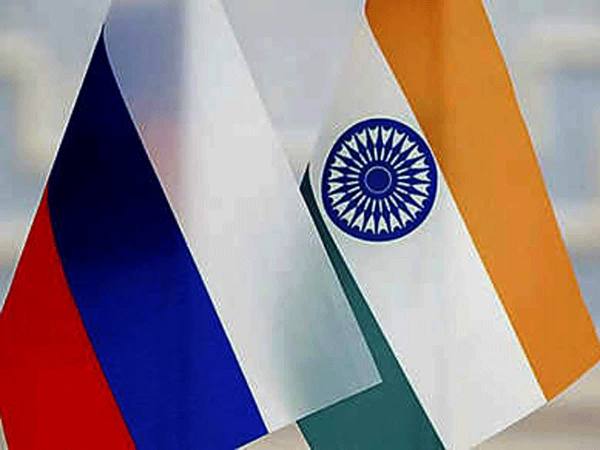
India and Russia are preparing an extensive programme of economic, scientific, cultural and people-to-people events to mark the 80th anniversary of their diplomatic relations in 2027, placing renewed emphasis on one of India’s longest-standing international partnerships.
Diplomatic relations between India and the then Soviet Union were formally established on April 13, 1947—several months before India attained independence. Over the following eight decades, the relationship evolved from early diplomatic engagement into a broad partnership encompassing defence, nuclear energy, space, trade, education, culture and strategic coordination.
India’s Ambassador to Russia, Vinay Kumar, said the two governments were discussing a comprehensive commemorative programme involving events in multiple cities across both countries. The proposed activities are expected to cover commerce, science and technology, culture, education and public engagement, allowing the anniversary to be presented not merely as a diplomatic ceremony but as a celebration of the wider connections between the Indian and Russian peoples.
A Partnership Built Across Generations
The coming anniversary will offer both countries an opportunity to reflect on a relationship that has endured major transformations in the international system.
The Soviet Union played an important role in supporting India’s early industrialisation by assisting in the development of steel plants, heavy engineering facilities, energy projects, scientific institutions and technical education. Defence cooperation subsequently emerged as another central pillar, creating long-standing institutional and technological links between the two countries.
After the dissolution of the Soviet Union, India and the Russian Federation rebuilt the relationship within a new geopolitical environment. The two countries declared a strategic partnership in 2000, which was elevated to a “Special and Privileged Strategic Partnership” in 2010.
The relationship today extends well beyond its traditional defence foundations. Annual summits, ministerial commissions, military-technical mechanisms, commercial forums and cultural exchanges provide an extensive institutional structure for bilateral engagement.
The 80th-anniversary programme is therefore expected to highlight both the historical depth of the relationship and its continued adaptation to emerging areas such as digital technology, advanced manufacturing, connectivity, pharmaceuticals, agriculture and skilled employment.
Bilateral Trade Targeted to Reach $100 Billion
Economic cooperation is expected to occupy a prominent place in the anniversary year.
India and Russia have set a target of increasing bilateral trade to $100 billion by 2030. The goal was formally adopted by Prime Minister Narendra Modi and Russian President Vladimir Putin during the 22nd India–Russia Annual Summit held in Moscow in July 2024.
Trade between the two countries has already expanded considerably, reaching a record $68.7 billion during the 2024–25 financial year, according to the Indian Embassy in Moscow.
Much of this increase has been driven by India’s imports of Russian crude oil, coal, fertilisers and other commodities. However, the expansion has also created a substantial trade imbalance, making diversification one of the most important tasks facing policymakers.
India is seeking greater access for its pharmaceuticals, engineering products, agricultural goods, textiles, chemicals, automobiles, electronics and consumer products in the Russian market. Russia, meanwhile, is interested in expanding cooperation in energy, minerals, transportation, machinery, fertilisers, nuclear technology and industrial equipment.
Reaching the $100-billion target will consequently require more than higher volumes of energy trade. It will depend on improved payment systems, stronger transport corridors, greater business-to-business contact and wider participation by small and medium enterprises.
The proposed India–Eurasian Economic Union trade agreement, the International North–South Transport Corridor and the Chennai–Vladivostok Maritime Corridor could become important components of this economic expansion.
Kudankulam Remains a Symbol of Energy Cooperation
Civil nuclear energy remains one of the most visible examples of India–Russia technological collaboration.
The Kudankulam Nuclear Power Project in Tamil Nadu is being developed with Russian technical assistance. Units 1 and 2, each with a generating capacity of 1,000 MW, are already operational. Four additional 1,000-MW reactors are at different stages of construction.
Units 3 and 4 have reached an advanced stage. Government data released in January 2026 placed their combined physical progress at more than 80 per cent, while the Nuclear Power Corporation of India Limited has reported continuing construction and equipment-installation work at the site.
Kudankulam demonstrates the long-term nature of India–Russia cooperation. Unlike short-duration commercial transactions, nuclear projects require decades of collaboration in design, construction, fuel supply, maintenance, training and regulatory coordination.
The project could also provide a foundation for broader cooperation in nuclear fuel cycles, reactor technology, scientific research and possible future nuclear power sites in India.
Skilled Indian Workers Find New Opportunities in Russia
Labour mobility is emerging as a newer dimension of the relationship.
Ambassador Vinay Kumar estimated that the number of Indian workers in Russia had risen from approximately 10,000–15,000 a few years earlier to more than 100,000. The figure was presented as a broad estimate rather than an officially finalised count.
Russian industries are facing workforce shortages in sectors such as machinery, manufacturing, construction, electronics, textiles and services. Indian workers with relevant technical and vocational skills are increasingly being recruited within Russia’s immigration laws, employment quotas and regulatory framework.
This trend could create valuable employment opportunities, but it also makes formal recruitment arrangements increasingly important. Both governments will need to ensure transparent contracts, legal migration channels, worker protection, recognised qualifications and effective consular support.
A structured labour-mobility framework could eventually become another pillar of economic cooperation, complementing the established fields of defence, energy and trade.
BRICS Adds a Wider Strategic Dimension
The anniversary preparations are unfolding as India assumes an important multilateral role through its BRICS chairmanship in 2026.
New Delhi is scheduled to host the 18th BRICS Summit on September 12–13, 2026. Russian participation is expected at the highest level, with President Vladimir Putin scheduled to attend.
The summit will give India and Russia an opportunity to coordinate on international financial reform, development cooperation, energy security, technology, trade settlement, supply-chain resilience and the representation of developing countries in global institutions.
India’s BRICS chairmanship is guided by the theme “Building for Resilience, Innovation, Cooperation and Sustainability.” The expanded grouping now brings together 11 member countries and has become an important platform for discussions on global economic governance and the priorities of the Global South.
For India and Russia, cooperation within BRICS complements their bilateral engagement. It allows the two countries to work together on international issues while maintaining independent positions based on their respective national interests.
The Next Phase of India–Russia Relations
The next meeting of the India–Russia Intergovernmental Commission on Trade, Economic, Scientific, Technological and Cultural Cooperation is expected to review ongoing projects and identify new areas for expansion.
The commission has a particularly important task: converting high-level political trust into diversified and sustainable economic activity.
Future cooperation is likely to focus on pharmaceuticals, medical technology, agriculture, food processing, information technology, artificial intelligence, space, critical minerals, transport equipment, shipping, advanced manufacturing and scientific research.
Educational and cultural engagement will also remain essential. Generations of Indians became familiar with Russian literature, science, cinema and educational institutions, while Indian philosophy, yoga, classical dance, films and Buddhism have maintained a significant presence in Russia.
The anniversary celebrations can revive these connections for a younger generation through film festivals, academic conferences, exhibitions, student exchanges, technology forums and joint cultural performances.
An Anniversary Focused on the Future
The 80th anniversary of diplomatic relations will commemorate a partnership with deep historical foundations, but its greater significance will lie in defining the next stage of cooperation.
India and Russia must now build a more balanced economic relationship, expand cooperation into new industries and create stronger links among businesses, universities, scientists, professionals and young people.
The $100-billion trade target, progress at Kudankulam, emerging labour mobility and cooperation within BRICS demonstrate that the partnership is continuing to evolve.
The planned celebrations in 2027 will therefore represent more than a remembrance of eight decades of diplomatic history. They will provide India and Russia with an opportunity to renew an enduring relationship and adapt it to the technological, economic and geopolitical realities of the coming decades.
You may also like
-
INS Sahyadri and INS Kulish Reach Philippines for ADMM-Plus Maritime Cooperation
-
India–Mongolia Joint Military Exercise Nomadic Elephant 2026 Begins in Pithoragarh
-
India–Thailand Trade Nears $14 Billion in Seven Months as Economic Ties Broaden
-
Japanese Parliamentary Delegation Visits BEL and Reviews Advanced Defence Systems
-
India and Thailand Move Toward UPI–PromptPay Link and Rupee–Baht Settlement to Deepen Economic Integration
