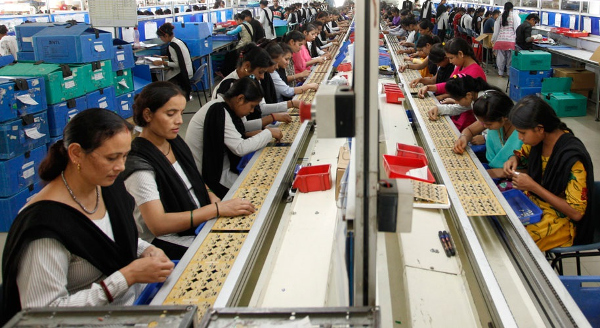
India’s small businesses have entered their strongest growth phase since the Covid disruption, powered by domestic demand, digital adoption, formalisation, e-commerce, easier access to finance and a rising appetite for technology-led expansion. The latest regional small-business findings show that four out of five Indian small businesses expanded in 2025, placing India among the more confident small-business markets in the Asia-Pacific region.
This performance is important because small businesses are the living tissue of India’s economy. They sit inside manufacturing clusters, trading networks, local services, food processing units, repair markets, digital storefronts, logistics chains, exports, rural enterprises and urban neighbourhood commerce. When this segment grows, the benefit spreads through employment, consumption, supplier payments, local investment and household income. India’s MSME sector contributes about 31.1% of GDP, 35.4% of manufacturing output and 48.58% of exports, while supporting more than 32 crore jobs across over 7.47 crore enterprises.
The post-Covid recovery of small businesses has moved through three clear stages. The first was survival, when firms tried to manage lockdown damage, weak cash flows and broken supply chains. The second was repair, when demand returned and businesses rebuilt working capital. The third stage, now visible in 2025, is expansion. Many enterprises are investing again, hiring cautiously, adopting digital tools and preparing for higher demand in 2026. The survey’s finding that 87% of Indian small businesses expect to grow in 2026 shows that confidence has moved beyond short-term recovery and entered a forward-looking phase.
A major reason for this confidence is India’s domestic demand base. Unlike export-dependent small-business economies, Indian enterprises serve a massive internal market across food, apparel, construction materials, automobiles, electronics, personal services, education, health, logistics and household consumption. Rising urbanisation, tier-2 and tier-3 city spending, digital payments and improved road connectivity have expanded the customer base for small firms. Even a modest rise in local consumption can create large opportunities for retailers, fabricators, small manufacturers, transporters and service providers.
Digital adoption has become one of the strongest engines of this new growth cycle. Small businesses that once depended only on physical footfall now use UPI, WhatsApp commerce, online marketplaces, digital bookkeeping, QR-code payments, social media marketing and app-based delivery networks. Earlier research on India’s MSME digitalisation also found that a large share of semi-urban and rural MSMEs reported business growth through digital adoption, with UPI and smartphones playing a central role in improving transactions and operational efficiency.
This digital shift has changed the meaning of scale for a small firm. A home-based food business can sell through local delivery networks. A garment unit can receive orders through Instagram or marketplace listings. A rural artisan can access national buyers through digital commerce. A repair shop can accept QR payments and maintain customer records. A small trader can track inventory through mobile software. These are small changes individually, but together they reduce friction, increase trust and make businesses more visible.
Formalisation is another major driver. The rapid expansion of registration through Udyam and allied platforms has brought more enterprises into the formal system. Registered enterprises have better access to government schemes, credit products, procurement opportunities, dispute resolution systems and digital records. One recent update noted that registered MSMEs rose sharply from 0.79 crore in FY22 to 7.83 crore by February FY26, showing the scale of India’s ongoing small-business formalisation.
Access to credit has also improved, although it remains uneven. Small businesses need working capital for inventory, wages, raw materials, logistics and seasonal demand. A growing formal footprint makes it easier for banks, NBFCs and fintech lenders to assess business activity through GST data, bank statements, digital payments and transaction history. This reduces dependence on informal borrowing and allows stronger enterprises to expand faster. Government-backed credit guarantee systems, public sector bank outreach and platforms such as TReDS have also helped create a more structured financing environment for MSMEs.
The strength of small businesses is also visible in employment. MSMEs remain India’s largest employment base after agriculture, supporting millions of self-employed workers, family enterprises, wage workers, apprentices and contract networks. Official and industry-linked data place MSME employment above 32 crore people, making the sector essential for inclusive growth. This matters because India’s development story depends not only on large factories and global corporations, but also on the ability of small enterprises to create steady local livelihoods.
The export role of small businesses deserves special attention. MSMEs contribute nearly half of India’s exports, making them central to India’s manufacturing and trade ambitions. Small firms are deeply present in textiles, engineering goods, leather products, handicrafts, processed foods, auto components, pharmaceuticals, chemicals, gems and jewellery, and packaging. When export markets recover or when India builds new trade corridors, these firms gain orders, upgrade quality and enter global supply chains.
Technology is now pushing this sector into a new competitive zone. The current small-business growth story is not only about more shops opening or more goods being sold. It is also about firms using cloud accounting, digital catalogues, AI-enabled customer support, targeted online advertising, automated billing, inventory analytics and online export discovery. The businesses adopting these tools are likely to grow faster because they can serve customers better, reduce waste and respond quickly to demand changes.
Artificial intelligence is beginning to enter this space as well. For a small business, AI does not always mean complex robotics or advanced coding. It can mean generating product descriptions, improving customer replies, designing promotional material, analysing sales patterns, translating catalogues, predicting inventory needs and creating low-cost marketing campaigns. This gives small firms access to capabilities that once required large teams or expensive consultants.
Yet the growth story carries real challenges. Rising input costs, wage pressures, rental expenses, energy costs, logistics charges, cyber risks and geopolitical uncertainty continue to affect small businesses. Many firms still struggle with delayed payments, compliance complexity, limited collateral and shortage of skilled workers. The survey itself highlights that optimism exists alongside cost and cybersecurity challenges.
Delayed payments remain one of the biggest structural problems. A small supplier may be profitable on paper but cash-starved in practice if large buyers delay settlement. This affects wages, raw-material purchases, loan repayments and expansion plans. Stronger invoice discounting, digital payment records, faster dispute settlement and wider adoption of TReDS-style platforms can help solve this problem. The next phase of MSME growth will depend heavily on improving cash-flow reliability.
There is also a productivity challenge. India has millions of small enterprises, but many remain micro-scale with low technology use, informal labour practices and limited market reach. The country’s opportunity lies in helping more of these firms move from survival entrepreneurship to growth entrepreneurship. That means better design support, testing labs, common facility centres, digital training, cluster-level logistics, packaging upgrades, quality certification and export mentoring.
The policy direction is already moving toward this goal. Budget and government initiatives have focused on credit support, formal registration, procurement access, technology upgradation and entrepreneurship promotion. One government update noted that MSME-related products accounted for 45.73% of India’s exports in 2023-24, while registered MSMEs employed more than 25 crore people at that stage. The later rise in registration and employment-linked data shows how quickly the sector is expanding into the formal economy.
The 2025 growth result therefore has a larger meaning. It suggests that India’s small businesses are no longer merely recovering from Covid. They are adapting to a new business environment shaped by digital payments, online discovery, formal credit, domestic consumption, government procurement, infrastructure expansion and technology-led productivity. The strongest firms are becoming more professional, more data-driven and more ambitious.
For India’s economy, this is a powerful signal. Large companies can build industrial scale, but small businesses build economic depth. They create jobs close to homes, absorb first-generation entrepreneurs, support women-led enterprises, strengthen rural markets and keep local supply chains alive. When they grow together, the national economy becomes more resilient.
The next big task is to convert this momentum into durable competitiveness. Small businesses need cheaper credit, faster payments, better digital security, simpler compliance, stronger skilling and easier access to domestic and international markets. If these gaps are addressed, the 2025 growth surge can become the foundation of a longer MSME expansion cycle.
India’s small-business story in 2025 is therefore a story of recovery turning into confidence. The sector has survived disruption, absorbed digital change and returned to growth with renewed energy. With strong domestic demand and rising formalisation, Indian small businesses are positioned to become one of the most important engines of employment, exports, innovation and inclusive growth in the years ahead.
Sources:
Economic Times — Indian small businesses record strongest growth since COVID in 2025: CPA Australia survey — https://m.economictimes.com/news/economy/indicators/indian-small-businesses-record-strongest-growth-since-covid-in-2025-cpa-australia-survey/articleshow/131370293.cms
CPA Australia — Asia-Pacific Small Business Survey 2024-25 India Market Summary — https://www.cpaaustralia.com.au/-/media/project/cpa/corporate/documents/tools-and-resources/business-management/small-business-survey/2024-2025-market-summaries/sbs—india-market-summary—2024-25.pdf
PIB — Udyami Diwas-MSME Day 2025 — https://www.pib.gov.in/PressNoteDetails.aspx?ModuleId=3&NoteId=154772&lang=2®=3
PIB — Budget 2025-26: Fuelling MSME Expansion — https://www.pib.gov.in/PressReleasePage.aspx?PRID=2099687&lang=2®=3
IBEF — MSME Industry in India — https://www.ibef.org/industry/msme
IBEF — Over 7.83 crore enterprises registered on Udyam platforms — https://www.ibef.org/news/over-7-83-crore-enterprises-registered-on-udyam-platforms-indicating-strong-msme-formalisation-growth
Economic Times — MSME sector’s role critical in enabling effective supply chain participation: Economic Survey 2025-26 — https://m.economictimes.com/small-biz/sme-sector/msme-sectors-role-critical-in-enabling-effective-supply-chain-participation-eco-survey-2025-26/articleshow/127765473.cms
You may also like
-
EON Space Labs and Dhruva Space Advance Indian Space Hardware on Transporter-18 Mission
-
SatLeo Labs’ TAPAS-1 Reaches Orbit, Advancing India’s Private Thermal-Imaging Capability
-
TakeMe2Space’s MOI-1A Reaches Space on Falcon 9 Transporter-18 Mission
-
Bank of Baroda Enters Pension Fund Management After PFRDA Appointment
-
SCI and India’s Push for a Larger Indigenous Maritime Fleet
