India’s digital payments diplomacy has taken another important step with the signing of a Memorandum of Understanding between the Reserve Bank of India and the State Bank of Vietnam. The agreement aims to strengthen cooperation in financial innovation and digital payments, with a special focus on possible payment-system connectivity for QR-code-based merchant payments between the two countries.
The MoU was signed on 5 May 2026 with the approval of the Union Cabinet. It creates a broad cooperation framework between the two central banking authorities for information exchange, regulatory coordination, implementation support and development of digital payment linkages. In practical terms, this means India and Vietnam are preparing the institutional ground for smoother, faster and more transparent cross-border payment systems.
This is significant because digital payments have become one of India’s strongest technology exports. India’s fintech ecosystem, led by fast payment infrastructure, QR-code acceptance and real-time transaction capability, has shown how public digital infrastructure can support everyday commerce at massive scale. The MoU with Vietnam fits into this larger story: India is steadily taking its payment architecture beyond domestic convenience and turning it into a tool of international economic partnership.
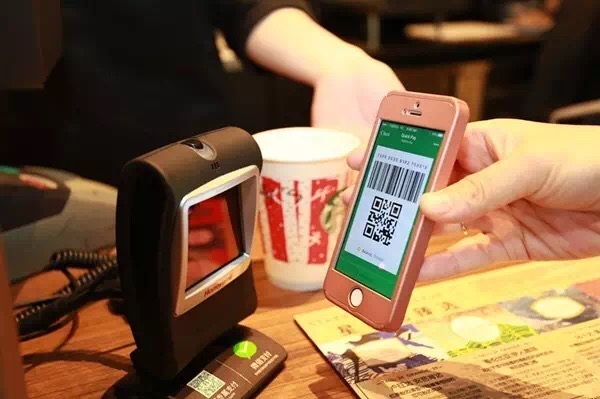
The most visible benefit could come for travellers, small merchants and exporters. A QR-code-based payment linkage can make everyday payments easier for Indian tourists in Vietnam and Vietnamese visitors in India. Instead of depending heavily on cash conversion, cards or multiple intermediaries, merchants and customers could eventually transact through a faster and more direct digital channel. PIB says the arrangement is expected to improve the efficiency of cross-border transactions while making them more transparent, convenient, real-time and cost-efficient.
For businesses, this can support trade by lowering friction in payments. Small exporters, tourism operators, retailers, hotels, restaurants and service providers benefit when cross-border settlement becomes easier and charges are displayed upfront. India and Vietnam already share a growing strategic and economic relationship, and payment connectivity can add a practical financial layer to that partnership. A smoother payment corridor can help Indian businesses explore export opportunities and help Vietnam-linked commerce interact more easily with India’s digital economy.
The scope of the MoU covers information sharing on emerging market trends, standards and best practices in digital payments, innovative technologies, regulatory frameworks and oversight of digital payments in financial services. It also includes potential joint programmes and projects, including payment system connectivity for QR-code-based merchant payments between India and Vietnam.
The agreement also has a regulatory importance. Cross-border payment systems require trust between central banks, clarity on standards, compliance coordination, risk management, cybersecurity awareness, settlement mechanisms and consumer protection. The PIB release describes the MoU as a regulatory cooperation framework that can support smooth cross-border financial activity and information exchange in areas such as fast payment systems, messaging systems and card switches.
For India, the MoU strengthens its position as a major fintech hub. The country’s digital public infrastructure model has already attracted global attention because it combines scale, low-cost access and public-private innovation. By building payment partnerships with other nations, India can extend the usefulness of its fintech capability into tourism, trade, remittances and regional economic integration.
For Vietnam, the partnership offers access to India’s experience in building large-scale digital payment systems and regulatory frameworks around financial innovation. Vietnam has a fast-growing digital economy, expanding smartphone penetration and a rising young consumer base. Cooperation with India can help both countries exchange ideas on secure digital payment adoption, market innovation and cross-border retail payment connectivity.
The RBI-SBV MoU should therefore be seen as more than a technical banking agreement. It is part of a larger movement where financial technology is becoming a diplomatic instrument. Ports, roads and trade corridors move goods; digital payment corridors move value. When such systems become faster and cheaper, they can directly improve the experience of tourists, traders and small businesses.
The agreement also reflects India’s larger approach to exporting trusted digital infrastructure. Instead of presenting fintech only as a commercial product, India is building government-to-government and regulator-to-regulator partnerships that create the foundation for long-term adoption. This matters because payment systems involve public trust, financial stability and national regulation. Central bank cooperation gives such projects credibility and structure.
The immediate outcome of the MoU will be cooperation, information sharing and exploration of joint projects. The long-term opportunity lies in creating a live cross-border QR payment corridor between India and Vietnam. Once such systems mature, an Indian traveller could pay a Vietnamese merchant through a familiar digital method, while Vietnamese users could enjoy similar convenience in India. That would make digital payments a visible part of people-to-people ties.
India’s fintech journey began as a domestic inclusion story. It is now becoming an international connectivity story. The RBI-State Bank of Vietnam MoU shows how digital payments can support trade, tourism, innovation and strategic partnership at the same time. For India and Vietnam, this is a small document with a potentially large impact: a framework that can turn financial innovation into everyday cross-border convenience.
Source: PIB
You may also like
-
India, Russia and the Ukraine Conflict: Putin Highlights Modi’s Continued Push for Dialogue and a Negotiated Settlement
-
EON Space Labs and Dhruva Space Advance Indian Space Hardware on Transporter-18 Mission
-
SatLeo Labs’ TAPAS-1 Reaches Orbit, Advancing India’s Private Thermal-Imaging Capability
-
TakeMe2Space’s MOI-1A Reaches Space on Falcon 9 Transporter-18 Mission
-
Bank of Baroda Enters Pension Fund Management After PFRDA Appointment
