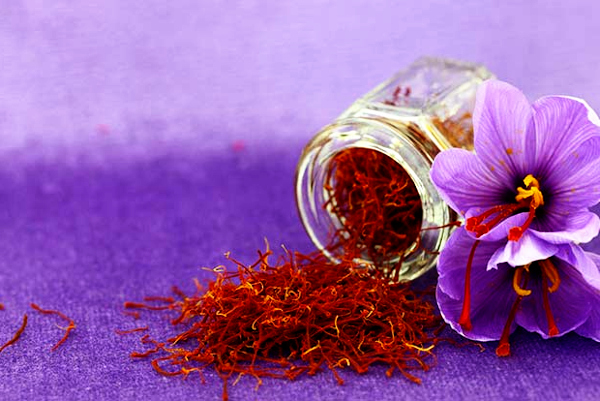
The saffron bowl, which was so far confined to Kashmir, may soon expand to the North East of India. Plants from seeds transported from Kashmir to Sikkim and acclimatized there are now flowering in Yangyang in the Southern part of the North-East state.
Saffron production has long been restricted to a limited geographical area in the Union territory of Jammu & Kashmir. Pampore region, in India, commonly known as Saffron bowl of Kashmir, is the main contributor to saffron production, followed by Budgam, Srinagar, and Kishtiwar districts. Saffron has traditionally been associated with the famous Kashmiri cuisine. It’s its medicinal values were considered as part of the rich cultural heritage of Kashmir. As saffron growing was confined to very specific areas in Kashmir, its production remained limited. Though the National Mission on Saffron focused on several measures to improve its farming, the measures were still limited to the specified areas of Kashmir.
North East Centre For Technology Application and Reach (NECTAR), an autonomous body under the Department of Science & Technology, Government of India supported a pilot project to explore the feasibility of growing saffron in North East region of India, with the same quality and higher quantity.
The Botany and Horticulture department of Sikkim Central University carried out tests to understand the soil and actual pH conditions of Yangyang of Sikkim and found it comparable to saffron growing places of Kashmir. Saffron seed/corms were purchased and air transported from Kashmir to Yangyang site by the department. One saffron grower was engaged and stationed to look after the complete growing process, along with the faculty of the university.
The corms were irrigated during the month of September and October, which ensured timely corm sprouting and good flower yields. The matching of climatic and geographical conditions between Pampore (Kashmir) and Yangyang (Sikkim) led to the successful sample farming of Saffron in Yangyang.
The project also focused on post-harvest management and value addition of saffron so that quality saffron drying and efficient post-harvest processing can improve saffron recovery, thereby improving its production.
Further, detailed analysis and testing of all parameters, including soil testing, quality, quantity, and possible value addition are planned, for immediate results and extrapolation of the project to other parts of the North East Region along with Micro Food Enterprises.
Source: PIB
You may also like
-
India’s Renewable Energy Capacity Expands as Solar Power Reaches 175 GW and Wind Power Crosses 59 GW
-
India Advances ₹68,816 Crore Ultra-High-Voltage Transmission Corridor to Strengthen National Power Grid
-
India’s Exports Rise 16.66% to $568.84 Billion During April–October 2026–27
-
Lakadong Turmeric of Meghalaya: The GI-Tagged Heritage of the Jaintia Hills’ Golden Spice
-
ISRO Successfully Tests Upgraded PSLV Third Stage at Sriharikota
