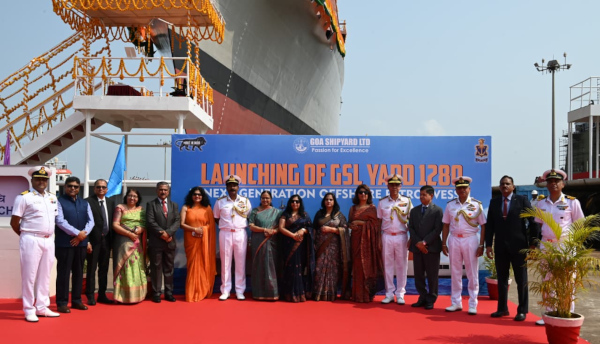
India’s naval shipbuilding programme added another visible milestone on March 31, 2026, with the launch of Yard 1280 “Shachi,” the first of eleven Next Generation Offshore Patrol Vessels (NGOPVs), at Goa Shipyard Ltd. The vessel was launched in Goa by Mrs Shagun Sobti in the presence of Vice Admiral Tarun Sobti, Deputy Chief of the Naval Staff, marking the formal entry of the NGOPV class into the water as the Indian Navy continues to expand its indigenous surface fleet.
The launch is significant not merely because it is the first ship of a new class, but because it represents the next step in a wider effort to strengthen the Navy’s offshore and constabulary capabilities through domestically built platforms. According to the Ministry of Defence, the 11-vessel NGOPV programme is being executed concurrently at two shipyards — Goa Shipyard Ltd. in Goa and Garden Reach Shipbuilders & Engineers in Kolkata — underlining both industrial scale and distributed shipbuilding capacity within India’s defence ecosystem.
Operationally, the new class is intended to reinforce the Navy’s ability to perform a broad spectrum of missions across peacetime presence and low-to-medium intensity operational roles. The PIB release states that these indigenously built ships will augment the existing fleet of ten OPVs/NOPVs and will be employed for defence and surveillance, search and rescue, protection of offshore assets, humanitarian assistance and disaster relief, and anti-piracy operations. That mission set makes the NGOPV a particularly important category of warship for the Indian Navy, because such vessels sit at the intersection of maritime security, coastal vigilance, presence patrols, and rapid-response support in the wider Indian Ocean region.
The naming of the first vessel also carries symbolic weight. The Navy has chosen names for the class from Indian mythology, with the first Goa-built ship being named “Shachi,” meaning one who renders assistance. The release further notes that the crest design of the NGOPV class features the constellation Ursa Major and a red-and-white lighthouse, blending navigational symbolism with the service identity expected of patrol platforms tasked with vigilance, endurance, and assistance at sea.
From a strategic-industrial perspective, the launch fits neatly into India’s long-running push to expand sovereign defence manufacturing capacity. The Ministry of Defence explicitly described the launch as another milestone in the Indian Navy’s pursuit of indigenous shipbuilding, adding that it aligns with the Government of India’s Aatmanirbhar Bharat and Make in India objectives. In practical terms, that means the NGOPV programme is not only about fleet numbers; it is also about sustaining shipyard competence, design maturity, vendor ecosystems, and production continuity across India’s public-sector naval industrial base.
In defence terms, offshore patrol vessels rarely attract the glamour attached to destroyers, submarines, or aircraft carriers, but they are often the ships that quietly do the work of maritime state presence. They patrol sea lanes, watch over offshore installations, support rescue missions, counter piracy, and provide a visible national flag in waters where persistence matters as much as firepower. The launch of Shachi therefore matters because it strengthens the layer of the fleet that is constantly in demand for day-to-day maritime tasks. As India’s responsibilities in the Indian Ocean continue to grow, the entry of the NGOPV class could prove to be an important force multiplier in maintaining surveillance reach, operational flexibility, and sustained presence at sea.
Reference:
You may also like
-
Indian Navy Vice Chief Inspects Japan’s Mogami-Class Stealth Frigate as India-Japan Shipbuilding Cooperation Expands
-
Philippine Marine Wargames Reportedly Show BrahMos Can Penetrate Chinese Destroyer Air Defences
-
Safran Signs 18 Agreements with Indian Aerospace Suppliers, Expanding Make in India Manufacturing Partnerships
-
Indian Army’s Vajra Corps Certifies First Batch of Drone Operators, Strengthens Battlefield Surveillance
-
India to Seek 35% Increase in Defence Modernisation Budget for FY 2027–28
