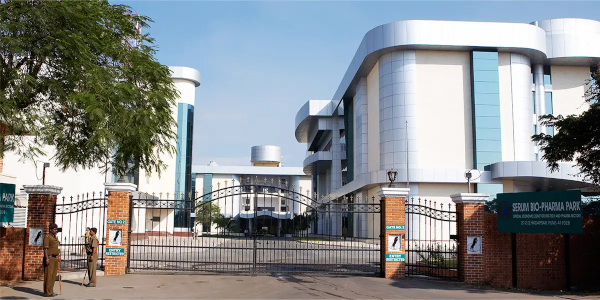
India’s vaccine manufacturing strength is once again entering the centre of global public health action, with the Serum Institute of India set to manufacture clinical trial doses of an experimental Ebola vaccine developed by the University of Oxford. The vaccine is being advanced against the Bundibugyo strain of the Ebola virus, a dangerous form of the disease for which the world still needs stronger medical countermeasures.
The project has received funding support of up to US$8.6 million, giving momentum to the rapid development of the vaccine candidate. The support will help accelerate preclinical work, prepare the vaccine for early-stage human trials, and enable the production of clinical-grade doses. At a time when outbreaks can move quickly across borders, this kind of early manufacturing readiness has become a critical part of epidemic preparedness.
The vaccine candidate is known as ChAdOx1 BDBV. It is built on the ChAdOx1 platform, the same viral vector technology that formed the basis of the Oxford-AstraZeneca COVID-19 vaccine. This platform has already shown its value during a global health emergency, where speed, scalability and manufacturing partnerships became central to vaccine access. Its use in the Ebola space reflects the growing importance of adaptable vaccine technologies that can be redirected toward emerging infectious threats.
The Bundibugyo strain of Ebola is a serious public health concern because approved vaccines and treatments remain limited when compared with the better-known Zaire strain. Ebola outbreaks place enormous pressure on hospitals, frontline health workers, families and public health systems. The disease spreads through direct contact with infected bodily fluids and can cause fever, weakness, vomiting, diarrhoea, bleeding and organ failure in severe cases. Rapid diagnosis, isolation, contact tracing and supportive care remain essential, but vaccines can add a powerful layer of protection when developed and deployed in time.
The latest vaccine effort is especially important because it combines scientific research with manufacturing capacity. Oxford brings vaccine design and immunology expertise, while Serum Institute of India brings large-scale production strength. This partnership model is vital for outbreak response because laboratory success must quickly move toward usable doses. In a fast-moving epidemic, a promising vaccine candidate becomes more valuable when manufacturing plans are ready early.
Serum Institute of India’s role carries wider significance for India’s position in global healthcare. The company has supplied vaccines across the world for decades and became especially visible during the COVID-19 pandemic. Its involvement in the Ebola vaccine effort shows how India’s pharmaceutical and biotechnology ecosystem is becoming a core part of global disease preparedness. India is no longer only a beneficiary of global health innovation; it is a major producer, partner and contributor.
The funding will support the creation of essential development materials, including a master virus seed stock and clinical-grade vaccine batches. These steps are necessary before a vaccine can move into human testing. They ensure that the candidate can be manufactured under controlled standards and assessed for safety and immune response. If early trial results are promising, such groundwork can help speed up movement into larger studies.
The project also reflects a major shift in how the world responds to epidemic threats. Earlier, vaccine development often began after outbreaks had already caused deep damage. The new approach is faster and more anticipatory. It brings research institutions, manufacturers, funders and public health agencies together before a crisis becomes unmanageable. This model helps reduce delays between identifying a threat and preparing a possible vaccine response.
For Africa, where Ebola outbreaks have repeatedly tested public health systems, such vaccine development can be life-saving. Local containment measures remain the first line of defence, but vaccines can protect healthcare workers, high-risk communities and contacts of infected patients. A vaccine targeting the Bundibugyo strain would add an important tool to the world’s Ebola response arsenal.
The effort also shows the importance of platform technologies in modern medicine. A platform like ChAdOx1 allows scientists to adapt a known delivery system to a new disease target. Instead of starting from zero, researchers can build on existing knowledge, safety data, manufacturing experience and regulatory familiarity. This helps compress timelines during emergencies while maintaining scientific discipline.
India’s participation strengthens the idea of health security as a form of global cooperation. Infectious diseases do not respect national borders, and a health crisis in one region can quickly affect travel, trade, migration and economic stability elsewhere. By helping manufacture an Ebola vaccine candidate, India contributes to a wider shield of preparedness that benefits vulnerable regions and the international community.
The development also has strategic value for India’s biotechnology sector. It highlights the country’s ability to participate in advanced vaccine platforms, epidemic response systems and international research partnerships. Such projects can encourage deeper investment in biosciences, clinical manufacturing, cold-chain systems, regulatory capacity and public health innovation.
The Oxford-Serum collaboration on the Bundibugyo Ebola vaccine is still at a development stage, and clinical testing will determine its safety and effectiveness. Yet its importance is already clear. It represents speed, preparedness, manufacturing confidence and international cooperation. It brings together scientific knowledge from one of the world’s leading universities and production capability from one of India’s strongest vaccine manufacturers.
In the larger picture, this project shows how the future of pandemic and epidemic response will be shaped. The world needs vaccines that can be designed quickly, tested responsibly and manufactured at scale. India’s role in this effort reinforces its growing reputation as a dependable pillar of global health security. As emerging diseases continue to challenge public health systems, partnerships like this can help transform scientific readiness into real protection for communities at risk.
You may also like
-
Ayurveda on Cold Foods and Iced Drinks: Why Food Temperature Matters for Digestion
-
Serum Institute of India-Manufactured Ebola Vaccine Enters Clinical Trial in Uganda
-
Ayurveda and Hydration: How Much Water Should We Really Drink?
-
Warm Water in Ayurveda: When and Why It Is Recommended
-
Women Make Up 43% of India’s Ayush Workforce as Sector Supports 17.6 Lakh Livelihoods
