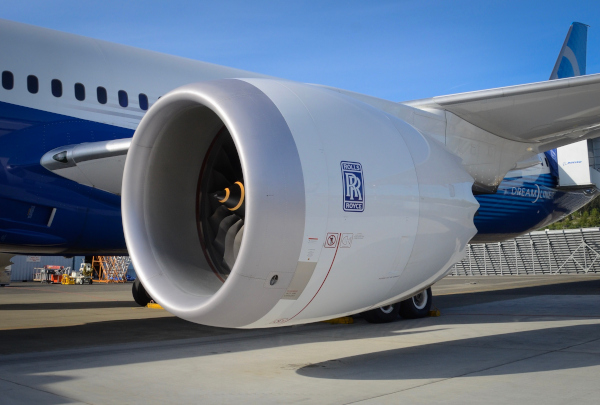
India’s rise as a major aviation, defence manufacturing and clean energy market is drawing deeper attention from global engineering leaders. Rolls-Royce is exploring a wider industrial footprint in India across three strategic areas: civil aircraft engine maintenance, aero gas turbine manufacturing and Small Modular Reactor opportunities. The move signals how India is increasingly being viewed as a long-term base for advanced propulsion, aerospace services, defence technology and future energy systems.
One of the most immediate opportunities lies in aircraft engine Maintenance, Repair and Overhaul. India’s aviation sector is expanding at remarkable speed, driven by rising passenger traffic, large aircraft orders and the growth ambitions of domestic airlines. As Indian carriers add more wide-body aircraft to their fleets, the demand for engine support, overhaul, inspection and lifecycle services will also increase. A domestic engine MRO facility would reduce the need to send commercial aircraft engines abroad for servicing and would help build a stronger aviation support ecosystem inside the country.
At present, many commercial aircraft engines from India are serviced in overseas facilities such as Singapore and Hong Kong. This creates cost, time and logistical dependence for Indian operators. A Rolls-Royce-backed engine MRO facility in India would bring high-value maintenance capability closer to the airlines, shorten turnaround timelines, support fleet availability and generate skilled employment in aerospace engineering. It would also help India move beyond aircraft operation into deeper participation in the aviation value chain.
The timing is important. Indian airlines have placed major orders for Airbus A350 aircraft, a platform powered by Rolls-Royce engines. With carriers such as Air India and IndiGo building long-haul ambitions, India will need a stronger domestic ecosystem for engine maintenance and technical support. Wide-body aircraft operations demand specialised expertise, high-precision tooling, certified facilities and a reliable supply chain. Building these capabilities within India would strengthen the country’s position as an aviation hub for South Asia and the wider Indo-Pacific region.
Beyond civil aviation, Rolls-Royce is also exploring the possibility of setting up an aero gas turbine complex in India. This proposal carries major defence significance because gas turbine engines sit at the heart of modern fighter aircraft, transport aircraft, helicopters, naval platforms and future unmanned systems. A dedicated complex with technology-transfer support could help India develop deeper competence in military propulsion, an area that has long remained one of the most difficult frontiers of defence self-reliance.
The proposed gas turbine complex would initially focus on military aircraft engines, with the possibility of later expansion into dual-use and civil aviation applications. This approach fits India’s broader defence-industrial strategy, where the country is seeking to build critical technologies at home rather than depending mainly on foreign procurement. Aero engines are among the most complex engineering products in the world, requiring mastery over metallurgy, thermal management, compressor design, turbine blades, control systems, materials science and long-duration testing.
For India, such a facility could support future indigenous defence programmes, including the Advanced Medium Combat Aircraft. The AMCA programme is one of India’s most ambitious military aviation projects, aimed at developing a fifth-generation fighter aircraft with stealth features, advanced avionics and modern combat capability. A strong propulsion partnership would be important for such a programme because engine performance directly shapes aircraft range, payload, speed, survivability and future upgrade potential.
The larger value of a gas turbine complex would lie in creating an industrial knowledge base. Engine manufacturing is not only about assembling parts; it creates an ecosystem of specialised suppliers, precision manufacturers, testing facilities, design engineers, certification experts and high-skill technicians. Once such an ecosystem matures, it can serve multiple sectors, from fighter aircraft and naval turbines to civil aviation and industrial power systems.
Rolls-Royce already has a long-standing presence in India through partnerships and joint ventures with companies such as Hindustan Aeronautics Limited and Force Motors. A deeper expansion would build on this existing base and align with India’s push for Make in India, defence indigenisation and high-technology manufacturing. It would also support India’s ambition to become a global hub for aerospace engineering rather than remaining only a large buyer of foreign systems.
The third area under consideration is Small Modular Reactors. SMRs are emerging globally as a possible next step in clean nuclear energy because they offer compact design, modular construction and flexible deployment potential. India’s growing energy demand, industrial expansion and clean energy commitments make nuclear power an important part of the long-term energy mix. If policy reforms create the right framework, SMRs could open a new chapter in India’s civil nuclear sector.
Small Modular Reactors can be useful for industrial clusters, remote regions, data centres, desalination plants and energy-intensive manufacturing zones. Their smaller size compared to conventional nuclear plants allows more flexible planning, while modular construction can reduce some of the complexity associated with large-scale nuclear projects. For India, this could support reliable low-carbon power generation while complementing solar, wind, hydro and conventional nuclear capacity.
The combined interest in MRO, aero gas turbines and SMRs shows how India is becoming a multi-sector strategic market for advanced engineering. Aviation gives India scale, defence gives it strategic urgency, and clean energy gives it long-term growth depth. A company entering all three areas would not be looking at short-term sales alone; it would be looking at India as a manufacturing, services, research and technology-development base.
The employment potential is also significant. Future investments across these sectors could create more than 10,000 jobs, especially in engineering, aerospace maintenance, manufacturing, quality control, testing, project management, energy systems and high-precision industrial services. These would be high-skill jobs that can raise India’s technical workforce capacity and create downstream opportunities for MSMEs, component suppliers and specialised service providers.
India’s advantage comes from the convergence of market size, policy direction and strategic need. The country has one of the world’s fastest-growing aviation markets, a major defence modernisation pipeline, a strong talent pool and increasing emphasis on domestic technology development. These conditions make India attractive for companies looking to build long-term industrial partnerships rather than only sell finished products.
Rolls-Royce’s India plans, if they move forward, could become a major marker in the country’s transition from buyer to builder. A domestic engine MRO facility would support civil aviation growth. An aero gas turbine complex would strengthen defence manufacturing and propulsion capability. Small Modular Reactor opportunities would connect India to the next wave of clean energy technology. Together, these possibilities point toward a wider transformation in which India becomes a serious centre for aerospace power, advanced manufacturing and strategic energy systems.
You may also like
-
India’s Economic Warfare Challenge: Strategic Autonomy, Energy Security and the Rise of a Global Power
-
India-US Trade Deal Stalemate: Why Washington’s Tariff Pressure Has Failed to Secure an Agreement
-
US Double Standards in Foreign Policy: 16 Recent Cases Involving India, Russia, China and Global Trade
-
India’s Arctic Energy Ambitions: Russian Oil, LNG and a New Sea Route to Indian Ports
-
India and Russia Explore Joint Icebreaker Construction as Maritime Industrial Cooperation Expands
