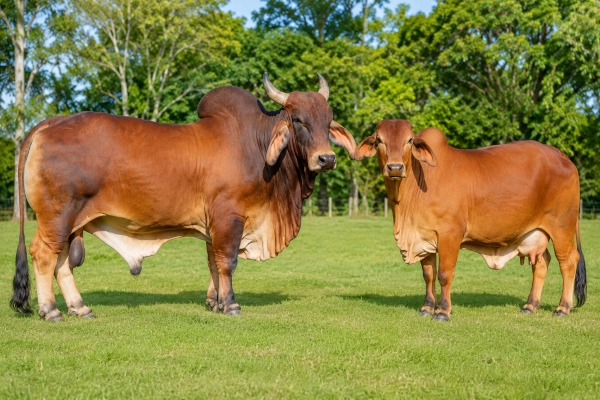
Red Sindhi cattle are among the best-known indigenous dairy breeds of the Indian subcontinent. Their deep red to reddish-brown coat, compact dairy form and ability to remain productive in hot climates have earned the breed recognition far beyond its original homeland. Red Sindhi animals combine useful milk production with hardiness, fertility and adaptability, qualities that have made their genetics valuable in tropical dairy-development programmes across several continents.
The breed developed in the Sindh region of undivided India, particularly around Karachi and Hyderabad and the adjoining Las Bela region of present-day Balochistan. It is also known by names such as Sindhi, Red Karachi and Malir. India recognises Red Sindhi as an indigenous milch breed, with organised populations maintained in states including Odisha, Tamil Nadu, Bihar, Kerala and Assam.
Origin and Historical Background
The Red Sindhi breed emerged within the dry and semi-arid landscapes surrounding the lower Indus Valley. Generations of selection by livestock keepers shaped cattle capable of producing milk while enduring high temperatures, seasonal fodder shortages and changing grazing conditions.
The breed is believed to share historical connections with cattle from the Las Bela region. Its compact body, red colour and dairy characteristics distinguish it from the taller, grey or white Tharparkar cattle that also developed in Sindh. Red Sindhi cattle also resemble Sahiwal animals, though they are generally smaller and display a more uniform red coat.
Following the political division of the subcontinent in 1947, much of the breed’s original tract became part of Pakistan. Established herds and breeding populations continued in India, particularly on government and institutional farms. The breed subsequently became an important genetic resource for Indian dairy development and international tropical-cattle breeding.
Physical Characteristics
The most striking feature of Red Sindhi cattle is their coat colour. It ranges from deep brick red and reddish brown to lighter copper or yellowish-red shades. Mature bulls usually carry a darker colour around the head, neck, shoulders and forequarters. Small white markings may occasionally occur on the forehead or dewlap.
The animals possess a medium-sized, compact and well-proportioned body. The forehead is broad and slightly convex, while the muzzle is dark and well developed. Their ears are medium-sized and gently drooping.
The horns are short and thick at the base. They emerge towards the sides before curving upward. The neck is comparatively short, and the dewlap is moderately developed. A distinct hump rises above the shoulders, particularly in bulls, reflecting the breed’s Bos indicus or zebu ancestry.
Red Sindhi cows have a deep barrel and a wedge-shaped dairy body. Their udders are generally well developed, with clearly defined milk veins and evenly positioned teats in well-selected animals. Bulls have a stronger forequarter, pronounced hump and muscular appearance.
Dairy Qualities
Red Sindhi is primarily a milch breed. Its value lies in the balance between useful milk production and the ability to perform under tropical conditions.
Recorded milk yield commonly ranges from approximately 1,100 to 2,600 kilograms during a lactation, with an average of around 1,840 kilograms in the breed information compiled by the National Dairy Development Board. Milk fat generally ranges from about 4 to 5.2 per cent, with an average close to 4.5 per cent. Individual performance varies according to genetic merit, feeding, health, lactation number, climate and farm management.
Historical records from organised herds have reported average production close to 2,000 kilograms per lactation, while exceptional cows of Red Sindhi and the closely related Sahiwal breed have exceeded 4,000 kilograms under favourable conditions. Such figures demonstrate the genetic capacity available within carefully selected bloodlines.
The relatively rich fat content makes Red Sindhi milk suitable for household consumption and the preparation of curd, ghee, butter and traditional dairy foods. For small dairy farmers, milk composition can be as important as total volume, particularly where payment systems reward fat and solids.
Adaptability to Tropical Conditions
Environmental adaptability is one of the breed’s greatest strengths. Red Sindhi cattle evolved in a region characterised by intense summer heat and fluctuating feed availability. Their body structure, skin pigmentation and zebu physiology support temperature regulation in warm environments.
The cattle can maintain production under climatic conditions that place considerable stress on many temperate dairy breeds. Their compact size also reduces maintenance requirements compared with very large animals. These traits allow Red Sindhi cattle to fit farming systems based on crop residues, cultivated fodder, grazing and moderate levels of concentrate supplementation.
Adaptability still depends on responsible husbandry. Shade, clean drinking water, good ventilation, adequate nutrition and timely veterinary care remain essential during extreme heat. The breed’s hardiness supports resilience, while sound farm management allows its productive qualities to emerge fully.
Temperament and Maternal Qualities
Red Sindhi cows are generally manageable and suited to routine dairy-farm handling. A calm animal is easier to milk, examine, breed and transport, making temperament an important selection characteristic.
The cows possess useful maternal instincts and can rear healthy calves when nutrition and health care remain adequate. Their established reproductive adaptation to hot climates has helped the breed gain acceptance in tropical breeding programmes.
Calves are usually born with a reddish coat that deepens with age. Female calves selected from high-yielding dams form the foundation of herd improvement, while bulls should come from recorded families with strong milk production, fertility and sound physical structure.
Feeding and Farm Management
Red Sindhi cattle respond well to improved feeding. A balanced ration should combine green fodder, dry roughage, concentrates and mineral supplementation according to the animal’s body weight and stage of production.
Leguminous fodders can provide protein, while grasses and crop residues supply fibre. Lactating cows require additional energy and protein to support milk production. Mineral mixtures and common salt help meet requirements that ordinary fodder may leave incomplete.
Constant access to clean water is essential, especially during lactation and hot weather. Cattle sheds should provide shade, airflow, dry flooring and sufficient space for resting. Regular cleaning reduces the build-up of moisture and infectious material around the udder and hooves.
Routine vaccination, deworming, reproductive monitoring and udder-health checks contribute to sustained productivity. Milk records should be maintained for individual cows so that superior females can be identified for future breeding.
Role in Crossbreeding
Red Sindhi genetics have travelled widely because tropical countries sought dairy cattle that could combine production with climatic resilience. The breed has contributed to cattle-development programmes in Sri Lanka, the Philippines, Australia, Brazil and the United States, among other countries.
Breeders have crossed Red Sindhi cattle with Jersey, Holstein-Friesian, Brown Swiss and other European dairy breeds. The aim has usually been to combine the higher yield of specialised temperate breeds with the heat adaptation and environmental fitness of zebu cattle.
In Sri Lanka, Red Sindhi–Jersey crosses became part of efforts to create dairy animals suited to warm and humid conditions. Similar programmes elsewhere demonstrated the wider genetic importance of the breed. Crossbreeding outcomes depend heavily on the proportion of each ancestry, local climate, nutrition and the level of farm inputs.
Red Sindhi has also influenced composite cattle populations developed for tropical dairy farming. Its contribution extends beyond purebred herds because many animals carrying Red Sindhi ancestry continue to support milk production in warmer regions.
Red Sindhi Cattle in India
Within India, Red Sindhi is classified as a specialised milk breed. Official listings associate it with organised populations in Odisha, Tamil Nadu, Bihar, Kerala and Assam. Pure animals are relatively scarce in ordinary village herds, making institutional conservation especially important.
Central cattle-breeding farms have maintained Red Sindhi and Red Sindhi crossbred populations as sources of superior germplasm. Semen stations also preserve selected bloodlines for artificial insemination and breed improvement.
Projects under the Rashtriya Gokul Mission have included measures to strengthen access to high-genetic-merit Red Sindhi germplasm. Government breeding facilities maintain indigenous cattle and use technologies such as artificial insemination, embryo transfer and in-vitro fertilisation to conserve and multiply valuable lines.
For India, the breed carries particular value in areas where farmers require a dairy animal suited to heat, moderate inputs and locally available fodder. Its genetic heritage can contribute to climate-resilient dairy systems when breeding remains systematic and based on recorded performance.
Difference Between Red Sindhi and Sahiwal
Red Sindhi and Sahiwal cattle share several features. Both are reddish zebu dairy breeds that developed in the north-western regions of the undivided subcontinent. Both possess short horns, a convex forehead, good dairy characteristics and adaptability to heat.
Red Sindhi animals are generally more compact and often display a deeper, more uniform red colour. Sahiwal cattle tend to be larger and may show lighter reddish-brown shades with irregular markings. Differences between individual animals can be subtle, particularly where historical interbreeding has occurred.
Accurate breed identification should therefore consider pedigree, body structure, coat pattern and breeding records together.
Importance for Climate-Resilient Dairying
Rising temperatures and increasingly variable weather have renewed interest in cattle capable of producing under environmental stress. Red Sindhi offers a valuable combination of milk production, moderate body size and tropical adaptation.
The breed is particularly relevant for small and medium farms where intensive cooling systems and high-cost feeding programmes may be impractical. Selective breeding can further improve milk yield while retaining fertility, longevity and resilience.
Conservation should focus on preserving broad genetic diversity rather than multiplying only a small number of popular sires. A diverse population provides stronger protection against inherited defects and supports long-term improvement.
Conservation and Future Potential
The limited availability of pure Red Sindhi cattle in field conditions makes conservation a priority. Genetic dilution through uncontrolled crossbreeding, small herd sizes and weak pedigree recording can gradually reduce the number of recognisable purebred animals.
Effective conservation requires organised herds, reliable registration, milk recording and the careful selection of breeding bulls. Cryopreserved semen and embryos can provide additional security for rare bloodlines. Farmer awareness and economic incentives also play an essential role, since a breed survives most successfully when keeping it remains rewarding.
Red Sindhi cattle hold considerable potential for selective dairy improvement. Greater emphasis on milk yield, fat percentage, udder structure, fertility, disease resilience and productive longevity could strengthen the breed while preserving its traditional identity.
A Valuable Dairy Heritage
Red Sindhi cattle represent the livestock heritage of the Indus region and the wider Indian subcontinent. Their rich red coat gives them a distinctive appearance, while their deeper importance lies in their capacity to produce valuable milk under challenging climatic conditions.
The breed has supported dairy farming in South Asia and contributed genetic material to cattle populations across the tropical world. Its compact body, useful milk-fat content and environmental adaptability continue to make it relevant to farmers, breeders and livestock scientists.
Careful conservation and performance-based selection can give Red Sindhi cattle an expanded role in the future of climate-resilient dairying. Through such efforts, this historic red dairy breed can remain a living agricultural resource for generations to come.
References
National Dairy Development Board. “Red Sindhi.” Dairy Knowledge Portal, Animal Breeding Group, NDDB.
https://www.dairyknowledge.in/dkp/article/red-sindhi
ICAR–National Bureau of Animal Genetic Resources. “Cattle Breeds of India.” Red Sindhi, accession number INDIA_CATTLE_0000_REDSINDHI_03025.
https://nbagr.res.in/cattle-breed
Food and Agriculture Organization of the United Nations. “Types and Breeds of Tropical and Temperate Cattle.” In Crossbreeding Bos indicus and Bos taurus for Milk Production in the Tropics.
https://www.fao.org/4/t0095e/t0095e04.htm
Food and Agriculture Organization of the United Nations. “Review of Literature on Dairy Cattle Crossbreeding in the Tropics.” Includes Red Sindhi crosses with Jersey, Holstein and Brown Swiss cattle.
https://www.fao.org/4/t0095e/T0095E06.htm
Food and Agriculture Organization of the United Nations. “Crossbreeding for Milk Production in Sri Lanka.” Includes the use of Red Sindhi cows in Jersey crossbreeding programmes.
https://www.fao.org/4/x6500e/X6500E08.htm
Jadhav, R. P., and S. S. Kamble. “Production and Reproduction Performance of Red Sindhi Cow.” Journal of Livestock Biodiversity, Volume 5, Issues 1–2. ICAR electronic publications.
https://epubs.icar.org.in/index.php/JLB/article/view/157934
Tiwari, R., et al. “Seasonal Variations in the Quality and Freezability of Red Sindhi Bull Semen.” Indian Journal of Animal Sciences. ICAR.
https://www.dairyknowledge.in/sites/default/files/seasonal_variations_in_quality_and_freezibility.pdf
Indian Council of Agricultural Research. “Cattle Breeding Programmes in India.” ICAR Technical Series.
https://www.icar.org/Documents/technical_series/ICAR-Technical-Series-no-3-Bella/Taneja.pdf
Department of Animal Husbandry and Dairying. “Rashtriya Gokul Mission.” Ministry of Fisheries, Animal Husbandry and Dairying, Government of India.
https://dahd.gov.in/schemes/programmes/rashtriya_gokul_mission
Tamil Nadu Agricultural University. “Breeds of Cattle and Buffalo: Red Sindhi.” Agritech Portal.
https://www.agritech.tnau.ac.in/expert_system/cattlebuffalo/Breeds%20of%20cattle%20%26%20baffalo.html
You may also like
-
Zoological Survey of India Discovers Three New Centipede Species in Western Ghats of Kerala and Karnataka
-
Scientists Document 3,261 Flowering Plant Species in Agasthyamalai Biosphere Reserve, Including 1,018 Indian Endemics
-
Scientists Discover Two Rare Blind Fish Species in Assam’s Underground Waters, Revealing Hidden Biodiversity
-
India Begins National Red List Assessment of 1,211 Bird Species to Strengthen Wildlife Conservation
-
Wild Water Buffaloes Return to Madhya Pradesh’s Kanha Landscape After Nearly 100 Years
