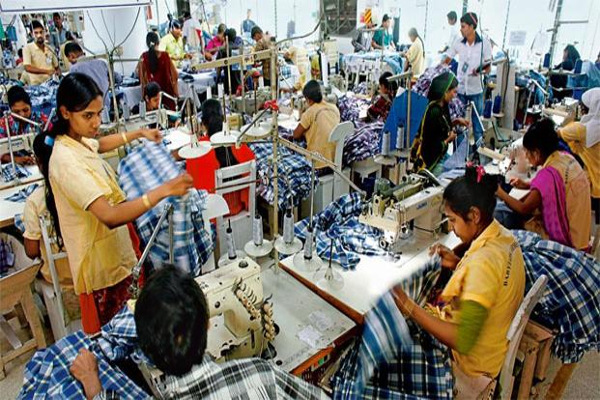
India’s Production Linked Incentive schemes have attracted actual investment exceeding ₹2.40 lakh crore and generated more than 14.15 lakh direct and indirect employment opportunities across 14 strategic sectors. The figures, calculated up to March 31, 2026, were presented by Minister of State for Commerce and Industry Jitin Prasada in a written reply to the Lok Sabha on July 21, 2026.
The PLI programme was introduced to expand domestic manufacturing, attract fresh investment, strengthen exports, create employment and improve India’s competitiveness in global supply chains. The schemes cover sectors such as electronics, pharmaceuticals, medical devices, automobiles, food processing, telecommunications equipment, textiles, solar modules, specialty steel, drones, batteries and white goods. The combined approved financial outlay for the 14 sectors stands at ₹1.91 lakh crore.
The Department for Promotion of Industry and Internal Trade serves as the coordinating and monitoring department for the programme. Individual schemes are implemented by the ministries and departments responsible for their respective sectors. This structure allows each ministry to frame eligibility conditions, production targets and incentive-disbursement mechanisms suited to the characteristics of its industry.
The schemes had attracted cumulative actual investment of ₹2,40,138 crore by the end of March 2026. High-efficiency solar photovoltaic modules recorded the largest investment among the covered sectors at ₹64,873 crore. Pharmaceutical drugs attracted ₹45,158 crore, while automobiles and auto components accounted for ₹44,326 crore. Specialty steel received ₹23,896 crore and large-scale electronics manufacturing attracted ₹20,580 crore.
Other sectors also recorded significant investment. Food products attracted ₹9,207 crore, textile products received ₹8,117 crore, white goods accounted for ₹6,409 crore and telecommunications and networking products attracted ₹5,278 crore. Investment in bulk drugs reached ₹5,070 crore, while advanced chemistry cell batteries recorded ₹4,570 crore. Manufacturing of medical devices received ₹1,151 crore, IT hardware attracted ₹908 crore and drones and drone components accounted for ₹595 crore.
The schemes have generated 8,49,069 reported employment opportunities across the individual sectoral programmes. The government has also reported approximately 5.66 lakh indirect jobs associated with large-scale electronics manufacturing, IT hardware and solar photovoltaic modules, taking the combined direct and indirect employment impact beyond 14.15 lakh.
Food processing emerged as the largest employment-generating sector under the programme, creating around 3,29,200 jobs. Large-scale electronics manufacturing generated 1,69,249 employment opportunities, while pharmaceutical drugs accounted for 1,14,880 jobs. The automobile and auto-components sector generated 67,820 jobs, followed by white goods with 52,703 employment opportunities.
The telecommunications and networking-products sector generated 33,610 jobs, while textile products created 33,427 employment opportunities. High-efficiency solar modules accounted for 14,794 jobs and specialty steel generated 14,138. Medical-device manufacturing created 5,268 jobs, bulk drugs generated 5,226, IT hardware created 4,859 and drones and drone components accounted for 2,650 employment opportunities.
Exports supported by the PLI schemes have exceeded ₹15.2 lakh crore since the programme’s inception. Cumulative exports under the schemes increased from ₹4 lakh crore at the end of the 2023–24 financial year to ₹6.5 lakh crore in 2024–25 and ₹15.2 lakh crore by March 31, 2026. The rapid rise reflects the growing contribution of PLI-supported manufacturers to India’s integration with international production networks and export markets.
Large-scale electronics manufacturing has emerged as one of the programme’s most visible areas of progress. Mobile-phone production has increased by around 2.4 times since the scheme was launched, while imports have declined by approximately 77 per cent. Around 99.2 per cent of the mobile phones used in India are now manufactured domestically, indicating a major expansion of local assembly, component sourcing and supply-chain capacity.
The pharmaceutical PLI programme has recorded cumulative sales exceeding ₹3.64 lakh crore. It has supported the domestic manufacture of 1,931 pharmaceutical products, including 191 bulk drugs produced in India for the first time. These developments have expanded local manufacturing capabilities across medicines, active ingredients and other critical pharmaceutical products.
Under the separate PLI scheme for bulk drugs, manufacturing capacity of approximately 55,000 metric tonnes has been established across 26 critical active pharmaceutical ingredients. These include important ingredients used in medicines such as paracetamol, levofloxacin and norfloxacin. The creation of domestic capacity in these areas strengthens pharmaceutical supply-chain resilience and supports the availability of essential medicines.
The medical-device scheme has facilitated the domestic production of advanced equipment including computed tomography scanners, magnetic resonance imaging systems, catheterisation laboratories and ultrasonography equipment. Twenty-two approved applicants have commenced operations and 55 distinct medical devices have been commissioned under the programme.
The telecommunications PLI scheme has supported the development of indigenous fourth-generation mobile technology and domestic manufacturing capacity for fifth-generation telecommunications equipment. This has helped create a broader local ecosystem for radio equipment, networking products, transmission systems and other components required for modern telecommunications infrastructure.
The white-goods programme has contributed to the localisation of components used in air conditioners and light-emitting diode products. India’s compressor-manufacturing capacity increased from around one million units in 2021 to 10 million units during 2025–26. Local production of printed circuit board assemblies, cross-flow fans and other air-conditioner components has also expanded under the scheme.
Government data separately indicate that PLI-supported sectors had generated production and sales exceeding ₹22.66 lakh crore by March 31, 2026. The combination of investment, production, exports and employment shows that the programme has moved beyond project approvals and entered a phase of measurable industrial output across several major sectors.
Implementation is periodically reviewed by an Empowered Group of Secretaries chaired by the Cabinet Secretary and by the ministries administering the individual schemes. The government has introduced measures such as rationalising guidelines, relaxing selected eligibility conditions, strengthening project monitoring, consulting participating industries and addressing implementation issues through inter-ministerial coordination.
The latest results highlight the role of the PLI framework in expanding India’s manufacturing base and encouraging businesses to invest in new production facilities. The programme’s long-term impact will depend on the ability of supported industries to deepen component manufacturing, develop domestic suppliers, adopt advanced technologies and maintain competitiveness after the incentive periods conclude.
REFERENCES
Press Information Bureau, Government of India. “PLI Schemes Attract Over ₹2.40 Lakh Crore Investment, Generate More Than 14.15 Lakh Jobs.” Ministry of Commerce and Industry, 21 July 2026. https://www.pib.gov.in/PressReleasePage.aspx?PRID=2287008
Press Information Bureau, Government of India. “India’s Vision for Viksit Bharat @ 2047.” June 2026. https://static.pib.gov.in/WriteReadData/specificdocs/documents/2026/jun/doc2026613891801.pdf
You may also like
-
India’s First Port-Based e-Methanol Plant at Kandla to Supply Green Fuel to Global Shipping
-
India’s Recent Oil and Gas Discoveries: New Finds, Offshore Frontiers and How Much Crude India Produces at Home
-
India’s Hidden Gold Mountain: How Households Came to Own an Estimated 31,000 Tonnes of Gold
-
India–Afghanistan Air Cargo Corridor Returns to Focus as Both Sides Push for Stronger Trade Connectivity
-
India’s Defence Shipyards Build Common Indigenous Supply Chain for Specialised Naval Cables
