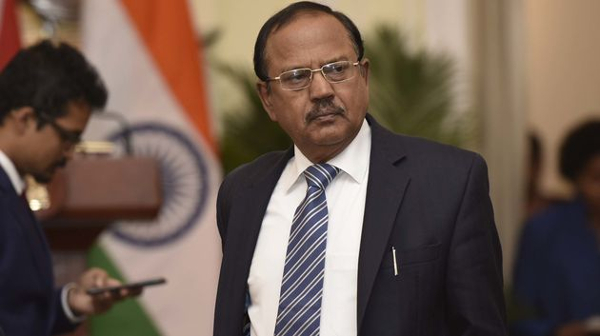
National Security Adviser Ajit Doval has called on BIMSTEC member states to strengthen regional cooperation and take decisive collective action against the expanding range of security challenges confronting the Bay of Bengal region. Addressing the fifth meeting of BIMSTEC National Security Chiefs in New Delhi on July 16, 2026, he said geopolitical uncertainty, technological disruption, regional conflicts and pressure on global supply chains were creating complex risks for every member country. He emphasised that these interconnected challenges required coordinated responses built on dialogue, mutual trust, institutional cooperation and practical action.
The contemporary security environment now extends across military, economic, technological and social domains. Terrorism, organised crime, cyberattacks, maritime insecurity, trafficking networks and disruptive technologies increasingly operate across national borders. A cyber incident in one country can affect financial systems, transport networks and critical infrastructure across the region. Criminal organisations use maritime routes, encrypted communications and informal financial channels to move narcotics, weapons, people and illicit funds. Instability affecting major sea lanes can also influence energy supplies, food prices and industrial production throughout South and Southeast Asia.
Doval urged BIMSTEC countries to translate shared concerns into coordinated measures. He highlighted the importance of sustained consultations, stronger institutions and regular exchanges among national security agencies so that the organisation can respond quickly to evolving threats. BIMSTEC has already developed cooperation in counterterrorism, transnational organised crime, cybersecurity and maritime security. The New Delhi meeting provided an opportunity to review this progress and identify areas where member states can expand intelligence sharing, operational coordination, training, capacity-building and policy alignment.
BIMSTEC brings together Bangladesh, Bhutan, India, Myanmar, Nepal, Sri Lanka and Thailand, linking five South Asian countries with two Southeast Asian nations. The grouping represents around 1.7 billion people and occupies a strategically important region connecting the Indian Ocean with major markets, ports and production centres across Asia. The Bay of Bengal serves as the geographical and economic centre of this partnership, carrying commercial shipping, energy supplies, fishing activity and maritime trade essential to the member states.
Doval described the Bay of Bengal as a shared civilisational and strategic space shaped by centuries of cultural exchange, commerce and human movement. These historical connections provide a strong foundation for developing a regional security framework based on common interests. Maritime safety, disaster preparedness, energy security, connectivity and economic resilience have acquired growing importance as regional trade, port development, coastal infrastructure and transport corridors continue to expand.
Counterterrorism remains a central area of BIMSTEC cooperation. Modern terrorist networks combine physical operations with encrypted communications, online recruitment, digital propaganda and unconventional financing systems. Regional coordination can support the exchange of threat assessments, financial intelligence and information about the movement of extremist groups. It can also help member states strengthen the protection of critical infrastructure and prevent hostile networks from exploiting administrative, legal or technological gaps between countries.
Transnational organised crime presents a closely related challenge. Criminal groups frequently operate across several jurisdictions and use both land and maritime routes. Greater coordination among security agencies can improve the identification of these networks, strengthen investigations and support faster operational responses. India leads BIMSTEC’s security pillar, which includes counterterrorism and transnational crime, disaster management and energy security. This places New Delhi in an important position to advance institutional cooperation and help member states build common capabilities.
Cybersecurity has also emerged as a major regional priority. Cyberattacks can target banking systems, communications networks, transport infrastructure, power grids and government databases. Artificial intelligence, autonomous systems and commercially available digital tools are creating new opportunities for development while also expanding the range of threats faced by governments and societies. BIMSTEC cooperation can help member states exchange information on cyber incidents, strengthen national response institutions and train specialised personnel capable of protecting critical systems.
Joint cyber exercises, technical workshops and coordinated response mechanisms could improve readiness for large-scale attacks affecting multiple countries. The region can also develop common principles for the secure and responsible use of emerging technologies. Such cooperation would support digital modernisation, protect public institutions and reduce the risk of fraud, manipulation and infrastructure disruption.
Maritime security remains another vital area of cooperation. The Bay of Bengal carries major shipping routes and supports the livelihoods of millions of people. Regional collaboration can strengthen the protection of commercial vessels, improve search-and-rescue coordination and enhance responses to trafficking, illegal fishing and environmental emergencies. Greater maritime domain awareness would allow member states to monitor activities across their waters and respond more effectively to suspicious vessels or emerging crises. Cooperation among navies, coast guards, port authorities and maritime agencies could create a stronger regional safety network.
Doval also linked security with connectivity, economic resilience and capacity-building. Recent disruptions to global supply chains have shown how distant conflicts can affect domestic production, energy availability and consumer prices. Reliable transport corridors, diversified supply networks and secure digital infrastructure can reduce regional vulnerability. BIMSTEC’s wider agenda supports this objective through cooperation in connectivity, trade, investment, science, technology, agriculture, energy, climate resilience and people-to-people contact.
For India, BIMSTEC brings together the Neighbourhood First policy, the Act East policy and the MAHASAGAR vision of Mutual and Holistic Advancement for Security and Growth Across Regions. The grouping connects India’s eastern and northeastern regions with neighbouring countries and Southeast Asian markets while providing a platform for cooperation on shared security concerns. It also strengthens India’s role in building a stable, connected and prosperous Bay of Bengal region.
BIMSTEC was established through the Bangkok Declaration in 1997 and will complete three decades in 2027. The approaching milestone provides an opportunity to review the organisation’s progress, strengthen its institutions and improve implementation. Regular meetings among national security chiefs can maintain high-level coordination, define clear priorities and guide specialised agencies towards measurable outcomes.
The fifth BIMSTEC National Security Chiefs meeting reflected the growing strategic importance of the Bay of Bengal. The region’s security increasingly depends on the ability of its countries to cooperate across conventional and emerging domains. Doval’s message centred on deeper institutional links, stronger information exchanges, coordinated capacity-building and decisive responses to common threats. With its geographical reach, economic potential and civilisational foundation, BIMSTEC can develop into a powerful regional platform capable of protecting its people, securing maritime and economic networks and supporting shared prosperity across South and Southeast Asia.
REFERENCES
- Akashvani News. “India Calls for Stronger BIMSTEC Cooperation on Security and Economy.” Published July 16, 2026.
https://newsonair.gov.in/nsa-ajit-doval-calls-for-stronger-bimstec-cooperation-on-security-and-economy/ - BIMSTEC Secretariat. “BIMSTEC Newsletter – June 2026.” Includes the announcement of the Fifth Meeting of BIMSTEC National Security Chiefs in New Delhi on July 16, 2026.
https://bimstec.org/images/enewsletter_pdf_file/1783484044_BIMSTEC%20Newsletter%20June%202026%20%281%29.pdf - BIMSTEC Secretariat. “Security Cooperation.”
https://bimstec.org/security - BIMSTEC Secretariat. “National Security Chiefs’ Meeting.”
https://bimstec.org/national-security-chiefs-meeting
You may also like
-
US Double Standards in Foreign Policy: 16 Recent Cases Involving India, Russia, China and Global Trade
-
Indian Navy Vice Chief Inspects Japan’s Mogami-Class Stealth Frigate as India-Japan Shipbuilding Cooperation Expands
-
INS Trishul Arrives in UK for Exercise KONKAN 2026 as India and Royal Navy Expand Maritime Cooperation
-
INS Sahyadri Arrives in Russia for Exercise INDRA 2026 to Strengthen India-Russia Naval Cooperation
-
India and Qatar Deepen Strategic Partnership with Focus on Energy Security, Trade and West Asia
