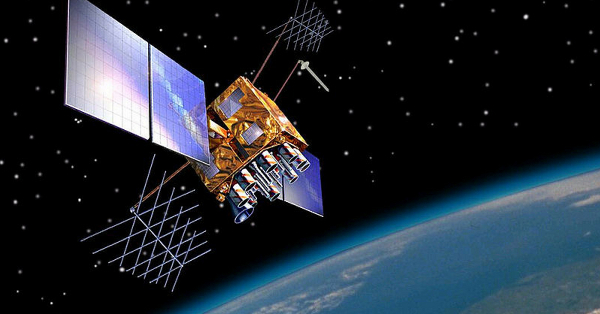
Although roping in private players to build on native technology is not new to India—both Isro and NPCI have undertaken initiatives—the space agency is going one step further. A report in the Economic Times says Isro is trying to get Xiaomi on board to roll out its navigation technology, NAVIC.
Isro has already made a deal with Qualcomm to create NAVIC-enabled chips, a tie-up with Xiaomi will ensure that Indian phones become NAVIC-enabled. Although most chips do come integrated with the American GPS, NAVIC-enabled phones would make India one of the few players offering it for commercial use. While Isro is building the technology for defence on its own, roping in private players will help expand its base much faster. Besides, it will popularise the technology, which will help scale it globally.
The Indian government also has a part to play in helping NAVIC succeed. While tie-ups will ensure that technology is available for start-ups and businesses to list and build upon this innovation, without the requisite infrastructure, this would not be possible. Take the case of Google Maps. While the service has been successful in India, it still encounters problems as the government does not allow Google to survey Indian areas. If NAVIC is allowed these capabilities, it will surpass Google in local transportation. Besides, it would also help the government in better delivery of public services and planning for infrastructure projects. By tracking traffic data, it will be better able to plan city infrastructure, and make cities and transportation smarter.
Source: FE
Image Courtesy: The Better India
You may also like
-
India’s Expanding Free Trade Network Could Cover 75% of Global Trade
-
LC3: The Indian-Backed Cement Technology That Could Change How India Builds
-
India’s Quantum-Secure Network Reaches 1,000 km as National Quantum Mission Advances Towards 2,000-km Goal
-
EON Space Labs and Dhruva Space Advance Indian Space Hardware on Transporter-18 Mission
-
SatLeo Labs’ TAPAS-1 Reaches Orbit, Advancing India’s Private Thermal-Imaging Capability
