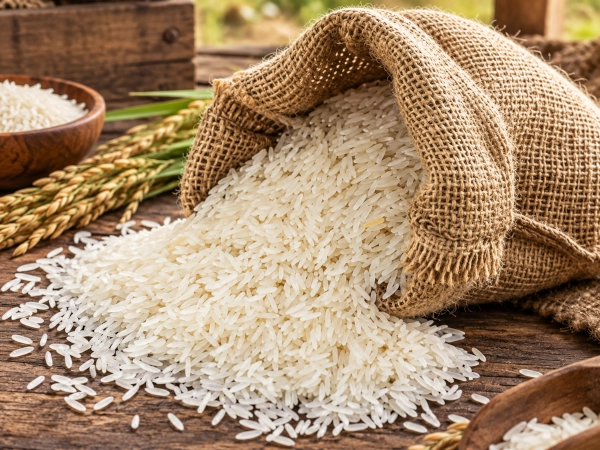
In the rice-growing landscape of central Chhattisgarh, a traditional aromatic grain has survived generations of agricultural change because farmers continued to value qualities that modern high-yielding varieties could not easily replace. Known as Nagri Dubraj, this heritage rice is closely associated with the Nagri area of Dhamtari district and is prized for its intense fragrance, fine grain, soft cooked texture and distinctive flavour.
Dubraj has long occupied a special place among Chhattisgarh’s indigenous aromatic rices. Its reputation became so strong that Indira Gandhi Krishi Vishwavidyalaya describes Nagri Dubraj as an aromatic rice sometimes called the “Basmati of Chhattisgarh” because of its fragrance. Yet Nagri Dubraj is not a local imitation of Basmati. It represents a separate rice tradition shaped by the ecology, cultivation practices and culinary preferences of Chhattisgarh.
Formal Geographical Indication recognition in 2023 gave that identity legal protection, linking Nagri Dubraj with the farming communities and landscape that preserved it. The GI also made Nagri Dubraj the second rice from Chhattisgarh to secure geographical protection after Jeeraphool, reinforcing the extraordinary depth of the state’s indigenous rice heritage.
The Dubraj Tradition of Chhattisgarh
The name Dubraj is widely recognised in Chhattisgarh as belonging to a group of highly aromatic traditional rice varieties. For generations, farmers valued these rices for their fragrance, taste and suitability for special meals rather than simply for their yield. Nagri Dubraj represents one of the best-known surviving expressions of this tradition.
Traditional aromatic rice varieties such as Dubraj were developed and maintained long before modern plant breeding created uniform commercial cultivars. Farmers saved seed from plants that displayed desirable qualities, selected them repeatedly over generations and adapted them to the soils and climate of particular localities. This process produced locally distinctive grains with characteristics strongly connected to the regions where they were cultivated.
Research from Indira Gandhi Krishi Vishwavidyalaya has documented Dubraj among Chhattisgarh’s important traditional aromatic rice varieties. The university has also worked with traditional rice lines collected from farmer fields, purifying and multiplying promising material in order to conserve varieties that otherwise risk disappearing as agriculture becomes more standardised.
Nagri Gives the Rice Its Geographical Identity
Nagri Dubraj takes its modern geographical identity from Nagri block in Dhamtari district, a predominantly agricultural region situated south of Raipur. The registered proprietor of the GI, Maa Durga Swayam Sahayata Samooh, is based at Bagrumnala village in Keregaon, within Nagri block, directly connecting the GI with the local farming community.
The Nagri region forms part of Chhattisgarh’s broader rice-growing belt, but its landscape differs from the intensely irrigated commercial rice plains found elsewhere. Agricultural fields are interspersed with forested and undulating terrain, while monsoon rainfall remains fundamental to the annual cultivation cycle.
Rice varieties maintained in such regions historically developed around the particular combinations of soil, rainfall, water availability and farmer practice found there. Nagri Dubraj therefore represents more than a seed variety planted in a convenient location. Its reputation developed from the interaction between the cultivar and the agricultural environment in which generations of farmers selected and maintained it.
Fragrance at the Heart of Nagri Dubraj
The defining quality of Nagri Dubraj is its strong natural aroma. Its fragrance becomes particularly noticeable during cooking and is one of the principal reasons the variety has retained a premium reputation among consumers in Chhattisgarh.
Aromatic rice differs fundamentally from ordinary commodity rice because fragrance itself becomes part of the food experience. In varieties such as Nagri Dubraj, the grain does not merely accompany a curry, dal or vegetable preparation. Its own aroma contributes significantly to the character of the meal.
This explains why traditional aromatic varieties have survived even when farmers have access to modern cultivars capable of yielding substantially more grain. A high-yielding variety may produce greater volume, but it does not necessarily reproduce the aroma, mouthfeel or flavour that gives a heritage rice its distinctive value.
Nagri Dubraj therefore occupies a different agricultural and commercial category. Its future lies not in competing directly with ordinary rice on price but in being recognised as a premium regional grain whose quality is inseparable from its origin.
A Fine Grain With a Delicate Character
Nagri Dubraj is valued not only for fragrance but also for its fine grain and characteristic eating quality. Traditional Dubraj rice is generally recognised for producing soft, delicate cooked rice with a pleasant texture and aroma that remains noticeable after preparation.
The grain is suited particularly well to dishes in which the rice itself must remain prominent. In heavily spiced preparations, the character of ordinary rice can disappear beneath other ingredients, while Nagri Dubraj is appreciated because its fragrance continues to contribute to the final dish.
This makes it suitable for relatively simple preparations where the quality of the grain can be fully appreciated. It also helps explain why households traditionally reserved aromatic rice for festivals, guests, ceremonies and other occasions when the quality of the meal carried social significance.
From Everyday Rice to Festive Grain
Across much of traditional India, not every variety of rice served the same purpose. Farmers frequently maintained different grains for ordinary household consumption, festive meals, flattened rice, sweets, ritual use or special dishes.
Nagri Dubraj belonged to the category of rices whose aroma and taste gave it a special place at the dining table. In Chhattisgarh, fragrant rice varieties were often associated with hospitality and celebrations because serving an aromatic grain immediately distinguished the meal from routine daily food.
Such cultural preferences played an important role in conserving the variety. Farmers did not preserve Nagri Dubraj merely because it was old. They preserved it because families continued to recognise its qualities and demand it for particular uses.
This relationship between cultivation and cuisine is fundamental to the survival of heritage crops. A rice variety remains a living agricultural tradition only when there is a community that continues to value, grow, cook and exchange it.
Why Traditional Dubraj Became Vulnerable
The agricultural transformation of India brought enormous gains in food production, but it also placed many traditional rice varieties under pressure. High-yielding cultivars offered farmers greater productivity, shorter crop cycles or more predictable performance, making them attractive where income depended heavily upon tonnes of grain produced per hectare.
Traditional aromatic varieties often yielded less and could require greater care during cultivation. Some were also more vulnerable to lodging, pests or diseases. Research by Indira Gandhi Krishi Vishwavidyalaya on Chhattisgarh’s traditional aromatic rices notes that many local varieties have lower yields than improved cultivars and can suffer from factors including lodging and disease susceptibility.
These disadvantages encouraged the replacement of many indigenous varieties. Once farmers stop maintaining seed, a landrace can disappear surprisingly quickly because its continued existence depends upon annual cultivation and careful selection.
Nagri Dubraj survived because enough farmers continued to consider its aroma and eating quality worth preserving.
Farmer Selection Preserved the Grain
Traditional rice conservation in Chhattisgarh was historically decentralised. Farmers themselves functioned as seed selectors, maintaining varieties within individual villages and exchanging seed through local networks.
Each season, cultivators would identify plants displaying the qualities they wanted to preserve and retain seed for future sowing. Over decades and generations, this repeated selection helped maintain local characteristics while allowing varieties to remain adapted to changing farm conditions.
Scientific institutions later began documenting and conserving some of these farmer varieties. ICAR has noted that Chhattisgarh contains a large number of native rice landraces and that community seed banks and institutional conservation initiatives have played an important role in protecting this agricultural biodiversity. Nagri Dubraj itself had already entered the GI application process by the time the Union government highlighted these conservation efforts in 2021.
The survival of Nagri Dubraj therefore represents cooperation between two forms of conservation: generations of farmer-led seed preservation followed by institutional recognition and formal protection.
The GI Journey
The effort to formally protect Nagri Dubraj was led by Maa Durga Swayam Sahayata Samooh, a self-help group based at Bagrumnala village in Keregaon, Nagri block of Dhamtari district.
The application sought to establish the geographical identity of the rice and formally recognise its distinctive association with Chhattisgarh’s agricultural heritage.
The current Intellectual Property India record gives the following details:
Geographical Indication: Nagri Dubraj
GI Application Number: 669
Category: Agricultural
Class: 30
State: Chhattisgarh
Applicant/Registered Proprietor: Maa Durga Swayam Sahayata Samooh
Applicant Location: Village Bagrumnala, Post Keregaon, Block Nagri, District Dhamtari, Chhattisgarh
Date of Filing: 11 October 2019
GI Journal: No. 163
Journal Availability Date: 30 September 2022
Certificate Number: 435
Certificate Date: 31 January 2023
Current Registration Valid Until: 10 October 2029
The GI Registry records Nagri Dubraj as a registered agricultural Geographical Indication and confirms that its registration remains valid until October 2029. APEDA separately lists the rice among Chhattisgarh’s officially recognised GI agricultural products.
The Second GI Rice From Chhattisgarh
Nagri Dubraj became an important milestone in the state’s agricultural heritage because it followed Jeeraphool, which had received GI recognition earlier.
Indira Gandhi Krishi Vishwavidyalaya identifies Nagri Dubraj as the second Chhattisgarh rice brand to receive GI recognition after Jeeraphool. APEDA’s annual reporting for 2022–23 similarly records Nagri Dubraj among the agricultural products that secured GI certification during that period.
The two varieties represent different geographical traditions within the state. Jeeraphool is associated principally with the Surguja region in northern Chhattisgarh, whereas Nagri Dubraj is tied to the Nagri-Dhamtari landscape farther south.
Their recognition demonstrates that Chhattisgarh’s rice heritage is not centred on a single famous cultivar. Instead, the state contains multiple local traditions shaped by geography, community preference and generations of farmer selection.
Why the GI Tag Matters
For Nagri Dubraj, GI protection helps prevent the reputation of the grain from being separated from the community that created it. Once an aromatic rice develops a premium name, there is a commercial incentive for ordinary grains from other areas to be marketed using the same name.
Such imitation can damage genuine producers in two ways. Farmers lose the opportunity to obtain a premium for authentic rice, while consumers may encounter inconsistent products and eventually lose confidence in the name itself.
A geographical indication creates a legal framework that links the recognised product to its origin and specifications. It therefore provides farmers and producer groups with a stronger foundation for collective branding, traceability and quality assurance.
The GI cannot by itself guarantee commercial success, but it gives Nagri Dubraj something traditional farmers rarely possessed in the past: a legally recognised regional identity that can be carried into modern retail and export markets.
Chhattisgarh’s Extraordinary Rice Diversity
Nagri Dubraj belongs to a much larger story of rice diversity in Chhattisgarh. Agricultural researchers have documented numerous traditional aromatic varieties in the state, including Dubraj, Jeeraphool, Badshahbhog, Vishnubhog, Tilkasturi, Tulsimanjari, Shuklphool and several others.
This diversity developed because farmers historically selected different rices for different agricultural environments and culinary requirements. A variety suitable for an upland rain-fed field might differ substantially from one grown in a low-lying paddy field, while another might be maintained specifically for aroma or traditional food preparation.
Such diversity constitutes an agricultural resource as well as a cultural inheritance. Traditional varieties may contain useful genetic traits relating to environmental adaptation, grain quality or resistance characteristics that could become increasingly valuable as climate conditions change.
Preserving Nagri Dubraj therefore protects more than a premium food product. It contributes to the conservation of India’s wider crop biodiversity.
Nagri Dubraj and Jeeraphool — Two Different Traditions
Because both varieties are aromatic and come from Chhattisgarh, Nagri Dubraj and Jeeraphool are sometimes grouped together. Yet each possesses its own geographical identity and agricultural history.
Jeeraphool is associated with Surguja and is famous for its fine, cumin-like grains and strong fragrance. Nagri Dubraj belongs to the Nagri region of Dhamtari and represents the celebrated Dubraj tradition of central Chhattisgarh.
The distinction matters because the entire logic of geographical indication protection rests upon recognising differences created by place. Treating all aromatic Chhattisgarh rice as interchangeable would erase precisely the regional diversity that GI recognition is designed to preserve.
Together, however, the two grains demonstrate how rich the state’s traditional rice landscape remains.
A Premium Rice Rather Than a Commodity Grain
The most promising commercial future for Nagri Dubraj lies in positioning it as a premium origin-specific rice rather than attempting to compete with ordinary non-Basmati rice in bulk markets.
Consumers increasingly show interest in traditional grains, indigenous foods and agricultural products linked to identifiable regions. Nagri Dubraj fits naturally into this segment because it combines fragrance, heritage, geographical identity and a strong farmer story.
Premium positioning can also help compensate for the lower productivity often associated with traditional varieties. If farmers receive significantly higher prices for authentic GI rice, maintaining a heritage cultivar becomes economically viable rather than merely culturally desirable.
This relationship between conservation and value is crucial. Agricultural biodiversity is easiest to preserve when the farmer who grows it receives a tangible economic benefit.
New Export Possibilities
Chhattisgarh is increasingly attempting to move its agricultural products into wider national and international markets. In January 2026, APEDA opened a regional office in Raipur and specifically identified Jeeraphool Rice and Nagri Dubraj Rice among the state’s GI-tagged products with export potential.
Nagri Dubraj has also been included by APEDA among the GI rice varieties selected for international food-promotion initiatives, alongside other distinctive Indian rices such as Kala Namak, Govind Bhog, Mushqbudji, Joha, Matta, Adam Chini and Katarni.
This represents a significant opportunity for the grain. The international rice market is dominated by volume trade, but a separate market exists for speciality grains where consumers are willing to pay more for aroma, origin, traditional cultivation and distinctive culinary characteristics.
Nagri Dubraj has the attributes required to participate in that market, provided authenticity and quality remain protected as production expands.
The Importance of Seed Purity
Commercial success can itself create new risks for a heritage variety. As demand increases, there may be pressure to expand cultivation rapidly, mix seed sources or sell visually similar rice under the Nagri Dubraj name.
Maintaining varietal purity therefore becomes increasingly important after GI recognition. Farmers need reliable access to authentic seed, while producer organisations and agricultural institutions must ensure that multiplication does not gradually dilute the characteristics associated with the traditional grain.
Indira Gandhi Krishi Vishwavidyalaya has included Nagri Dubraj within its seed-production activities, demonstrating the role agricultural institutions can play in maintaining and multiplying recognised varieties.
Seed conservation, GI protection and commercial development must therefore proceed together. Without the first, the other two eventually lose their meaning.
From Farmers’ Fields to a Recognised Indian GI
The journey of Nagri Dubraj illustrates how a crop once preserved primarily through village seed networks can acquire a formal place within India’s modern intellectual-property and agricultural marketing systems.
For generations, farmers maintained Dubraj because they valued its fragrance. Agricultural researchers subsequently documented and conserved traditional lines, while local producer organisations pursued geographical recognition.
The GI certificate completed another stage in that journey by providing legal acknowledgment of the grain’s regional identity. The next stage involves ensuring that this recognition produces measurable benefits for cultivators.
That will require producer organisation, traceability, consistent grading, modern packaging and direct links with consumers who understand why Nagri Dubraj is different from ordinary rice.
Dhamtari’s Fragrance Preserved in a Grain
Nagri Dubraj represents the kind of agricultural heritage that can easily disappear when farming becomes focused exclusively on uniformity and yield. Its persistence demonstrates that flavour, fragrance and cultural preference can be powerful forces of conservation.
The farmers of the Nagri region preserved the variety because it offered something that could not be measured simply by the weight of a harvest. A pot of Dubraj announces itself through its aroma, while the cooked grain carries the culinary identity of the landscape in which it evolved.
GI recognition has now given that relationship between grain and geography formal protection. With growing institutional support and expanding interest in origin-specific foods, Nagri Dubraj has the opportunity to move from a treasured regional rice to a nationally and internationally recognised speciality grain.
Its future, however, will depend upon preserving precisely what made it valuable in the first place: authentic seed, distinctive fragrance, traditional knowledge and the connection between Nagri Dubraj and the farmers of Chhattisgarh who kept it alive.
You may also like
-
Starlink and India’s Digital Costs: Satellite Internet Must Not be the Continuation of Politics by Other Means
-
CG Power Strengthens India’s Semiconductor Manufacturing Ecosystem with ₹7,600 Crore Sanand Investment
-
India’s Tata WhAP 8×8 Debuts with 30 mm Unmanned Turret at Marrakech Air Show
-
Kargil Gets Its First Heat-Pump Dehydration and Cold Storage Facility to Boost Ladakh’s Agricultural Economy
-
Marcha Rice of Bihar — West Champaran’s Pepper-Shaped Aromatic Grain
