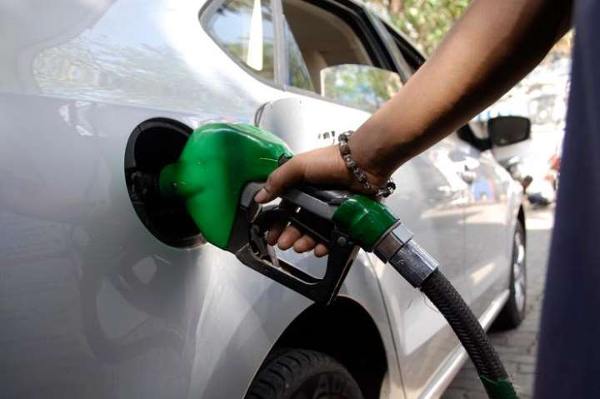
India’s clean mobility journey has received a major push with the unveiling of the Maruti Suzuki WagonR Flex Fuel, the country’s first mass-market passenger vehicle engineered to operate on ethanol-petrol blends from E20 to E100. The model marks a new phase in India’s alternative-fuel strategy, where ethanol moves from being a blending component in petrol to becoming a serious automotive fuel option in its own right.
The importance of this vehicle lies in its ability to run on 100 percent ethanol, also known as E100. A normal petrol car is designed around a fixed fuel chemistry, while a flex-fuel vehicle can adjust to different ethanol-petrol mixtures through changes in fuel-system materials, engine calibration and electronic control. Ethanol has different combustion behaviour, different energy density and different cold-start characteristics compared with petrol, so an E100-capable car needs special engineering rather than a simple fuel-tank change.
The WagonR is a meaningful choice for this transition because it is one of India’s most familiar family cars. By using a popular hatchback platform, Maruti Suzuki is placing flex-fuel technology close to the everyday Indian buyer instead of keeping it limited to experimental prototypes or premium vehicles. This gives the technology a practical identity: a city-friendly, mass-market car that can support India’s move toward biofuel-based mobility.
Ethanol mobility carries strong national relevance for India. The country imports a large share of its crude oil requirement, which exposes the economy to global price shocks, currency pressure and supply-chain disruptions. Ethanol, produced domestically from agricultural and biomass-based feedstock, offers a fuel pathway connected to Indian farms, Indian industry and Indian energy security. A wider ethanol ecosystem can reduce the pressure on imported petroleum while creating demand for sugarcane, maize, damaged foodgrain and other biomass streams.
The unveiling also fits into India’s wider ethanol-blending progress. India has already moved to E20 petrol, and the next policy push is focused on higher ethanol blends such as E85 and E100. The government is also preparing fuel infrastructure for this shift, with plans to introduce E85 at selected outlets in 2026 and expand the network further by 2027.
For consumers, the flex-fuel model brings a new type of choice. A flex-fuel vehicle can use available ethanol-petrol blends according to fuel supply and pricing. This flexibility can become valuable as ethanol pumps expand across cities and highways. The running-cost advantage will depend on the pump price of ethanol, the mileage difference between ethanol and petrol, and the availability of high-blend fuel. Ethanol usually contains lower energy per litre than petrol, so the final savings will come from the balance between fuel price and fuel efficiency.
For the environment, ethanol offers a cleaner combustion pathway with the potential to reduce net carbon emissions when produced through sustainable agricultural and biofuel systems. It also supports a circular rural economy by converting farm-linked feedstock into transport energy. The impact becomes stronger when ethanol production is integrated with better crop utilisation, compressed biogas, green power and waste-to-energy systems.
The vehicle also carries industrial significance. India’s automobile sector has already moved through major transitions in emission norms, safety standards, CNG adoption, hybrid systems and electric mobility. Flex-fuel adds another technology pathway. It allows Indian automakers to develop engines, materials, sensors and calibration systems suited for domestic fuel priorities. Over time, this can create supplier capacity in fuel pumps, injectors, hoses, seals, engine-control units and corrosion-resistant components.
The presence of senior Union ministers at the unveiling underlined the policy importance of the project. Road transport, petroleum, agriculture, energy and industry are all connected in the ethanol mobility chain. A car that runs on E100 needs farmers to supply feedstock, distilleries to produce ethanol, oil companies to distribute fuel, automakers to manufacture compatible vehicles, and consumers to adopt the technology with confidence.
The next challenge will be ecosystem creation. Vehicles alone cannot build a fuel revolution; fuel stations, pricing clarity, service readiness, public awareness and technical standards must grow together. India’s early success with CNG shows how alternative fuels can scale when vehicle availability, refuelling networks and customer economics align. Ethanol mobility will require the same coordinated expansion.
The WagonR Flex Fuel therefore represents more than a new variant of a familiar car. It is a technology signal from India’s largest passenger vehicle maker, a policy milestone for biofuel mobility and a practical step toward reducing oil dependence. If fuel infrastructure expands steadily and pricing remains attractive, E100-capable vehicles can become an important part of India’s multi-fuel future alongside electric vehicles, hybrids, CNG, hydrogen research and compressed biogas.
India’s clean-transport transition will be shaped by many technologies working together. The WagonR Flex Fuel adds ethanol to that national mobility basket with a clear message: India’s road to energy security can run through domestic innovation, agricultural strength and mass-market engineering.
You may also like
-
India’s Economic Warfare Challenge: Strategic Autonomy, Energy Security and the Rise of a Global Power
-
India-US Trade Deal Stalemate: Why Washington’s Tariff Pressure Has Failed to Secure an Agreement
-
US Double Standards in Foreign Policy: 16 Recent Cases Involving India, Russia, China and Global Trade
-
India’s Arctic Energy Ambitions: Russian Oil, LNG and a New Sea Route to Indian Ports
-
India and Russia Explore Joint Icebreaker Construction as Maritime Industrial Cooperation Expands
