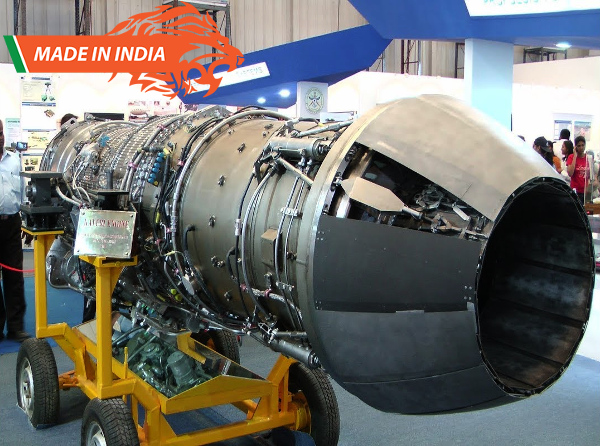
India’s Kaveri programme is one of the most important and misunderstood efforts in the history of Indian military aviation. Conceived under the Cabinet Committee on Security in 1989, the project was meant to give India what only a handful of countries possess: an indigenous engine base capable of powering combat aircraft. That ambition matters because a fighter aircraft is never truly sovereign if its engine remains foreign. Airframes, radar, avionics, weapons and software can all be domestically built, but the engine remains the deepest technological lock in modern aerospace. The Kaveri programme, led by DRDO’s Gas Turbine Research Establishment (GTRE), was therefore never just about one engine for one aircraft. It was India’s attempt to enter the hardest club in defence engineering.
Originally, Kaveri was intended to power the Light Combat Aircraft Tejas. In the early phase of the programme, the government described the engine as a totally indigenous design, with a target of about 75 per cent indigenous content in initial series production, to be raised further over time. That is a remarkable statement when one remembers how dependent India’s aviation ecosystem was on imported propulsion technology in the 1990s and early 2000s. The state was not merely funding an engine; it was trying to create domestic capability in materials, sub-systems, controls, manufacturing and testing around it.
Technically, the Kaveri programme ran into exactly the areas where aero-engine development becomes brutally difficult: thrust-to-weight ratio, hot-section materials, turbine temperature capability, and the ability to package performance inside the weight and envelope required for a frontline fighter. Official explanations over the years have been careful but clear. By 2012, the Ministry of Defence stated that Tejas required a 90 kN thrust-class engine to meet operational needs, while Kaveri did not fully meet that requirement. In 2021, the government sharpened the point further, saying that the Tejas FOC configuration demanded higher thrust than the intended engine requirement, and that Kaveri in its present architecture could not be integrated without a modified version. More recent official reporting around GTRE has also noted development delays linked to thrust-to-weight issues and high-temperature materials.
That shortfall should not be read as total failure. In propulsion engineering, there is a large difference between “did not meet the final fighter requirement” and “produced no meaningful capability.” Kaveri generated an enormous amount of real technology. The government has stated that the project delivered higher Technology Readiness Levels in many critical domains, and that these technologies are being used in other national engine-development efforts. By 2015, the Defence Ministry had formally listed several notable achievements: an indigenously designed, developed and qualified Full Authority Digital Engine Control system, twelve indigenously developed and type-certified materials, nine Kaveri prototypes plus four core-engine prototypes, and successful integration with an IL-76 flying test bed. Those are not cosmetic milestones; they represent hard-won competence in control systems, metallurgy, validation and flight testing.
The testing record itself is significant. In 2002, the government said the engine had already accumulated more than 1,200 hours of ground testing. By 2003–04, MoD reporting said Kaveri had completed Phase I and II high-altitude testing in Russia and logged more than 1,300 hours of development testing, while work continued on revised configurations to improve fan surge margin, compressor structural integrity and combustor pressure loss. By 2012, the official record had advanced much further: 73 hours of official altitude testing at CIAM, Russia, 55 hours of flying-test-bed trials with an IL-76 at Gromov, and about 2,100 hours of endurance testing at GTRE. In 2021, the government updated the cumulative picture again, stating that nine full prototype engines and four core engines had been built and that 3,217 hours of engine testing had been conducted, including altitude and flying test bed trials. This makes Kaveri one of the most extensively tested indigenous propulsion programmes India has ever run, even if it did not mature into the Tejas production engine.
One of the most important technical lessons from Kaveri is that fighter-engine development is not just about achieving thrust on a stand. A combat turbofan must produce the right thrust reliably, at the right weight, with acceptable specific fuel consumption, temperature margins, surge tolerance, structural life, control stability and maintainability. It must also do so under highly dynamic conditions: rapid throttle transients, varying altitude, high inlet distortion, thermal stress and repeated mission cycles. The old MoD reporting on Kaveri’s redesign work is revealing here, because it explicitly mentions efforts to improve fan surge margin, compressor integrity and combustor pressure loss—three classic areas where an engine can be technically alive but operationally unready for a fighter fleet. That is why India could legitimately claim real progress while still having to accept that the engine, in its existing form, was not yet suitable for Tejas service.
The strategic pivot in the programme came when the state stopped treating Kaveri only as a Tejas engine and began treating it as a technology base with useful derivatives. This shift was already visible by 2012, when the government said variants of Kaveri would instead be used for unmanned air vehicles and marine applications. By 2015, the Defence Ministry formally said that the Kaveri derivative “dry” engine without afterburner would be used to power an Indian unmanned combat aircraft. That decision has only become more central in recent years. In July 2025, the Ministry of Defence stated that the Kaveri Derivative Engine (KDE) is the power plant for the remotely piloted strike aircraft / IUCAV, and that two projects had been sanctioned for it: Flightworthy Kaveri Dry Engine Development at ₹472.42 crore, and Technology Demonstration of Kaveri Derivative “Dry” Engine at ₹251.17 crore.
That derivative path is not a retreat; it is actually a technically rational salvage and maturation strategy. A dry engine for an unmanned strike platform imposes a different optimisation problem from an afterburning fighter engine for a nimble light combat aircraft. The UCAV role is still demanding, but it can tolerate a different thrust regime and does not require the same pilot-centric transients, operational envelopes and weight penalties associated with a single-engine fighter in frontline service. The official record supports this reframing. Recent reporting in DRDO’s own ecosystem noted that the earlier Kaveri generated roughly 51 kN and is now being adapted for the Ghatak / UCAV path, while the 2024–25 annual-report snippets indicate that the Kaveri Dry Engine had completed close to 300 hours of testing, over 1,300 cumulative hours of rig testing, and 75 hours of altitude testing. Even where public details remain limited, the direction is clear: Kaveri is no longer being judged only by the question “Can it power Tejas?” but by “How much propulsion sovereignty can India still extract from the programme?”
Another important Kaveri legacy is in spin-offs and industrial ecosystem building. The government has long stated that Kaveri Marine Gas Turbine (KMGT) is a spin-off from the aero-engine project and has been tested for naval applications. More broadly, the Kaveri effort forced India to develop domestic competence in engine controls, test infrastructure, materials certification, manufacturing know-how, and integration disciplines that remain relevant to every later propulsion programme. The Defence Ministry explicitly says that the technological capabilities built through Kaveri will be used for future indigenous engines for LCA variants and AMCA, in association with an international engine house. In other words, even the state now describes Kaveri less as a closed chapter and more as the knowledge reservoir from which the next generation must draw.
That future is now tied to a larger national propulsion push. In February 2026, during a visit to GTRE, the Raksha Mantri reviewed indigenous military gas-turbine projects, witnessed a full afterburner engine test of the Kaveri engine, and emphasized that aero-engine development is being prioritised under a broader national effort. The same PIB release said GTRE is engaged in a joint study with the UK and that the process has also been initiated with France under the National Aero Engine Mission. This matters because India’s path forward increasingly appears to be a hybrid one: retain and exploit the technological base built by Kaveri, while accelerating the leap to a higher-thrust future engine through co-development and ecosystem partnerships.
The deeper defence lesson of Kaveri is therefore not that India “failed to make a jet engine.” The deeper lesson is that aero-engine sovereignty is a generational campaign, not a procurement event. The official Indian record itself now acknowledges how hard the field is: thermodynamics, fluid mechanics, high-end metallurgy, advanced manufacturing, control logic and system integration all converge in one machine that must survive extraordinary conditions. India entered that arena late, under sanctions-era constraints, and still managed to build prototypes, core engines, flight-test a military gas turbine on an IL-76, indigenise a FADEC, certify materials, and carry forward a dry-engine derivative for an unmanned combat aircraft. That is not enough to declare victory, but it is far too much to dismiss as dead history.
So the most accurate way to describe Kaveri today is this: it did not become the production engine for Tejas, but it did become the foundation stone of India’s indigenous military aero-engine capability. Its original fighter objective ran into the harshest limits of propulsion science, especially in thrust and hot-section performance. Yet the programme produced real technologies, real test data, real derivative pathways, and real institutional memory. Today, as India pushes toward UCAV propulsion and eventually engines for future fighters like AMCA, Kaveri survives not as a relic, but as the first difficult climb up the mountain.
Reference:
PIB — Development of Kaveri Engine
https://www.pib.gov.in/PressReleasePage.aspx?PRID=1776092
PIB — Kaveri Engine
https://www.pib.gov.in/newsite/PrintRelease.aspx?relid=83706
PIB — Developments of Kaveri Fighter Engine
https://www.pib.gov.in/newsite/PrintRelease.aspx?relid=123940
PIB Archive — Development of Engines for LCA
https://archive.pib.gov.in/release02/lyr2002/rdec2002/19122002/r1912200221.html
PIB — Development of Indigenous Defence Technologies
https://www.pib.gov.in/PressReleasePage.aspx?PRID=2148337
PIB — Raksha Mantri reviews projects of indigenous military gas turbine engine development during visit to DRDO’s GTRE in Bengaluru
https://www.pib.gov.in/PressReleasePage.aspx?PRID=2228670
Ministry of Defence Annual Report 2003-04
https://mod.gov.in/sites/default/files/MOD-English2004.pdf
You may also like
-
Indian Navy Vice Chief Inspects Japan’s Mogami-Class Stealth Frigate as India-Japan Shipbuilding Cooperation Expands
-
Philippine Marine Wargames Reportedly Show BrahMos Can Penetrate Chinese Destroyer Air Defences
-
Safran Signs 18 Agreements with Indian Aerospace Suppliers, Expanding Make in India Manufacturing Partnerships
-
Indian Army’s Vajra Corps Certifies First Batch of Drone Operators, Strengthens Battlefield Surveillance
-
India to Seek 35% Increase in Defence Modernisation Budget for FY 2027–28
