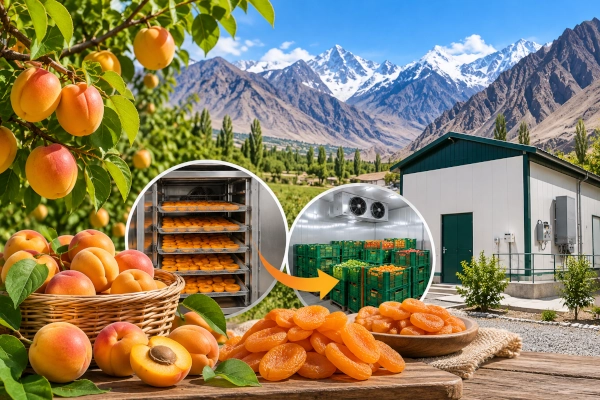
Kargil has taken an important step towards modernising its agricultural infrastructure with the inauguration of its first Heat-Pump Dehydration and Cold Storage Facility on October 10, 2026. The energy-efficient facility aims to reduce post-harvest losses, preserve locally grown produce and create new economic opportunities for farmers and agricultural entrepreneurs in Ladakh.
Located at Kantakari, near the University of Ladakh’s Kurbathang Campus, the facility was inaugurated by Ladakh Member of Parliament Haji Mohammad Haneefa Jan. It introduces modern food preservation technology to a region where short growing seasons, difficult terrain and limited processing infrastructure have traditionally restricted agricultural earnings.
The initiative will support the preservation of apricots, vegetables, medicinal herbs and other horticultural products, helping farmers extend the commercial life of their harvests and explore markets beyond the immediate region.
Energy-Efficient Technology to Improve Agricultural Preservation
The newly established facility uses heat-pump dehydration technology to remove moisture from agricultural produce under controlled conditions. Unlike conventional open-air drying, this process allows better regulation of temperature and humidity, helping preserve product quality while reducing exposure to dust, insects and unpredictable weather.
Heat-pump dryers operate by circulating heated air through an enclosed drying chamber. A refrigeration-based system recovers and reuses heat, reducing the energy required for moisture removal compared with many conventional electrical drying systems.
This technology is particularly suitable for high-value horticultural products such as apricots, vegetables and herbs, where maintaining colour, texture and other quality characteristics can influence market prices.
The accompanying cold storage infrastructure will complement dehydration by supporting the preservation of fresh produce. Together, these technologies provide farmers with additional options for managing their harvests and reducing losses caused by inadequate storage.
Ladakh’s Apricot Farmers to Benefit from Modern Processing Infrastructure
Apricot cultivation forms an important part of Ladakh’s horticultural economy, particularly in Kargil district. Farmers produce varieties valued for their flavour, nutritional qualities and suitability for drying and processing.
However, the region’s short agricultural season creates a concentrated harvesting period. Farmers often face pressure to sell fresh produce quickly because limited storage and processing facilities restrict their ability to hold agricultural products for better market opportunities.
Modern dehydration offers an alternative by converting perishable fruits into products with longer shelf lives. Controlled drying can improve consistency, while appropriate packaging and storage can help maintain quality during transportation and marketing.
The facility can also support the processing of locally grown vegetables and herbs, allowing agricultural producers to diversify their products and reduce their dependence on immediate fresh-market sales.
Cooperative Partnership Brings Modern Technology to Kargil
The facility was established by The Tropicalist Trust in collaboration with the local Yakzes Cooperative, with support from EcoRainger, CRID and SELCO Foundation.
The partnership brings together community participation, agricultural entrepreneurship and energy-efficient technology to address practical challenges faced by farmers in Kargil.
Cooperative involvement can help smaller producers access processing infrastructure that may otherwise require substantial individual investment. Shared facilities also create opportunities to organise collection, processing, packaging and marketing activities more efficiently.
Dr. Madhavi Swamy, a founding member of The Tropicalist Trust, highlighted the importance of cooperative institutions, collective entrepreneurship and modern technology in strengthening the economic viability of traditional agriculture.
By combining local agricultural knowledge with improved preservation methods, the initiative seeks to strengthen Kargil’s horticultural value chain and encourage farmers to participate in higher-value agricultural activities.
New Opportunities for Youth Entrepreneurship and Agricultural Startups
Addressing the inauguration ceremony, MP Haji Mohammad Haneefa Jan emphasised the need to encourage youth entrepreneurship, agricultural innovation and startups to strengthen Ladakh’s local economy.
The facility can support new enterprises involved in dried fruit processing, vegetable dehydration, herbal products, packaging and agricultural marketing. These activities offer opportunities to generate additional income from crops already cultivated in the region.
Local entrepreneurs can also explore value-added products such as packaged dried apricots, dehydrated vegetables and processed agricultural ingredients. Such businesses can help create employment beyond farming while developing skills in food processing, quality control and distribution.
The availability of shared processing infrastructure is especially relevant in remote Himalayan regions, where the cost of establishing individual manufacturing facilities can discourage small-scale entrepreneurship.
Strengthening Kargil’s Agricultural Value Chain
The new facility complements wider efforts to strengthen agricultural processing in Kargil. The district administration has been encouraging local enterprises involved in apricot processing, sea buckthorn products and other horticultural activities.
In May 2026, the Kargil district administration reviewed local processing and entrepreneurship units at Kurbathang and Chanigund, including the Halman Apricot Processing Unit. The visit highlighted the administration’s interest in expanding local agricultural enterprises and improving value addition.
The district has also pursued additional apricot processing infrastructure. In April 2026, authorities invited expressions of interest for establishing a dried apricot washing and packaging line with a capacity of three tonnes per hour at the Model Orchard-cum-Nursery in Kurbathang.
These developments reflect a broader shift towards processing agricultural produce closer to cultivation areas rather than depending entirely on the sale of raw products.
Improved dehydration, cold storage, washing and packaging infrastructure can collectively support better product handling and market access. They also provide opportunities to develop stronger regional agricultural brands associated with Ladakh’s distinctive horticultural produce.
Modern Agricultural Technology Supports Sustainable Development in Ladakh
Ladakh’s geographical conditions make energy efficiency an important consideration when developing agricultural infrastructure. Remote settlements, harsh winters and transportation difficulties increase the importance of technologies that can operate economically and reduce wastage.
Heat-pump dehydration offers a practical approach to food preservation by recovering heat during the drying process. Its actual energy savings depend on operating conditions, equipment efficiency and the products being processed.
The technology can also improve the consistency of dried agricultural products, an important factor for farmers seeking access to organised retail and commercial markets.
By enabling more produce to be preserved near its point of cultivation, local processing infrastructure can reduce the pressure to transport highly perishable crops immediately after harvesting.
Kargil’s new facility demonstrates how relatively small, community-oriented technological investments can address important gaps in rural infrastructure and support more sustainable agricultural livelihoods.
Kargil Advances Towards a Stronger and More Self-Reliant Agricultural Economy
The inauguration of Kargil’s first heat-pump dehydration and cold storage facility represents progress in bringing modern food preservation technology to Ladakh’s agricultural communities.
Its combination of energy-efficient processing, cooperative participation and entrepreneurship support provides a foundation for reducing agricultural losses and increasing the value of locally grown produce.
As Kargil expands its food processing capabilities, initiatives such as this will strengthen farmers’ participation in agricultural value chains, encourage rural enterprises and support a more resilient and self-reliant economy in Ladakh.
References
- News On AIR — October 10, 2026: Kargil’s First Heat Pump Dehydration and Cold Storage Facility Inaugurated in Ladakh
- Administration of Union Territory of Ladakh — May 27, 2026: DC Kargil Visits Entrepreneurship and Processing Units at Kurbathang and Chanigund, Assures Support to Local Startups and Artisans
- District Administration Kargil — April 2026: Expression of Interest for Establishment of a 3-Tonne-Per-Hour Dried Apricot Washing and Packaging Line at Kurbathang
You may also like
-
Marcha Rice of Bihar — West Champaran’s Pepper-Shaped Aromatic Grain
-
India Explores 3,000 km Power Corridor to Supply 2,000 MW of Clean Electricity to Singapore
-
Punjab’s Rail Coach Factory Advances Vande Bharat Manufacturing as 16-Coach Trainset Undergoes 180 kmph Trial
-
Himachal Startup Tecnod8.AI Develops Industrial AI Copilot for Advanced Manufacturing
-
Skyroot Aerospace Partners with Brazil’s Concert Technologies to Develop New Orbital Launch Vehicle
