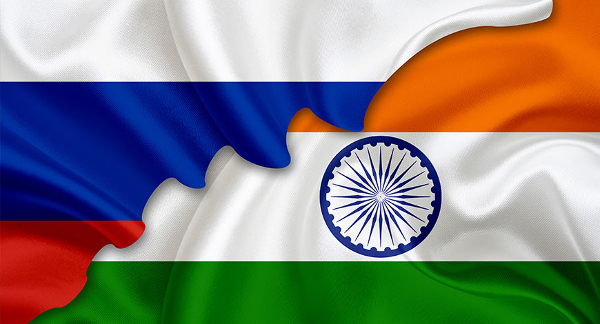
India and Russia have reviewed the state of their bilateral relationship and discussed the next round of high-level engagements, with External Affairs Minister S. Jaishankar and Russian Foreign Minister Sergey Lavrov meeting in New York on 25 September 2026 on the sidelines of the 81st United Nations General Assembly.
The talks covered bilateral cooperation, coordination within BRICS, the schedule of upcoming India–Russia contacts and major regional and international issues. The Russian Foreign Ministry said both sides reaffirmed their intention to continue strengthening the Special and Privileged Strategic Partnership and maintain close coordination at the United Nations, G20 and BRICS.
Jaishankar and Lavrov Review Bilateral Cooperation
Jaishankar described the meeting with Lavrov as a useful review of current issues, bilateral cooperation and coordination within BRICS. His public statement indicated that the interaction was not limited to a single subject but formed part of the continuing strategic dialogue between New Delhi and Moscow.
The Russian readout was more detailed and said the ministers discussed key areas of Russia–India cooperation along with the timetable for forthcoming bilateral contacts. That adds a forward-looking dimension to the meeting, suggesting that the two governments are preparing for further engagement beyond the UN General Assembly session.
Upcoming India–Russia Contacts Enter the Diplomatic Agenda
The reference to the schedule of upcoming bilateral contacts is one of the most notable elements of the latest meeting.
India and Russia maintain a dense diplomatic structure involving their foreign ministries, defence establishments, national security institutions and intergovernmental commissions. Regular ministerial and leader-level engagement has remained an important feature of the relationship even as the wider international environment has become more complicated.
The latest discussions indicate that New Delhi and Moscow intend to maintain that rhythm of engagement rather than limit contact to multilateral gatherings.
Russia’s Foreign Ministry did not publicly specify all the future meetings under discussion, but its inclusion of the bilateral calendar in the formal readout shows that preparation for subsequent high-level contacts formed part of the New York talks.
BRICS Cooperation Remains a Major Pillar
BRICS coordination was another central element of the Jaishankar–Lavrov meeting.
Jaishankar said the two ministers reviewed cooperation within the grouping, which has expanded considerably in recent years and now includes a broader group of major emerging economies. India and Russia have remained important participants in BRICS discussions covering economic cooperation, global governance, development finance and reform of international institutions.
The Russian Foreign Ministry separately emphasised the intention to maintain close coordination with India in BRICS, the G20 and the United Nations, highlighting the multilateral dimension of the strategic partnership.
Ukraine and the Middle East Also Discussed
The Russian Foreign Ministry said the talks also covered the Ukraine crisis and developments in the Middle East, placing the bilateral discussion within a wider geopolitical context.
These issues remain important for India because of their implications for energy markets, trade routes, diplomatic relations and the broader international security environment. New Delhi has repeatedly emphasised dialogue and diplomacy in addressing international conflicts while maintaining engagement with multiple sides.
The inclusion of Ukraine and the Middle East in the meeting demonstrates that India–Russia consultations continue to extend beyond purely bilateral matters into wider strategic and geopolitical questions.
Special and Privileged Strategic Partnership Reaffirmed
Russia’s official readout said both sides reaffirmed their commitment to strengthening the Special and Privileged Strategic Partnership, the terminology long used to describe the India–Russia relationship.
The partnership spans defence, energy, nuclear cooperation, space, trade, technology and multilateral diplomacy. While individual sectors have evolved over time, the political relationship continues to be supported by regular institutional engagement at multiple levels.
The latest meeting therefore functions as both a review of current cooperation and a reaffirmation that New Delhi and Moscow intend to preserve the strategic framework that has developed over several decades.
India–Russia Ties Operate Across Multiple Institutional Channels
The India–Russia relationship is supported by several formal mechanisms, including the India–Russia Intergovernmental Commission on Trade, Economic, Scientific, Technological and Cultural Cooperation and the bilateral mechanism covering military and military-technical cooperation.
Senior-level contacts also take place through the foreign ministries, national security establishments and leader-level meetings.
The Ministry of External Affairs has documented sustained high-level interaction between the two countries, including repeated meetings between Jaishankar and Lavrov as well as contacts involving defence and national security officials. This institutional depth gives the relationship continuity even when international circumstances change.
Strategic Dialogue Continues Amid Global Shifts
The latest Jaishankar–Lavrov meeting comes at a time when India is simultaneously deepening relations with the United States, Europe, the Gulf, East Asia and other major partners.
Russia, meanwhile, remains an important source of defence equipment, energy and strategic cooperation for India.
New Delhi’s approach has been to maintain multiple partnerships rather than place all its strategic relationships within a single geopolitical bloc. The India–Russia dialogue therefore continues alongside India’s expanding engagement with Western and Indo-Pacific partners.
The New York meeting reflects that wider diplomatic approach, with India maintaining long-standing partnerships while also broadening its international relationships.
Future High-Level Engagements Will Be Closely Watched
The most important forward-looking element from the latest talks is the reference to upcoming bilateral contacts.
Future meetings will provide greater clarity on the next phase of India–Russia cooperation and on priorities in areas such as trade, energy, defence, technology and multilateral coordination.
The continued emphasis on BRICS, the United Nations and G20 also indicates that the relationship is increasingly being expressed not only through bilateral projects but through coordination in major international institutions.
References
Ministry of Foreign Affairs of the Russian Federation — Press Release on Foreign Minister Sergey Lavrov’s Meeting With Indian Foreign Minister Subrahmanyam Jaishankar, 25 September 2026
https://mid.ru/en/maps/in/2148717/
TASS — Lavrov Discusses Ukraine, Middle East With Indian Foreign Minister, 25 September 2026
https://tass.com/politics/2193103
The New Indian Express — EAM Jaishankar Holds Discussions With Iranian, Russian Counterparts on UNGA Margins, 25 September 2026
https://www.newindianexpress.com/india/2026/Sep/25/eam-jaishankar-holds-discussions-with-iranian-russian-counterparts-on-unga-margins
Ministry of External Affairs, Government of India — India–Russia Bilateral Relations
https://www.mea.gov.in/Portal/ForeignRelation/IndiaRussia25new.pdf
You may also like
-
India Strengthens Trade Ties with Netherlands as Piyush Goyal Visits Port of Rotterdam
-
India to Train 600 Nigerian Army Soldiers in Specialised Jungle and Mountain Warfare
-
India and Russia Strengthen Parliamentary Diplomacy as Om Birla Meets State Duma Chairman Vyacheslav Volodin
-
India Seeks South Korean Shipbuilding Partnerships as Sarbananda Sonowal Begins Four-Day Visit to Busan
-
India and Italy Hold First Maritime Security Dialogue in Rome, Strengthen Strategic Maritime Cooperation
