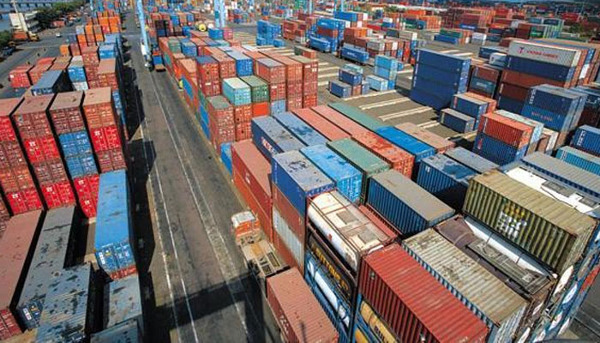
India’s combined merchandise and services trade reached $506.9 billion during the first quarter of 2026-27, expanding by 15.5% from the same period a year earlier despite continuing geopolitical tensions and uncertainty in global trade policy.
The figures were released by NITI Aayog on September 16 in the ninth edition of its Trade Watch Quarterly, covering the April-June 2026 period. The report finds that India’s trade expansion took place alongside surprisingly resilient global commerce, with world merchandise trade continuing to grow despite tariff disputes, supply-chain pressures and geopolitical disruptions.
The composition of India’s trade also points to a broader change in the economy. Merchandise exports were supported by petroleum products, electrical machinery, engineering goods, steel and automobiles, while imports increasingly included capital goods, electronic components, copper and other inputs required by a growing manufacturing economy.
At the same time, India’s export markets continued to diversify, trade with Free Trade Agreement partners accelerated sharply, and digitally delivered services strengthened their position as one of the country’s most globally competitive export sectors.
Global Trade Remains More Resilient Than Expected
India’s trade expansion took place against a global environment that remained uncertain but considerably more resilient than many earlier forecasts had suggested.
Global merchandise trade reached approximately $13.7 trillion during the first half of 2026, representing year-on-year growth of 12.5%, while international services trade expanded by 10.5%.
These figures are significant because international commerce has been operating under increasing pressure from geopolitical conflicts, tariff disputes, industrial-policy interventions and attempts by major economies to reduce dependence on concentrated supply chains.
Rather than causing a broad contraction in trade, these pressures have increasingly altered where goods are produced, which countries supply them and the routes through which they reach markets.
India appears to be benefiting from some of this restructuring while simultaneously becoming more deeply integrated into global manufacturing supply chains.
Merchandise Exports Broaden Beyond Traditional Sectors
NITI Aayog found that India’s merchandise exports recorded strong growth during April-June, with several industrial categories making an important contribution.
The leading export sectors included mineral fuels, electrical machinery, nuclear reactors and machinery, iron and steel, and vehicles. Growth was supported particularly by increased shipments of petroleum products, steel, engineering goods and automobiles.
The composition is important because a larger share of Indian exports is increasingly connected with manufacturing rather than being concentrated exclusively in traditional commodities or labour-intensive products.
Electrical machinery and automobiles, in particular, connect India to complex international production networks involving components, electronics, precision manufacturing and industrial supply chains.
Separate Commerce Ministry figures released on September 15 reinforce this trend. India’s cumulative merchandise and services exports reached $399.27 billion during April-August 2026, up 15.55% from a year earlier. Merchandise exports alone rose 17.85% to $215.91 billion.
Electronic-goods exports were one of the strongest performers, rising almost 90% year-on-year in August, from $2.93 billion to $5.55 billion. Engineering-goods exports increased 24.86% during the same month.
The combination suggests that India’s export growth is increasingly being supported by manufacturing segments that barely featured in the country’s export basket at comparable scale a decade ago.
Imports Also Reflect Expanding Industrial Capacity
The increase in imports requires a more nuanced interpretation than simply viewing all import growth as negative for the economy.
NITI Aayog noted particularly strong imports of capital goods, electronic components and copper during the quarter. These categories are closely connected with industrial investment and manufacturing expansion.
Capital goods include machinery and equipment used to produce other goods. Rising imports in this category can therefore indicate that companies are constructing factories, expanding production lines or modernising industrial capacity.
Electronic components similarly feed India’s rapidly expanding electronics manufacturing industry, while copper is essential for electrical equipment, renewable-energy systems, power transmission, electric vehicles and industrial machinery.
NITI Aayog consequently interprets part of the import growth as evidence of strong domestic investment, expanding industrial capacity and India’s deeper integration into global value chains.
This does not eliminate the need to reduce strategic import dependence. Instead, it highlights the distinction between imports that satisfy consumption and imports that contribute directly to future productive capacity.
Tanzania and South Africa Enter India’s Top Export Markets
One of the more interesting findings in the latest Trade Watch is the continued diversification of India’s export destinations.
Tanzania and South Africa emerged among India’s ten largest export markets, while exports to Singapore also recorded strong growth.
The emergence of African economies among India’s major destinations is strategically important because India has traditionally relied heavily on the United States, Europe, the Gulf and a relatively small group of Asian markets.
Greater trade with Africa provides another avenue for engineering goods, pharmaceuticals, automobiles, machinery, refined petroleum products and other Indian exports.
It also fits India’s wider effort to diversify its markets so that disruption or protectionist measures in one major economy do not disproportionately affect overall export performance.
The geographical diversification was also visible on the import side. Imports from Latin America and West Africa increased significantly, partly because India has diversified its sources of crude oil.
Northeast Asia, West Asia-GCC and ASEAN nevertheless remained India’s largest broad import regions and together accounted for approximately half of total imports during the period.
Trade With FTA Partners Accelerates Sharply
Perhaps one of the strongest figures in the report concerns India’s Free Trade Agreements.
Exports to India’s FTA partners increased 36.3%, while imports from those economies grew by 10%.
The difference is notable because criticism of FTAs in India has historically centred on the argument that such agreements sometimes increase imports more rapidly than exports.
The latest quarterly figures show the opposite pattern for the period examined, with Indian exports to preferential-trade partners expanding considerably faster than imports from them.
A single quarter is not sufficient to establish a permanent structural trend, but the numbers strengthen the case for India making greater use of preferential market access already available under its growing network of trade agreements.
The government has separately said India’s nine FTAs now cover economies representing approximately $60 trillion in GDP and provide preferential access to markets accounting for around two-thirds of global trade.
New and expanded agreements could increase this reach further.
The economic importance therefore lies not simply in signing FTAs but in whether Indian companies actually use preferential tariffs, rules of origin and market-access provisions to expand exports.
India Becomes World’s Fourth-Largest Digitally Delivered Services Exporter
India’s services economy produced another important finding in the report.
Exports of digitally delivered services increased from $277 billion in 2024 to $317 billion in 2025, representing growth of approximately 15%. India consequently moved from fifth place to become the world’s fourth-largest exporter of digitally delivered services, behind only the United States, United Kingdom and Ireland.
Digitally delivered services extend well beyond traditional IT outsourcing. They can include software development, cloud services, professional services, financial and business-process services, consulting, engineering design and numerous other activities that can be delivered electronically across borders.
India’s position in this market represents a significant strategic advantage because services exports are not constrained by shipping capacity, ports or the physical movement of goods.
They also generate foreign-exchange earnings while drawing heavily on India’s domestic base of technical and professional talent.
As manufacturing exports expand, digitally delivered services provide India with another export engine that operates through an entirely different economic channel.
Metals and Ores Become a Strategic Trade Issue
The latest Trade Watch devotes special attention to India’s trade in metals and ores because these materials are becoming increasingly important to manufacturing, infrastructure, defence and the energy transition.
India exported approximately $34.8 billion worth of metals in 2025. Iron and steel, articles made from iron and steel, and aluminium together accounted for around 78% of those exports.
India has already developed substantial competitiveness in these industries, particularly steel and aluminium.
The more complicated picture lies further up the technology ladder.
Demand is rising rapidly for higher-value non-ferrous metals and critical minerals used in batteries, electronics, electric vehicles, renewable-energy systems, aerospace equipment and advanced industrial technologies.
India remains considerably more dependent on imports in many of these categories.
Metals and Ores Imports Almost Double in a Decade
India’s imports of metals and ores increased from $32.2 billion in 2015 to $60.5 billion in 2025.
The rise reflects India’s expanding industrial economy but also exposes an important strategic dependency.
NITI Aayog specifically highlights increasing requirements for copper, lithium, cobalt and nickel. These materials are critical to sectors that India is actively trying to expand domestically.
Lithium, nickel and cobalt are important to several battery chemistries. Copper is fundamental to electrical transmission, renewable-energy equipment, electric motors and electronics.
As India increases domestic production of electric vehicles, batteries, renewable-power equipment and electronics, consumption of these materials is likely to rise further.
The challenge therefore is not merely to reduce imports. India needs to secure reliable supplies while simultaneously developing domestic exploration, refining, processing, recycling and advanced-material capabilities.
Critical Minerals Become Part of Industrial Policy
The strategic importance of critical minerals has led India to begin reforming both its mining framework and overseas resource strategy.
The latest Trade Watch points to changes under the Mines and Minerals Development and Regulation framework, including the MMDR Amendment Act, 2026, as measures that can improve investment conditions for mineral exploration and mine development.
For many critical minerals, however, complete domestic self-sufficiency is unlikely.
The more realistic objective is a diversified supply chain combining domestic production, overseas mineral partnerships, long-term supply agreements, recycling and strategic processing capacity within India.
This approach becomes increasingly important as critical minerals move into the same category of strategic economic resources once occupied primarily by oil and gas.
Control of mineral processing can be just as significant as ownership of the underlying mine.
Europe’s Carbon Border Tax Creates a New Challenge
India’s strength in metals exports faces another challenge from the European Union’s Carbon Border Adjustment Mechanism.
CBAM places an increasing carbon-related cost on certain carbon-intensive imports entering the European market, including steel and aluminium.
For Indian exporters, competitiveness will therefore depend increasingly not only on the price and quality of their products but also on how much carbon is emitted during their manufacture.
NITI Aayog consequently emphasises the importance of expanding access to renewable energy, improving production efficiency and preparing Indian companies to meet CBAM-related requirements.
This could accelerate the decarbonisation of India’s steel and aluminium industries because reducing emissions would no longer be only an environmental objective. It would increasingly determine the ability of Indian producers to remain competitive in major export markets.
Trade Growth Is Becoming More Diverse
The most important message from the $506.9-billion quarterly trade figure may therefore be found beneath the headline number.
India is exporting more manufactured goods. Electronics are expanding rapidly. African markets are becoming more significant. Exports to FTA partners are growing strongly. Digitally delivered services have moved India into fourth place globally.
At the same time, expanding industrial production is increasing the country’s requirements for capital goods, electronic components and strategic minerals.
These trends demonstrate both the opportunity and the challenge facing Indian trade policy.
An economy moving deeper into manufacturing will inevitably require greater imports of some intermediate goods and raw materials. The objective cannot therefore be to minimise imports indiscriminately. It must be to increase the domestic value created from what India imports while expanding the range and technological sophistication of what it exports.
From Trade Volume to Value Addition
NITI Aayog’s recommendations consequently focus on greater export diversification, deeper integration with global and regional value chains, stronger domestic capabilities in strategic sectors and improved competitiveness.
In metals and critical minerals, that means moving beyond extraction towards refining, processing, advanced materials and recycling. In manufacturing, it means converting imported components and machinery into higher-value finished products capable of competing internationally.
In services, it means building on India’s established software and professional-services strengths while moving into AI, engineering, design and increasingly sophisticated digital services.
The $506.9-billion trade figure demonstrates that India is participating in global commerce at an increasingly large scale. The more important question for the next phase is how much value India can retain within its own economy as those trade flows continue to expand.
The first quarter of 2026-27 offers encouraging signs. Export destinations are becoming more diverse, FTA markets are absorbing more Indian goods, digitally delivered services are strengthening their global position and manufacturing exports are broadening.
At the same time, rising dependence on critical minerals shows why greater trade alone is not enough. India’s long-term objective will be to combine open and diversified global trade with deeper domestic manufacturing, processing and technological capability.
That balance will determine whether increasing trade volumes translate into a more resilient and higher-value Indian economy.
You may also like
-
DFCCIL Sets New Freight Operations Record with 946 Train Interchanges in a Single Day
-
NTPC Identifies Three Nuclear Power Plant Sites as India Advances 30 GW Atomic Energy Expansion
-
Seven Indian SMEs Debut on Stock Exchanges as Electronics, Software and Engineering Firms Access Public Markets
-
India’s Quick Commerce Market Could Reach US$90 Billion by FY31 as Retail Shopping Undergoes Major Transformation
-
India Targets 10% of Global 6G Patents and Standards, Pushes Indigenous Telecom Technologies
