India’s installed solar power capacity has reached approximately 175 gigawatts (GW) as of 31 October 2026, recording nearly 62-fold growth from 2.82 GW in 2014. The expansion marks a major milestone in the country’s renewable energy development, supported by large solar parks, rooftop installations, agricultural solarisation, domestic manufacturing and sustained investments in clean energy infrastructure.
According to the Ministry of New and Renewable Energy, India’s installed solar capacity stood at 174.55 GW at the end of October 2026, making solar energy the largest component of the country’s renewable energy capacity.
The sector has also witnessed record annual capacity additions. India installed 44.61 GW of solar power during the financial year 2025–26, compared with 23.83 GW in 2024–25. During the first seven months of the current financial year, from April to October 2026, another 24.29 GW of solar capacity was added.
The achievements were highlighted in a Press Information Bureau backgrounder released on 17 November 2026, following the Bharat Renewable Energy Summit & Expo 2026 held in New Delhi from 2 to 5 November.
India’s solar expansion reflects the growing contribution of renewable energy to electricity generation, industrial development, agricultural modernisation and national energy security.
Solar Power Capacity Expands from 2.82 GW to 175 GW
India’s solar energy sector has undergone substantial expansion over the past twelve years, transforming from a relatively small component of the national electricity system into a major source of installed power generation capacity.
Installed capacity increased from 2.82 GW in 2014 to approximately 175 GW by October 2026, representing nearly 62 times the capacity recorded at the beginning of the period.
The expansion has been supported by the National Solar Mission, the Solar Parks Scheme, competitive electricity procurement mechanisms and improvements in transmission infrastructure.
Large solar installations account for a substantial share of the country’s total solar capacity. According to the government, approximately 133 GW comes from large solar projects, including the solar component of hybrid renewable energy installations.
Grid-connected rooftop solar installations contribute another 34.97 GW, while off-grid solar systems account for the remaining capacity.
Rajasthan, Gujarat, Karnataka, Tamil Nadu, Andhra Pradesh and Maharashtra are among the leading states in solar power deployment.
The development of large solar parks in regions with favourable solar irradiation has played an important role in expanding generation capacity and attracting investments into the renewable energy sector.
India Adds Record 44.61 GW of Solar Capacity in FY 2025–26
The financial year 2025–26 witnessed India’s highest annual solar capacity addition, with 44.61 GW of new installations.
This was nearly double the 23.83 GW added during FY 2024–25, demonstrating the increasing pace of solar power development across the country.
The momentum has continued during the current financial year. Between April and October 2026, India added 24.29 GW of solar capacity.
The expansion has been driven by utility-scale solar projects, rooftop installations, agricultural solarisation and commercial and industrial solar systems.
Distributed solar installations have also emerged as an important contributor to annual capacity additions.
During FY 2025–26, distributed solar solutions contributed approximately 16.3 GW, representing around 36% of the country’s total solar capacity additions for the year.
Of this, approximately 7.6 GW came from installations associated with the PM-KUSUM programme, while rooftop solar contributed around 8.7 GW.
The increasing contribution of decentralised solar power demonstrates how renewable energy development is extending beyond large power generation facilities to households, farms and commercial establishments.
Domestic Solar Module Manufacturing Capacity Reaches 192 GW
India’s solar energy expansion has been accompanied by substantial growth in domestic manufacturing capabilities.
According to the government, India’s solar module manufacturing capacity increased from 2.3 GW in 2014 to approximately 172 GW by 31 March 2026.
Manufacturing capacity increased further to 192 GW by June 2026, reflecting significant investment in domestic solar equipment production.
The expansion is important for India’s efforts to develop a stronger renewable energy manufacturing ecosystem and reduce dependence on imported equipment.
Domestic solar manufacturing encompasses several industrial activities, including photovoltaic module assembly, solar cell production, electrical equipment manufacturing and supporting engineering services.
The Production Linked Incentive Scheme for High Efficiency Solar PV Modules has been introduced to encourage domestic manufacturing and support the development of integrated solar production facilities.
The government’s wider manufacturing strategy also emphasises the importance of strengthening supply chains for solar cells, modules and associated technologies.
The expansion of manufacturing capacity provides opportunities for Indian companies involved in electronics, electrical engineering, precision manufacturing and renewable energy infrastructure.
However, solar module manufacturing capacity should be distinguished from actual production, which depends on factory utilisation, market demand and the availability of components.
Solar Parks Become Major Centres of Renewable Energy Generation
Large solar parks have played a central role in India’s renewable energy development by providing common infrastructure for utility-scale projects.
The Solar Parks Scheme was introduced to facilitate access to suitable land, transmission connectivity and supporting infrastructure for solar project developers.
As of October 2026, the government had approved 56 solar parks with a combined sanctioned capacity of approximately 39,461 megawatts.
Major solar parks include the Bhadla Solar Park in Rajasthan, Pavagada Solar Park in Karnataka, Ananthapuramu and Kurnool Solar Parks in Andhra Pradesh, and Rewa Ultra Mega Solar Park in Madhya Pradesh.
Bhadla Solar Park, located in Rajasthan’s arid region, is one of India’s largest solar power installations.
Developed across approximately 5,700 hectares, the project has an installed capacity of around 2,245 MW.
The availability of extensive land, favourable solar irradiation and supporting transmission infrastructure has contributed to its development as a major renewable energy generation centre.
The solar park model has also supported private investment by providing developers with access to common facilities and reducing several infrastructure-related challenges associated with individual projects.
Rooftop Solar Expands Renewable Energy Access to Households
Rooftop solar power has become an important component of India’s distributed renewable energy strategy.
The PM Surya Ghar: Muft Bijli Yojana encourages households to install rooftop solar systems through financial assistance and supporting implementation mechanisms.
Launched in February 2024, the scheme has a total approved outlay of ₹75,021 crore and aims to support rooftop solar installations for one crore households.
Rooftop solar systems allow households to generate electricity using available roof space, reducing their dependence on electricity purchased from the grid during periods of solar generation.
Depending on the applicable electricity regulations and metering arrangements, households may also receive benefits from surplus electricity supplied to the distribution network.
The expansion of rooftop solar creates opportunities for domestic solar module manufacturers, electrical equipment suppliers, installation companies and maintenance service providers.
It also encourages wider public participation in renewable energy development, extending clean energy adoption beyond large industrial and utility projects.
PM-KUSUM Supports Solar Power Adoption in Agriculture
Agriculture is another major area benefiting from India’s solar energy programmes.
The Pradhan Mantri Kisan Urja Suraksha evam Utthaan Mahabhiyan, commonly known as PM-KUSUM, supports the deployment of solar-powered irrigation pumps, solarisation of existing agricultural electricity connections and decentralised renewable power generation.
The programme aims to add approximately 34,800 MW of solar capacity by FY 2026–27, with central financial support of ₹34,422 crore.
Solar irrigation systems can reduce farmers’ dependence on diesel-powered pumps and provide an alternative source of electricity for agricultural operations.
Solarisation of agricultural electricity feeders can also improve the availability of renewable energy for irrigation requirements.
Under eligible components of the programme, farmers may generate solar electricity and sell surplus power to electricity distribution companies.
During FY 2025–26, PM-KUSUM-related installations contributed approximately 7.6 GW of solar capacity additions.
The programme connects renewable energy development with agricultural modernisation, energy efficiency and improved access to electricity in rural areas.
Solar Power Tariffs Decline Sharply Over the Past Decade
One of the most important developments supporting the expansion of solar energy has been the reduction in electricity tariffs discovered through competitive bidding.
According to the government’s backgrounder, solar power tariffs declined from approximately ₹18 per unit in 2010 to a record low of ₹1.99 per unit achieved through a Gujarat Urja Vikas Nigam Limited procurement process in 2020.
The Solar Energy Corporation of India and state electricity procurement agencies have played important roles in expanding competitive bidding for renewable energy projects.
The declining cost of solar photovoltaic equipment, improvements in project development and competition among developers have contributed to lower electricity tariffs.
The government also reported that the levelised cost of electricity from utility-scale solar photovoltaic projects in India stood at approximately US$35 per megawatt-hour in 2025, compared with a global average of US$44.
These developments have improved the competitiveness of solar power within India’s electricity sector.
At the same time, electricity supplied from solar installations remains dependent on sunlight availability, making grid flexibility, transmission infrastructure and energy storage important components of future renewable energy development.
Green Energy Corridors Strengthen Renewable Power Transmission
The rapid expansion of solar capacity has increased the importance of strengthening electricity transmission networks.
The Green Energy Corridor Programme supports the development of transmission infrastructure required to transfer electricity from renewable energy-rich regions to major consumption centres.
According to the government, the programme had facilitated the evacuation of approximately 24,567.8 MW of renewable energy capacity through strengthened transmission infrastructure as of February 2026.
Additional Green Energy Corridor projects across ten states are planned to support the evacuation of around 44 GW of renewable energy.
These investments are particularly important because several large solar power installations are located in regions distant from major industrial and urban electricity demand centres.
Efficient transmission infrastructure enables renewable energy projects to supply electricity to the national grid while supporting system reliability.
The development of modern transmission networks, energy storage systems and flexible electricity management technologies is increasingly important as India’s share of renewable generation capacity expands.
Floating Solar and Energy Storage Receive New Policy Support
India is also expanding its renewable energy strategy to include floating solar power installations and integrated energy storage systems.
The Union Government approved the Pradhan Mantri Surya Sarovar Yojana on 31 July 2026 to support the development of 5,000 MW of floating solar photovoltaic projects with associated energy storage systems.
The scheme has an approved outlay of ₹5,070 crore and is scheduled for implementation from FY 2026–27 to FY 2030–31.
It aims to support floating solar installations on suitable reservoirs, industrial ponds and other inland water bodies.
The programme also envisages energy storage systems with a minimum two-hour storage duration, corresponding to an aggregate planned storage capacity of 10,000 megawatt-hours.
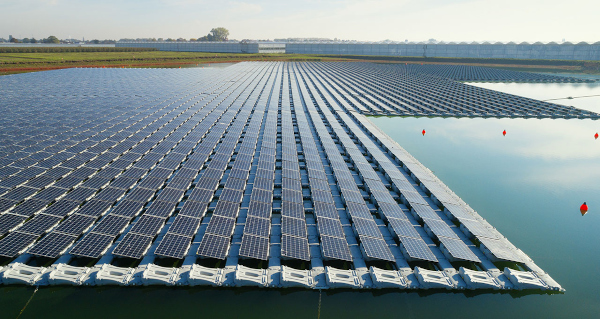
Floating solar projects can reduce the need for additional land while utilising suitable water surfaces for electricity generation.
The National Institute of Solar Energy has estimated India’s technical floating solar potential at approximately 102.18 GWp across reservoirs and suitable inland water bodies.
The proposed expansion also creates opportunities for domestic manufacturing of floating structures, solar photovoltaic components, electrical systems and energy storage equipment.
India’s Non-Fossil Fuel Power Capacity Continues to Expand
Solar power has emerged as a major contributor to India’s expanding non-fossil fuel electricity generation capacity.
According to the government, total installed non-fossil fuel capacity reached 308.03 GW as of 30 September 2026.
This included 299.25 GW of renewable energy capacity and 8.78 GW of nuclear power capacity.
During FY 2025–26, India recorded its highest annual addition of non-fossil fuel capacity, amounting to 55.29 GW.
The development reflects the combined expansion of solar, wind, hydropower and other non-fossil electricity generation technologies.
India has established a national objective of achieving 500 GW of installed non-fossil fuel electricity capacity by 2030.
The continued expansion of solar power represents an important component of efforts to achieve this target while strengthening electricity availability and supporting economic growth.
India Strengthens Its Position in Global Solar Energy Development
India’s expanding solar energy sector has also strengthened its participation in international renewable energy cooperation.
According to the government, India added approximately 37 GW of solar capacity during calendar year 2025, exceeding the annual solar additions recorded in the United States.
This positioned India as the world’s second-largest solar growth market during the year.
India has also played an important role in international solar cooperation through the International Solar Alliance, launched jointly with France in 2015.
The alliance promotes cooperation among participating countries in solar energy deployment, financing, technology development and capacity-building.
India’s experience in large-scale solar parks, rooftop installations and agricultural solarisation provides opportunities for sharing renewable energy technologies and implementation practices with other countries.
The Bharat Renewable Energy Summit & Expo 2026 in New Delhi brought together policymakers, investors, researchers and industry representatives from more than 130 countries to discuss renewable energy investment, innovation and technological cooperation.
Solar Expansion Strengthens India’s Energy Security and Manufacturing Ecosystem
India’s growth from 2.82 GW of installed solar capacity in 2014 to approximately 175 GW in October 2026 represents a substantial transformation of the country’s electricity generation infrastructure.
The expansion has created opportunities across several sectors, including renewable power generation, electrical engineering, domestic manufacturing, transmission infrastructure, energy storage and agricultural technology.
The record addition of 44.61 GW during FY 2025–26 and the continued expansion during the current financial year demonstrate the increasing scale of India’s solar energy industry.
At the same time, the growth of domestic module manufacturing capacity to 192 GW provides an industrial foundation for strengthening India’s renewable energy equipment ecosystem.
Programmes supporting rooftop solar, agricultural solarisation, large solar parks and floating photovoltaic installations are also extending renewable energy adoption across different sections of the economy.
The development of stronger transmission networks and energy storage infrastructure will remain important for integrating increasing amounts of solar electricity into the national grid.
With its expanding generation capacity, growing manufacturing ecosystem and sustained investment in renewable energy infrastructure, India is strengthening the foundations of a more diversified, technologically capable and energy-secure electricity sector.
You may also like
-
India’s Electronics Exports Surge 44% to USD 31.97 Billion in First Half of FY 2026-27
-
India’s Horticulture Production Estimated to Reach Record 386.9 Million Tonnes in 2025-26
-
Vasmat Haldi – The Golden Agricultural Heritage of Maharashtra’s Marathwada Region
-
Tata Power Renewables Commissions 100.8 MW Wind Energy Project in Maharashtra
-
Hindustan Zinc Approves ₹80,000 Crore Expansion to Nearly Double Metal Production Capacity
