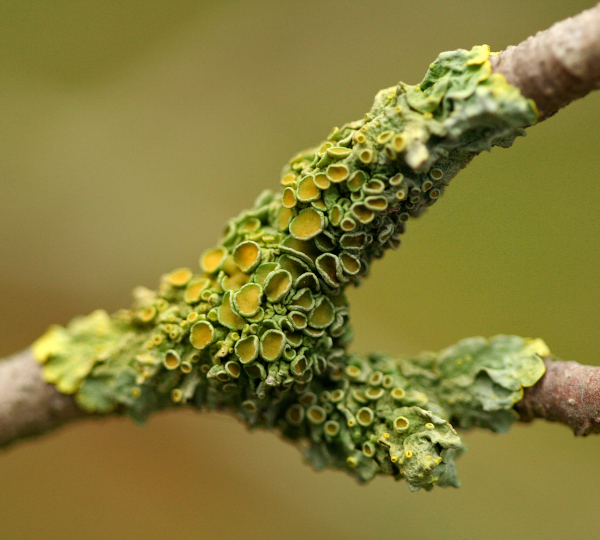
India’s first cryptogamic garden housing nearly 50 species of lichens, ferns and fungi was inaugurated in Uttarakhand’s Dehradun district on Sunday.
Located in the district’s Chakrata town, the garden was inaugurated by social activist Anoop Nautiyal.
Around 50 species have been grown in the garden at Deoban in Chakrata at a commanding height of 9,000 ft, Chief Conservator of Forest (research) Sanjiv Chaturvedi said.
“We chose to locate the garden, which is spread over three acres, at Deoban because of its low pollution levels and moist conditions which are conducive for the growth of these species,” he said.
Deoban has pristine majestic forests of Deodar and Oak which create a natural habitat for cryptogamic species, he added.
Cryptogamae means “hidden reproduction” referring to the fact that no seed, no flowers are produced. Thus, cryptogams represent the non-seed bearing plants, Chaturvedi explained.
Algae, bryophytes (moss, liverworts), lichens, ferns and fungi are the best-known groups of cryptogams that require moist conditions to survive, he said.
Expatiating on the cryptogamic groups present in the garden, Chaturvedi said algae comprises the most primitive organisms which are predominantly aquatic, both in marine as well as freshwater habitats.
Bryophytes are the simplest and primitive land plants that occupy an intermediate position between algae and pteridophytes. Lichens are a complex life form that is a symbiotic partnership of two separate organisms, a fungus and an algae, he said.
Ferns are the largest living group of primitive vascular plants while fungi is a kingdom of usually multicellular eukaryotic organisms that are heterotrophs, he said.
Source: Indian Express
You may also like
-
Large- and Small-scale Magnetic Activity Driving Microwave Polar Brightening in the Sun
-
Molecular Geometry Tweak Opens New Way for Smart Biomaterials
-
ISRO’s Indo-French TRISHNA Satellite Enters Advanced Development Stage, Launch Expected in 2027–28
-
IISc Scientists Show How Strong Magnetic Fields Could Allow White Dwarfs to Exceed Chandrasekhar Limit
-
IIT Madras to Launch Global Mission to Map 100 Human Brains in 3D
