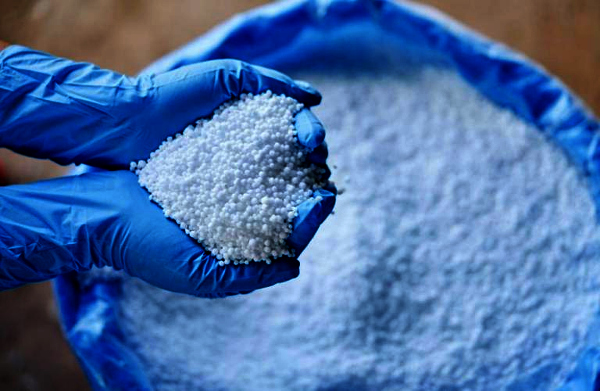
India’s fertiliser security is set to receive a major domestic push as two new urea plants with a combined annual capacity of 2.54 million tonnes prepare to begin production shortly. The move comes at a critical time for Indian agriculture, when global supply disruptions, West Asian tensions, high natural gas prices and shipping delays have made fertiliser availability a strategic economic issue.
Urea remains the most important nitrogen fertiliser used by Indian farmers. It supports paddy, wheat, maize, sugarcane, pulses, vegetables and several other crops across the country. Stable urea supply is therefore directly linked to food security, farm income and price stability. A disruption in urea availability can affect sowing decisions, crop nutrition and rural confidence during the agricultural season.
The government’s latest update shows that India is adding fresh domestic capacity to reduce import dependence. The two upcoming plants will add 25.4 lakh tonnes of annual urea output. This is a meaningful addition because India continues to depend on imported urea to meet a part of its domestic requirement. In 2025-26, India imported more than 10 million tonnes of urea, showing the scale of demand and the importance of local production.
The development fits into a larger decade-long expansion of India’s fertiliser manufacturing base. Since 2014, six large urea plants have been established, together adding 76.2 lakh tonnes of annual capacity. These include major units created through public-sector joint ventures and private investment. Each of these modern units has an installed capacity of 12.7 lakh metric tonnes per year and has helped India strengthen its indigenous production base.
Domestic urea output has grown sharply over the last decade. India produced around 22.5 million tonnes of urea in 2014-15. Production rose to a record level of around 31.4 million tonnes in 2023-24. In 2024-25, the country produced 30.667 million tonnes. This expansion has helped India absorb demand pressure from agriculture and reduce the impact of global volatility.
The new capacity comes during a period of global fertiliser stress. West Asian conflict has affected shipping confidence, natural gas supply chains and fertiliser prices. The Strait of Hormuz has remained an important route in global energy and fertiliser logistics. Any tension around this corridor affects freight, shipping schedules, insurance costs and availability of raw materials. India has therefore explored alternative transit routes and direct sourcing from global producers.
This is where domestic urea production becomes a strategic shield. Every additional tonne produced inside India reduces exposure to foreign price shocks, delayed cargoes and geopolitical uncertainty. A country with a large farming population cannot depend only on global markets for a commodity as essential as urea. Local plants create supply assurance during crisis periods.
The government has also maintained strong subsidy support to protect farmers from international price spikes. A 45-kg bag of urea continues to be sold to Indian farmers at a highly subsidised rate, while global market-linked prices are many times higher. DAP is also supplied at a controlled price compared with its global market cost. This policy protects farmers from sudden shocks, though it also places a large burden on the fertiliser subsidy bill.
The subsidy structure shows the importance of balancing farmer welfare with fiscal pressure. When global prices rise, the government absorbs the difference between the cost of production or import and the price paid by farmers. Domestic production helps reduce this pressure over time because it improves availability, cuts freight risk and gives the country better control over supply planning.
The expansion of urea capacity also supports the Kharif season. The government has said that fertiliser availability remains sufficient for the ongoing sowing period. This assurance is important because Kharif crops depend heavily on timely fertiliser application. Farmers require urea at the right stage of crop growth, and even short delays can affect yield.
India’s fertiliser policy now has three broad pillars. The first is capacity creation through new urea plants. The second is supply protection through imports, long-term sourcing and alternative routes. The third is farmer affordability through subsidy support. Together, these pillars create a buffer against global uncertainty.
The New Investment Policy for urea has played an important role in reviving the sector. It encouraged fresh investment and supported new units at Ramagundam, Gorakhpur, Sindri, Barauni, Panagarh and Gadepan. These plants helped restore confidence in domestic fertiliser manufacturing and showed that modern high-capacity units can strengthen national self-reliance.
Future projects such as Talcher and Namrup-IV also show the next stage of fertiliser strategy. Talcher is important because it is based on the coal gasification route, which can help India use domestic coal resources for fertiliser production. Namrup-IV is significant for the Northeast because it can strengthen fertiliser availability, use nearby natural gas resources and support industrial development in the region.
Phosphatic and potassic fertiliser production is also growing. India’s P&K fertiliser manufacturing reached 21.12 million tonnes in 2024-25, rising from 15.95 million tonnes in 2014-15. This matters because balanced fertiliser use requires more than urea. Farmers also need phosphorus, potash, sulphur and micronutrients for soil health and crop quality.
The challenge for India is to expand production while promoting balanced nutrient use. Excessive dependence on urea can affect soil health and reduce fertiliser efficiency. The future of fertiliser security will therefore depend on both supply and smarter usage. Nano urea, neem-coated urea, soil health cards, precision application and awareness campaigns can help improve nutrient efficiency.
India’s fertiliser story is now closely linked to Atmanirbhar Bharat. Urea plants are industrial assets, energy assets and agricultural security assets at the same time. They support farmers, reduce import exposure, create local employment, strengthen industrial regions and protect the economy from external shocks.
The two new urea plants preparing to start production therefore represent more than capacity addition. They mark another step toward fertiliser self-reliance. As global disruptions continue to affect supply chains, India’s ability to produce more fertiliser at home will become a major strength for its agriculture sector.
Fertiliser security is food security. With rising domestic production, continued subsidy support, new plant capacity and better supply-chain planning, India is building a stronger foundation for its farmers. The coming phase will be shaped by local manufacturing, balanced nutrient use and resilient supply systems that can protect agriculture during global uncertainty.
You may also like
-
Manastu Space Secures ₹116 Crore Government Support to Develop Indigenous Green Propulsion Systems
-
GeM’s AABHAR Collection Showcases 294 Indigenous Products, Strengthens Market Access for Indian Artisans
-
Balaghat Chinnor Rice of Madhya Pradesh: The Fragrant Heritage Grain with GI Recognition
-
Indian Semiconductor Companies Propose New Manufacturing and Chip Design Investments in Madhya Pradesh
-
CSIR-CRRI Partners with Industry to Develop Advanced Indigenous Airport Runway and Pavement Materials
