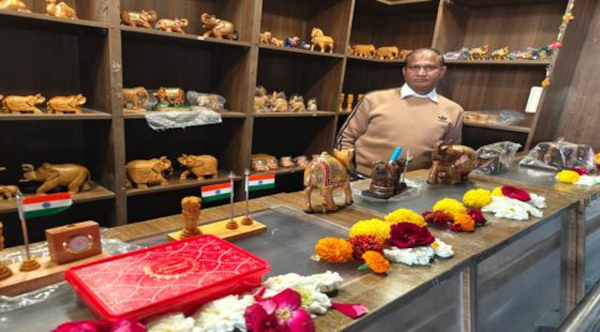
Indian Railways is increasingly using its vast station network for more than passenger transport. Through the One Station One Product (OSOP) initiative, railway stations across the country are being transformed into marketplaces where local artisans, weavers, farmers, craftspeople and small producers can directly reach millions of travellers.
Latest information attributed to Indian Railways shows that the initiative has now generated approximately ₹162.39 crore in cumulative sales, while more than 1.54 lakh people have benefited from the programme. More than 2,300 OSOP outlets are operating across over 2,000 railway stations, giving locally produced goods access to one of India’s largest everyday consumer networks. Nearly 1.5 lakh direct beneficiaries have received market opportunities through the initiative.
The programme represents an unusual use of India’s railway infrastructure as a grassroots economic platform. Instead of requiring a small artisan or producer to establish a separate retail network in another city, OSOP brings products directly to railway passengers at stations that already receive substantial daily footfall. This creates visibility for products that might otherwise remain restricted to local markets, fairs or specialised stores.
The initiative was introduced under the Union Budget 2022-23 as part of the government’s broader effort to promote locally produced and indigenous goods. Indian Railways launched the programme on 25 March 2022, initially testing the concept through a 15-day pilot at 19 railway stations. Following the pilot, the programme was progressively expanded across the national network. An official Press Information Bureau backgrounder published by the Ministry of Railways in March 2026 recorded 2,326 OSOP outlets at more than 2,000 railway stations as of 19 January 2026, benefiting more than 1.32 lakh people at that stage.
The subsequent increase to more than 1.54 lakh beneficiaries illustrates the continuing expansion of the programme during 2026.
OSOP outlets are designed primarily to showcase products associated with the area surrounding a particular railway station. This allows passengers travelling across India to encounter distinctive regional products during their journeys rather than only at their places of origin.
The range is extensive. Products permitted under the programme include handicrafts, artefacts, handloom and textile products, traditional garments, toys, leather goods, jewellery and locally produced or processed food items. Government guidelines also provide space for indigenous and Geographical Indication-linked products where appropriate. Individual artisans, craftspeople, weavers, tribal producers, farmers, members of Self-Help Groups, women-led SHGs, micro-enterprises and social organisations can participate.
As the network has grown, railway stations have become showcases for some of India’s best-known regional products. Travellers can encounter products such as Madhubani paintings and Bhagalpuri silk from Bihar, Gamosa and Mekhela Chador from Assam, Kota Doria and Sanganeri textiles from Rajasthan, Channapatna toys from Karnataka, Kanchipuram silk from Tamil Nadu, Kolhapuri footwear from Maharashtra and Moradabad brassware from Uttar Pradesh.
The model is especially important because many of these traditional industries consist of relatively small production units. Their challenge is often not the ability to manufacture distinctive products but gaining affordable access to large and geographically diverse consumer markets. A stall at a busy railway station can expose such producers to passengers from across India without requiring the investment normally associated with establishing conventional retail stores.
Indian Railways has attempted to keep entry barriers low. Outlets are allotted on a rotational basis, helping prevent a small number of sellers from permanently occupying the available commercial space and allowing more eligible participants to gain access. Official railway guidelines provide for nominal registration charges and flexible allotment periods, with the objective of encouraging participation by people from economically weaker and marginalised sections.
Under the current implementation cited by Railways, registration for a 15-day period can cost approximately ₹500 to ₹1,000 depending on the category of the station. Digital transactions through systems including UPI, BHIM, point-of-sale machines and digital wallets are also encouraged, allowing even very small railway-station stalls to participate in India’s rapidly expanding digital-payment ecosystem.
The geographical spread of the programme has also become substantial. According to the latest figures being reported from Indian Railways information, West Bengal has 378 OSOP units, the highest among the states, followed by Maharashtra with 205, Tamil Nadu with 199 and Uttar Pradesh with 196.
OSOP’s significance therefore extends beyond the ₹162.39 crore in recorded sales. The programme provides a distribution channel for rural and semi-urban enterprises while simultaneously preserving the commercial relevance of traditional skills. A handicraft or textile tradition becomes easier to sustain when producers can connect their work with a steady stream of paying customers rather than depending exclusively on periodic exhibitions or local demand.
The programme also complements the government’s “Vocal for Local” approach by turning railway stations into points where commerce and regional identity intersect. Official Railway Ministry material describes OSOP as a mechanism for providing market access to indigenous products, creating additional income opportunities and allowing passengers to experience the country’s regional heritage through products associated with the places through which they travel.
With more than 2,300 outlets already connected to over 2,000 stations, Indian Railways has effectively created a decentralised retail network specifically oriented towards local production. Its reach could become increasingly valuable as more artisans, Self-Help Groups and micro-enterprises seek access to customers outside their immediate districts.
The ₹162.39-crore cumulative sales figure is therefore more than a measure of merchandise sold at railway platforms. It reflects the emergence of railway stations as small but increasingly important economic gateways, connecting India’s enormous passenger network with its equally diverse network of artisans, traditional industries and grassroots entrepreneurs.
References
Press Information Bureau — Ministry of Railways
One Station One Product: Bringing India’s Local Heritage to Railway Platforms
Published: 25 March 2026. The official government backgrounder records 2,326 OSOP outlets across more than 2,000 stations and explains the scheme’s launch, pilot programme, beneficiary model and objectives.
Official PIB source — One Station One Product
Press Information Bureau — Ministry of Railways
One Station One Product: Celebrating Regional Identity Through Indian Railways
Published: 20 January 2026. Official Ministry of Railways update covering the nationwide expansion of OSOP and its role in providing direct market access to local producers.
Official Ministry of Railways/PIB release
Press Information Bureau — Ministry of Railways
Official parliamentary information on the features and beneficiary categories of the One Station One Product scheme, including artisans, craftspeople, weavers, farmers, tribal producers, SHGs and micro-enterprises.
You may also like
-
Cosmochute Develops Reusable Lunar Robotics Platform, Raises $1.5 Million to Advance Moon Exploration
-
BHEL Approves ₹500 Crore Expansion of Thermal and Nuclear Power Equipment Manufacturing at Haridwar
-
Reliance Building One of World’s Largest Battery Gigafactories in Jamnagar with 120 GWh Annual Capacity
-
India’s Exports to US Rise to $50.81 Billion in April–September 2026 Despite Tariff Disruptions
-
Tata Advanced Systems Reportedly Considering LAMV 4×4 Production in Morocco
