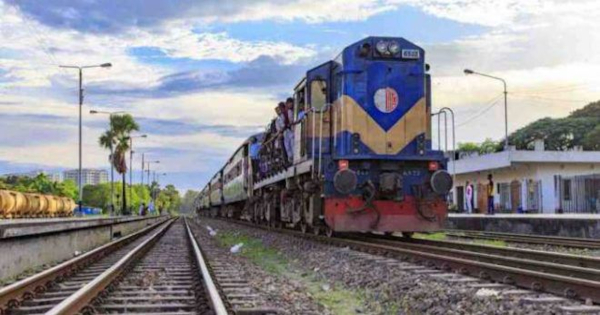
Indian Railways recorded growth across both passenger and freight operations in August 2026, with freight loading increasing by 5.4 per cent year-on-year and passenger traffic also rising during the month. The railway network simultaneously expanded its cargo infrastructure and long-distance passenger services, commissioning five new Gati Shakti Cargo Terminals and regularising 14 Amrit Bharat services.
The developments reflect Indian Railways’ continuing effort to increase transport capacity, improve logistics connectivity and provide more affordable passenger services across major regions of the country.
Freight Loading Reaches 137.9 Million Tonnes
Indian Railways loaded 137.9 million tonnes of freight during August 2026, compared with 130.9 million tonnes in August 2025, representing year-on-year growth of 5.4 per cent.
Freight revenue also increased during the month, rising by 6.27 per cent compared with August 2025. The growth indicates continued demand for rail-based transportation from several major sectors of the economy.
Higher freight movement by rail supports industries by providing large-scale and comparatively efficient transportation of raw materials, intermediate goods and finished products across long distances.
Iron Ore, Coal and Containers Record Strong Growth
Several important commodity categories registered higher loading during August.
Iron ore loading increased by 12.1 per cent, while clinker recorded growth of 10.4 per cent. Domestic container movement rose by 9.2 per cent and coal loading increased by 6 per cent.
Finished steel loading grew by 4.9 per cent, mineral oil by 3.1 per cent and fertilisers by 1.6 per cent. The category classified as balance other goods recorded an increase of 8.2 per cent.
The increase across these commodity groups indicates broader demand for railway freight capacity from the mining, manufacturing, energy, construction and agricultural sectors. The rise in domestic container movement is particularly significant because greater containerisation can help shift a wider range of goods towards rail transport.
Five New Gati Shakti Cargo Terminals Commissioned
Indian Railways commissioned five additional Gati Shakti Cargo Terminals during August, taking the cumulative number of operational terminals to 149 as of August 31, 2026.
The new terminals were commissioned at Shivlakha in Gujarat, Nalli in Tamil Nadu, Shaktinagar in Uttar Pradesh, Deoragram in Madhya Pradesh and Brajrajnagar in Odisha.
The Gati Shakti Cargo Terminal programme is designed to bring rail freight facilities closer to industrial, mining, manufacturing and consumption centres. Direct access to cargo-handling infrastructure can reduce the distance goods must travel by road before entering the railway network and can help improve turnaround times for freight movement.
Expansion of the network also strengthens the integration of Indian Railways with the country’s wider multimodal logistics infrastructure.
14 Amrit Bharat Services Regularised
Passenger connectivity also expanded during August, with 14 Amrit Bharat services converted from special operations into regular train services. This raised the total number of Amrit Bharat services to 86.
The regularised services connect several important regions across Uttar Pradesh, Bihar, Gujarat, Maharashtra, Tamil Nadu and other parts of the country.
Among the routes are Subedarganj–Lokmanya Tilak Terminus, Gorakhpur–Bandra Terminus, Gorakhpur–Delhi Junction, Ahmedabad–Bhagalpur, Lokmanya Tilak Terminus–Prayagraj Junction, Prayagraj Junction–Udhna Junction and Dhanbad–Coimbatore.
The services are aimed at providing affordable long-distance travel while improving direct connectivity between major cities, industrial centres and regional population hubs.
New Routes Strengthen Inter-Regional Connectivity
The additional services are particularly significant for passengers travelling between eastern and northern India and the country’s major western and southern economic centres.
The Gorakhpur services to Bandra Terminus and Delhi provide additional options for travellers from eastern Uttar Pradesh heading towards major employment and business centres.
The Ahmedabad–Bhagalpur service strengthens direct connectivity between Gujarat and Bihar, while the Dhanbad–Coimbatore route provides an additional long-distance connection between eastern and southern India.
Similarly, the Prayagraj–Udhna and Prayagraj–Mumbai connections increase travel options between Uttar Pradesh and western India.
These routes are expected to benefit passengers travelling for employment, education, business and family purposes while expanding the availability of relatively affordable long-distance rail transport.
Passenger Traffic Rises to 67.27 Crore
Indian Railways carried 67.27 crore passengers during August 2026, compared with 64.43 crore passengers in the corresponding month of 2025.
Suburban passenger traffic recorded even stronger growth. Around 38.01 crore suburban passengers used railway services during August 2026, up from 34.89 crore a year earlier, representing growth of 9.02 per cent.
The figures underline the continued importance of suburban railways as a major form of daily transport in India’s large urban regions, where millions of commuters depend on trains for work and other routine travel.
Festival Specials Expanded for Rakshabandhan Rush
Indian Railways also increased special train operations to handle higher passenger demand during the Rakshabandhan period.
A total of 144 trips of Rakshabandhan Special trains were operated between August 25 and 31, 2026. This compared with 48 trips during the corresponding festival-related period between August 8 and 14 in 2025.
Additional festival services provide temporary capacity when demand rises sharply, particularly on routes connecting major employment centres with passengers’ hometowns and family destinations.
By supplementing regular services during peak travel periods, special trains can help reduce pressure on heavily booked routes and improve ticket availability.
Freight and Passenger Expansion Move in Parallel
The August figures show Indian Railways expanding on two fronts simultaneously. On the passenger side, additional Amrit Bharat services and festival trains are increasing connectivity and capacity, while continued growth in suburban traffic highlights the network’s role in everyday mobility.
On the freight side, rising loading volumes and the expansion of Gati Shakti Cargo Terminals are strengthening railway links with industrial and logistics centres.
With freight loading reaching 137.9 million tonnes, passenger traffic crossing 67 crore during the month and the cargo-terminal network expanding to 149 locations, Indian Railways is continuing to build both its economic and public-transport roles across the country.
You may also like
-
Pine Labs Expands in Singapore with Unified Merchant Payments Platform
-
VORAN Partners Italian Manufacturer to Build Light-Aviation Ecosystem in India
-
World Bank Raises India’s FY27 Growth Forecast to 7.1%
-
Adani Power and Druk Green Power to Develop 770 MW Chamkharchhu-I Hydropower Project in Bhutan
-
Cabinet Approves ₹10,000 Crore SME Growth Fund to Scale Indian Manufacturing
